Medicine Wheels: South Direction, Jude Catallo & Scott Emerson

Medicine Wheel, holistic wellness, U.P. well-being magazine, U.P. wellness publicatioin

Know this. If your healing intention is pure, you can’t make any mistakes.

The use of the Medicine Wheel and its four compass points in the spiritual and healing practice of the indigenous peoples of the western hemisphere of Earth stretches back at least 5000 years(1) – probably much longer. This is actually the traditional and original “Western medicine”—a knowledge and practice almost lost to those of us living today. Although some of the details of different tribes’ medicine wheels differ from North to Central to South America, the major concepts appear similar. For example, among some indigenous North American people, the Bear is the archetype for the West instead of the Jaguar found in South America, but both embody fearlessness as a core attribute.(2)

Each direction is associated with one of the four energetic bodies that make up the human energy field:

the particle or physical world (the body), the realm of emotions and thoughts (the mind), the realm of myth (the soul), and the world of spirit (energy). In North America, the Lakota Sioux also associate each direction with the time of day, the time of year, and the time of life.(2)

For many thousands of years, the shamans of the Americas have used each direction of the Medicine Wheel as an interdependent doorway to unique perceptual levels, or states, in order to recover an individual’s true essence, personal power, energy, and inner wisdom for healing.

The Laika people, isolated in the Peruvian Andes Mountains, seem to have a well-preserved and undistorted record of the use and meaning of their Medicine Wheel.(3) Thus we use their version in our personal energy medicine and integrative medicine practice.

Sun in sq.

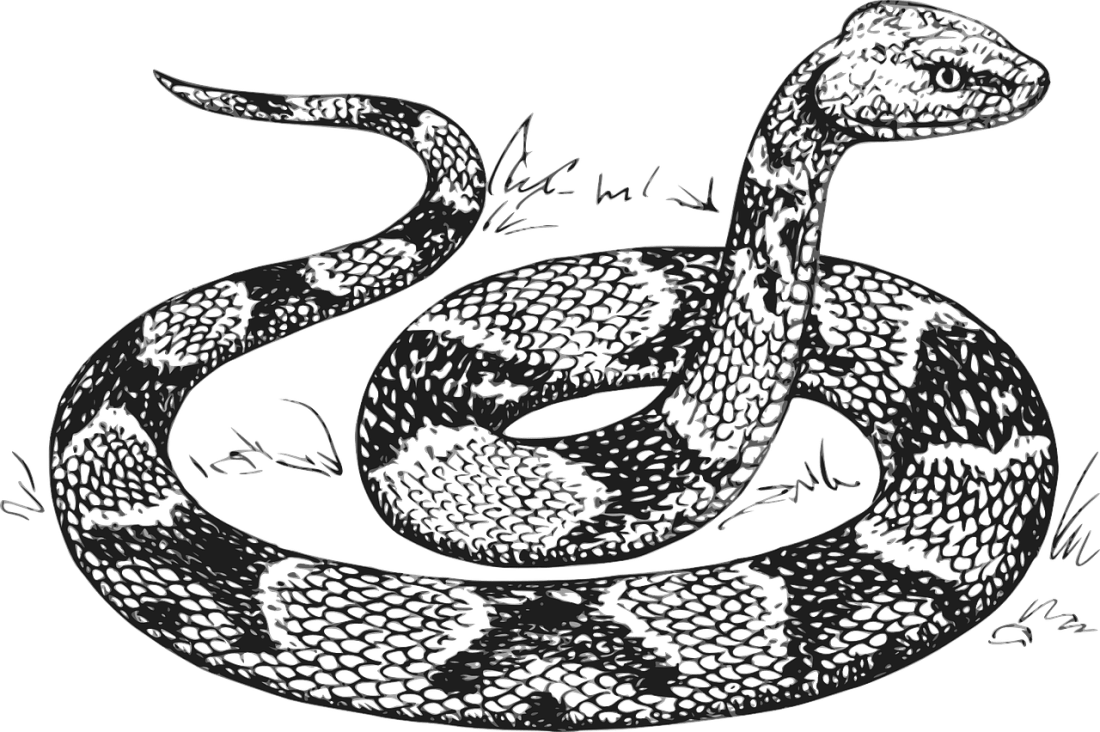
The physical world (the body) is associated with the SOUTH direction and is represented by Serpent.(3) In North America, the Lakota Sioux word for the South direction is Iktokaga, and is associated with noon, summer, and adolescence.(2) This is the material level of perception where most of modern medicine resides—in anatomy, physiology, biochemistry, surgery, and pharmacy. It is the realm where reality is 99% matter and only 1% spirit. This perspective is where everything is exactly as it seems or is measured without any judgment or emotions.

Serpent symbolizes knowledge, scientific method, and healing with physical solutions in order to treat diseases and injury. Serpent also sheds its skin and grows a new skin underneath, and so is continually both shedding its past and healing itself. The innate healing intelligence of the body that is gradual, incremental, and pulsed is the domain of the Serpent.

Operating from Serpent level is especially helpful for getting us through immediate trouble. Our reptilian brain is in charge and works from survival instincts, doing without over-analyzing or getting emotionally distraught about it.
snake-48155_1280

The downside of this perspective it is that it is heavily biased toward the physical or particle aspect of reality, which is very comfortable for most of us. It is easy to get stuck here and lose track of the authentic essence of our soul. We can begin to believe that the roles we play in this life—mother, brother, care-giver, etc., are the true self. We can hang on to toxic beliefs and reflex patterns of thoughts that may have been useful to get us through a crisis in the past, but now no longer serve us. They now create suffering and have become destructive for us as well as others.

Each direction is accompanied by four essential teachings.

The Four Teachings of the South are: Non-Judgment, Non-Suffering, Non-Attachment, and The Beauty Way.(3) Look at everything with beginner’s eyes. Avoid indulging or projecting pain. Let go of the labels you have stuck on yourself. Perceive loveliness even in the midst of ugliness. Move upon the Earth in beauty. Bring beauty into every interaction.

Each direction also offers a unique perspective on any aspect of your life that you feel you are ready to change in order to affect personal healing: the South—things with which you strongly identify; West—things from which you are mentally differentiating yourself; North—things you newly integrate into your life; and East—transcendence and full integration into your luminous energy body.

Movement around the directions and perspectives of your Medicine Wheels over time possesses great power for spiritual growth. To have the most power, they should be done by you privately, electronic gadget-free, in a special natural setting, and accepting the Earth’s wild card role in the process. The days of a new or a full moon, or solstices and equinoxes are preferred. It is most important that your ceremony be within a sacred space.

You can create sacred space as a healing bubble around your chosen Medicine Wheel site by “calling” to the four direction master archetypes (S-Serpent, W–Bear, N–Hummingbird, E–Eagle, as well as down—Mother Earth and up—Father Sky). With humility and gratitude, ask for their power and assistance in your personal healing work.

Medicine Wheel, holistic wellness, U.P. wellness publication, U.P. holistic health magazine

We have found soft rattling or drumming and offering tobacco gifts to the “spirits of the site” greatly facilitate this “calling.” Use a compass if you’re not certain of directions. The creative and intimate process of constructing your Medicine Wheel in a natural setting, using natural items found at your chosen site, quiets the mind and creates a highly meditative state. In sacred space there is no time, and you can trust your instincts and synchronicity.

Healing work with the Medicine Wheel begins with honoring the South direction and creation of a mandala in the sand, snow, or grass. Find one or two sticks to represent roles with which you currently identify, and that you mentally are ready to let go. Choose two additional objects (stones, acorns, pine cones, etc.) representing two of the “Teachings of the South” that you feel you are ready to mentally accept.

Place these objects in the South portion of your Medicine Wheel and leave them overnight on your mandala. Return the following day. Powerfully blow the mental and emotional attachment of your roles into the chosen sticks, but retain the lessons the role has taught you. Put them into the West space of the mandala. Place one or both of the “South teachings” objects into the West space as you also move these teachings firmly into your awareness. Savor in stillness how this feels.

If you can’t honestly do this, leave one or both in the South space for future Medicine Wheel work.

Leave and return the next day. Feel if any further movement is possible (roles, teachings). Collect your role sticks and teaching objects. Destroy your Medicine Wheel. Leave no trace! Close sacred space by thanking and releasing the four archetypes as well as Mother Earth and Father Sky.

Within the next two weeks, build a fire safely somewhere in open sacred space, and ceremonially throw your role sticks into the fire as you stomp your foot, intending for your mental attachment to them to be destroyed. Retain the objects representing “teachings” as daily reminders, and to be used in the next Medicine Wheel.

Now take the time to see how these mental and emotional changes begin to work in your life until your next Medicine Wheel ceremony, honoring the West direction.

Footnotes:
(1) Scherrer, D., Native American Medicine Wheels; Stanford University, 2015 & Medicine Wheel / Medicine Mountain National Historic Landmark; Wyoming State Historic Preservation Office (SHPO Website) 2017
(2) Oklevueha Native American Church
(3) Four Winds Society, Light Body School, Shamanic Energy Medicine Training

Jude Catallo and Scott Emerson, MD of Timelesshealing.org are both graduates of The Four Winds Society: Shamanic Energy Medicine Intensive Apprenticeship 2017 – ongoing; members of the Oklaweva Native American Church 2016 – ongoing; and Andean Cosmic Vision Apprenticeship, Don Theo Paredes 2003 – ongoing.

Reprinted with permission from the Summer 2019 issue of Health & Happiness U.P. Magazine, copyright 2019. All rights reserved.

Spotlight On… Alicia Smith, Owner of Acupuncture of Marquette 

Tell us what happens at Acupuncture of Marquette.
Basically, we do a health intake with all different kinds of questions and develop a complementary health treatment plan using acupuncture. Sterile, non-reusable needles are used on the meridians, which are pathways through the body affecting the nervous system.


How does acupuncture work?
Acupuncture looks at the whole body as an ecosystem and helps balance it. In Eastern theory, acupuncture points are being chosen to balance the body’s chi or life force energy. It’s also fascia-related – the interconnected tissues of the body send electrical impulses throughout. One area can impact another. Western medicine describes acupuncture as increasing blood circulation, and decreasing inflammation and tight muscles. And acupuncture may remove blockages, for example blood stasis, phlegm accumulation, stomach accumulation.

Groups of qualities (yin/yang) are considered in deciding where we need to balance you. Yin is water, fluid, slow-moving, fleshy, cooling; yang is fast-moving, hot, dry, loud. It’s a way to compartmentalize what is not in balance in the body. Someone with a very red face, maybe constipation, is considered to have yang excess and yin deficiency. Post-menopausal symptoms also indicate yin deficiency.

Certain acupuncture points have certain qualities.

Acupuncture can have a local quality – you may have tennis elbow and we are providing acupuncture there, but this also affects digestion because it’s on the large intestine meridian. Acupuncture points work on the body both distally and locally. For example, we can work with headache issues by moving energy away from the head and bringing it to the hand. This helps a lot with stress.

There are all different types of acupuncture needles – some longer, some shorter, different diameters. I tend to be gentler, using them without having to go so deep into people. I think a good acupuncturist meets the person’s energy where it’s at, addressing the person’s disposition and issue.

There are also different theories on how acupuncture treatment should be created. Some use abdominal diagnosis, palpating the stomach. Others use their sense of smell, seeing the skin color, taking the pulse, looking at the palm, feeling temperature differences, and/or running their hands up and down meridians to see where blockages are.

What do your clients most commonly come in for?
Often pain—back, neck, arm. Also infertility issues, anxiety, depression, PTSD syndrome. We can work on back pain and anxiety at the same time.

Acupuncture is a viable treatment option. It’s non-invasive, with no side effects beyond possibly feeling tired. In today’s world of medicine, much more invasive procedures are often used. Now more medical professionals are recommending acupuncture before prescribing surgery.

What do your clients like about it?
They feel very relaxed afterward. They feel comfortable in my clinic because the building is a house. It’s personal. They feel safe talking about what’s going on, being in a traditional setting rather than one where a medical record is created that follows you through life and could potentially be used against you. If you’re diagnosing using Chinese medicine, the insurance companies typically don’t understand it.

What kinds of benefits does it offer?
All ages can benefit from acupuncture. It doesn’t interact with medications. That’s why I really like this natural form of medicine. It’s very safe when done by a qualified professional, not a weekend class attendee. Acupuncture creates an environment in your body to help it heal.

If you don’t feel right, or are in a slump, potentially even just one treatment could help you. It can help with transitioning with the seasons, grief, over-consumption of anything that’s throwing you off in some way so you haven’t felt right since. It can help you safely move off of pain medication.

Some will take the input and heal faster. Some acupuncture points will go double-duty and work on additional things such as infertility or depression. There’s also a set of points that help the system as a whole. Doing acupuncture, you’re opening all the meridians. They’re interconnected, so your body’s going to do what it needs to do.

What are your qualifications and experience?
I went to Bastyr University in Seattle and did my internships, Bachelors, and Masters degrees. I took the pre-med program at NMU, and am on the verge of completing my PhD through the California institute of Integral Studies in San Francisco. I’ve been in practice since 2013.

What made you decide to become an acupuncturist?
I was dissatisfied with the Western medicine approach… Once I made the switch to Bastyr, I found acupuncture seemed to make sense. I wanted to work with my hands and practice a form of healing that did no harm… I found through my research that acupuncture has been around for a very long time and has a whole culture behind it. This was humbling, to embark on learning a system of medicine that had helped people heal for centuries.

What do you enjoy most about your practice?
I enjoy seeing all different types of people and treating all different types of conditions. I see a lot of first-time acupuncture patients. Here it’s newer, whereas it was very common in Seattle. I really like my patients, and living in the natural environment of the U.P., offering personalized care in a comfortable, cool, little clinic.

Why should someone come to Acupuncture of Marquette?
For pain and stress relief, balance, like when you feel you need a tune-up, wellness care, so life can be even better. When you fall off your wheel and need some support. When you want to find non-invasive, non-pharmacological help.

What else should people know about acupuncture?
It doesn’t hurt, and it’s not scary. It’s really relaxing. It’s a different type of medicine from a different paradigm and culture—not a pill in a bottle, not an injection with fluids in it. The dangers of trying it with a board-certified acupuncturist are very minimal.

Acupuncture has been around for a very long time. America is a melting pot, and this type of medicine is a gift we should embrace. It may seem to you that it’s different, that it’s strange, that maybe it doesn’t work, but have you actually tried it?

Reprinted with permission from the Summer 2019 issue of Health & Happiness U.P. Magazine, copyright 2019. All rights reserved.

Bodies in Motion: Direct Connection—Yoga in Nature, Crystal Cooper

yoga in nature, U.P. holistic health publication, U.P. holistic wellness magazine, hysical fitness, connecting with nature

Breathe in. You are here, in this body, at this time. You are aware of and immersed in your surroundings. Perhaps you’ve arrived stressed, scared, weak, or in need. A peaceful simplicity welcomes you. Breathe out. Why not unplug, unwind, reset, recharge? Where? The porch, the beach, the woods, the mountains. All viable options are yours for the indulging.

This time you choose to flee to the wilds, submerging yourself into the elements. It feels sneaky, thrilling, fearless, or empowering. The mind is silent and the senses vital here. Now you can feel with the subtle, deeper parts of yourself. It is quiet in a different way. The present sounds are more alive. The surrounding scents invite you to remember to smell them. You realize you are holding the tensions of the day in your body, and that you can release them. Observing other living beings, you realize the grass and bird hold nothing but what is essential.

You move into downward-facing dog pose, pressing your hands and feet into the wood, grass, soil, or rock. Breathing in, you fill to your capacity, then exhale. The earth is pressing back, supporting you. Your body is being rejuvenated—the stresses and pressures of the day and your life being gently released or powerfully pushed out. Fully released and truly connected to this space, you receive a glimpse of understanding that you are indeed one with all.

. . .

We make choices every day, every moment. Time and energy are utilized for all that life requires and offers. How mindfully and intentionally are these resources prioritized? Consider the idea of taking back our time and energy from those entities that abduct it, deviation for the greatest good. What a wily, wholesome way to protest the perpetual adversity faced, rallying for our inherent life force.

Cleansing and growing the connection to our vitality, we can practice yoga outside, additionally healing the human connection to earth. This is good work. This is an individual grassroots movement to be built upon in times to come. This foundation gratifies immediately and long-term, fortifying personal resilience. Immersed in a natural yogic practice, one does not require proof or over-thinking—the facts of goodness and righteousness are felt, known.

Yoga means union, the harmony of awareness and intention, body and mind, soul and earth.

Physically, yoga can allow vast synergistic opportunities—oxygenating tissues, lubricating joints, and restoring and strengthening subtle, vital connections throughout the body. A yoga practice begins with the breath and mental presence. No matter the origin of one’s practice, the purpose is an honest, focused communion. This can begin in the living room with a book or Youtube video, in a studio on the mat, or simply with gravity, the earth, and your body.

Once an understanding of the poses exists, like words, they are sequentially placed to make an intentional sentence. Each sentence, or stream of poses, is mindfully carried out to compose a paragraph, eventually telling the story of your yoga practice. Within this story line exist possibilities to get curious, experimental, creative, and playful!

Life offers us the occasion to be in our bodies and to go be out in the world.

We can reproduce our own energy, free of charge. No flexibility, strength, or shape is required. These qualities are inherently cultivated through each small, practical step of the practice. Sustainability on a large scale begins with reviving our sovereignty on an individual level. Allowing our leadership to shine through in our personal choices, yoga can act as a brilliant mirror throughout life.

Crystal Cooper has called Marquette, MI home for a decade. Her communion with the northwoods deepened upon beginning yoga in 2013. Passionate about natural healing modalities as well as personal and global sustainability, Crystal advocates yoga and other resiliency-promoting actions within the community.

Reprinted with permission from the Summer 2019 issue of Health & Happiness U.P. Magazine, copyright 2019. All rights reserved.

Healthy Cooking: Wild Blueberry Ice Cream, Val Wilson

healthy cooking, holistic health, vegan blueberry ice cream, U.P. holistic health magazine, U.P. wellness publication, U.P. well-being magazine

There is nothing more delicious in the summer than wild blueberries grown in the U.P. They are sweeter and juicier than any other blueberries I have tasted. It is always a thrill when you come across some wild blueberries growing in the woods and get to pick them for yourself. And you are getting extra health benefits from the wild ones.

Although all blueberries have a high amount of antioxidants, wild ones contain more of the powerful antioxidant anthocyanin. Anthocyanin may be responsible for some biological activities such as preventing or lowering the risk of cardiovascular disease, diabetes, arthritis, and cancer. And it’s responsible for the beautiful blue color of the berries. If you are lucky enough to pick a bunch of blueberries, you can make some ice cream with them.

Have you heard of Aquafaba?

It is an exciting ingredient used in many vegan recipes. Aquafaba is the water left over when you cook chickpeas. You can cook the chickpeas yourself and save the water, or you can use the water from canned chick peas. Something amazing happens when you whip the Aquafaba in a mixer for about 10 minutes—it gets fluffy similar to a meringue created by egg whites! It increases five times in volume when you whip the chickpea liquid. For best results, you need to add a stabilizer. Cream of tartar works best.

Once the Aquafaba is whipped up and you’ve added the flavors you want, you freeze it to make great ice cream. Because Aquafaba is basically bean water, it contains very low amounts of calories, fat, protein, or carbohydrates. The ice cream is vegan, and the only fat or calories it contains are what you add to the Aquafaba, making it a great low-fat, low-calorie dessert.  It is a soft ice cream and melts fast, so packaging it in small, one-serving containers to freeze works best.

Aquafaba Blueberry Ice Cream

1/2 cup Aquafaba
1/4 tsp. cream of tartar
1 cup blueberries
1/4 cup maple syrup

Put the Aquafaba and cream of tartar in the mixing bowl of a standing mixer. Using the whisk attachment, start on low speed, slowly increasing the speed until you reach high speed. (With a Kitchen Aid Mixer, whipping it on #8 works great.) Whisk the Aquafaba for 8 to 10 minutes until you have achieved a stiff consistency and it has increased in volume about 5 times.

While whisking the Aquafaba, put the blueberries and maple syrup in a sauce pan and heat on low until warm. Gently fold the blueberry syrup into the whipped Aquafaba. Put in small, one-serving containers (half pint containers work well). Cover and put in freezer for a couple of hours until completely frozen.

Chef Valerie Wilson, a.k.a, Macro Val, has been teaching cooking classes since 1997. Visit her website to purchase her new cookbook, Vegan Cooking with Kids, set up a phone consultation, or listen to her radio show, http://www.macrval.com. Facebook, Macro Val Food.

Reprinted with permission from the Summer 2019 issue of Health & Happiness U.P. Magazine, copyright 2019. All rights reserved.