Creative Inspiration: Challenges as Catalysts, Kim Nixon Hainstock

challenges as catalyst, creative inspiration, U.P. holistic business, U.P. wellness publication

When change happens, many of us become uncomfortable, even if we recognize and accept that the one certainty in life is change. I have worked in the Adult Foster Care industry and managed a group home for those with cognitive and physical disabilities. When a new resident would arrive, they often did not fit the written description given by former caregivers. Often, having arrived at a place never seen before, without familiar faces present, a new resident would demonstrate skills no one thought they had, as if an alarm clock had gone off, and now he or she was awake.

I always suggested to staff we roll with it and see what else might surface. How exciting to do so rather than look at the negative side and blame the people who made those meager introduction notes. Once we were told a person would not walk without guidance and assistance, and one day the person did, standing up, walking across the room, and sitting on the floor in a spot of light coming through the window. I smiled and thought, “Oh, this new resident can self-soothe. The person saw a spot of warmth and moved to it like a cat.” Others in my employ looked on with pity that this person sat on the floor; how sad.

I recognize change can be so sudden and complete that we often feel loss, and just like a special needs individual with no compass to navigate the changes before them, it often comes down to what I need in this moment. Warmth, I need warmth. I will walk across the room and achieve that. Here I now sit in a spot of sun. Magical! Change can be a catalyst for magic, and for fresh new insights on living.

Perceptions of change, as well as our coping abilities, vary and we all have differing skill sets.

Often we do not know how to confront or meet what is happening. In such situations, I like to turn to my creative skills: journaling, vision boards or dream-mapping, or creating mandalas of natural items found on walks.

Let’s look at the process of creating a dream-map or vision-board. I like to gather images and items starting at the New Moon and put them into a cardboard box—clippings from the news, old photos, and items culled from old magazines, bits of scrapbook papers, letters, cards, poems.

Then on the Full Moon, I settle into a space created for the moment. I set the stage. Spread out a blanket upon the floor. Retrieve the box of gathered treasures, scissors, glue sticks, adhesive, scrapbook paper, with an artist pad or cardboard as a base. I set an intention, say a positive affirmation, and begin the sifting process on what is rising up through these items for me. Often I am surprised that something I had clung to or felt strongly about initially does not make it through the gathering phase for my full moon collage.

vision board, challenges as catalyst, creative inspiration, U.P. holistic business, U.P. wellness publication

Displaying my new vision board is essential, as I do not always recognize the meaning or message in the artwork I created. I like to keep it present and allow for the true messages to come like whispers on the wind, allowing their guidance to become fully realized. I do not need to take action right away. Change is often slow. But having a catalyst to help with the sorting of meaning and story can be extremely enlightening.

Licensed Massage Therapist and Yoga instructor Kim Nixon Hainstock holds a B.S. in English from NMU, has led vision board classes at Ishpeming’s Joy Center, Essentials Massage and Yoga, and with at-risk youth, and is currently navigating change and finding ways to nurture her journey.

Excerpted with permission from the Summer 2020 issue of Health & Happiness U.P. Magazine. Copyright 2020, Empowering Lightworks, LLC.
Holistic Animal Care: Immune Boosting for Pets, Jenny Magli

pet health, immune boosting for pets,holistic animal care, U.P. holistic business, U.P. wellness publication

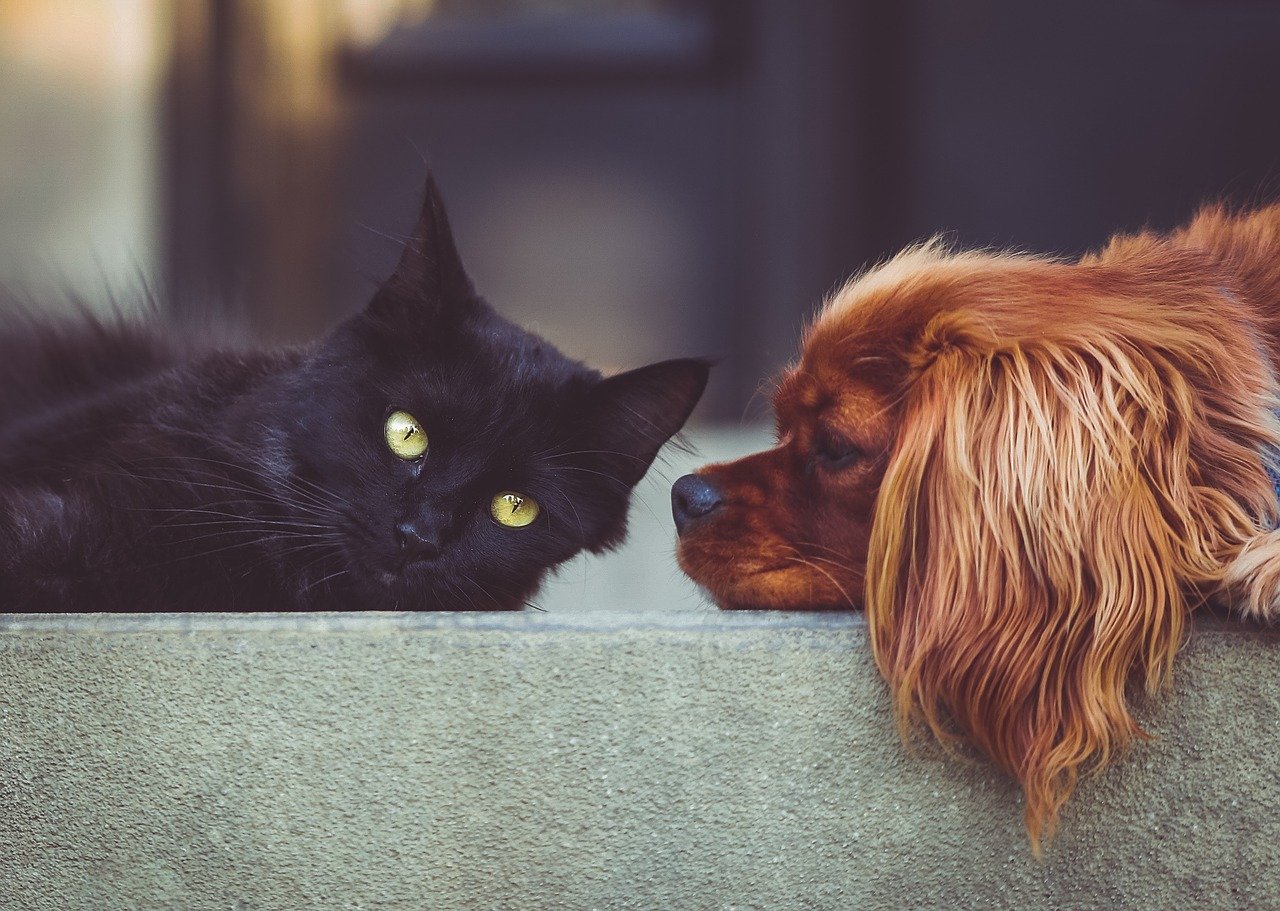
Our furry friends offer us unconditional love and joy on a daily basis. What wonders they are! We try to offer them the same, along with much care and attention. As we go through life together, we learn to co-exist, and eventually get to know each other very well. I really feel they are teachers of sorts in that they show us how to live in the moment, and find simple joy from day to day. But ultimately, they are dependent on our complete care during their lifetimes.

Most pets start their lives pretty strong and resilient. No matter their age, they can always benefit from immune support, especially if their immune systems have been compromised due to aging, or sudden or chronic health issues. With the many pets I have had over the years, I have learned just how beneficial immune support can be, and how it can add to longevity and quality of life. This is a win for the pet parent as well! Keeping your pet’s immune system balanced can help to prevent a variety of health issues such as cancer, diabetes, autoimmune issues, and more.

Additionally, some medications can stress the immune system. Antibiotics come to mind, as they are often over-prescribed by vets. Of course, at times they may be totally necessary! If your pet must go on antibiotics, be sure to support his or her immune system during that process. Also, know there are alternative health options that can strengthen and support the immune system.

Here are some examples of ways to support your pet’s immune system:

First, please be aware that the majority of commercial kibble (for cats and dogs) does not contain the nutrients you’d think. The manufacturing, along with shelf life, storage, and heat, destroys the majority of nutrients that may have been added during processing. So a well-balanced, wholesome and nutritious diet (preferably organic with human grade protein and free of dyes and preservatives) should be your first point of support.

Some basics for a healthy immune system include reducing stress, providing fresh filtered water (clean food and water dishes regularly), moderate and regular daily exercise, quality uninterrupted sleep, maintaining a healthy weight, receiving regular dental care, and enjoying sunshine, fresh air, playtime, love, and attention.

Reducing your pet’s exposure to toxic substances is also protective. Consider using simpler alternative household cleaners such as vinegar and baking soda. Use natural or non-toxic pet shampoos and products for flea and tick control because commercial topical and oral flea and tick preventatives can have an adverse effect on the immune system, and are highly toxic. Do not use chemical cleaners or household air fresheners. Do not use scented laundry soap or chemical dryer sheets on anything your pet lays on. And be sure not to use lawn or garden chemicals in areas your pet frequents.

Here’s a sampling of supplements that can help support the immune system:

– Bovine Colostrum – Preferably from New Zealand grass-fed, non-grain-fed cows that have not been fed antibiotics or hormones.
– Medicinal mushrooms such as Maitake, Turkey Tail, Reishi, Cordyceps, Shiitake, Lions Mane, etc.
– Digestive enzymes and probiotics
– Pre-formulated immune-boosting supplements for dogs and cats

All the above can be purchased already-formulated for pets and can easily be added to their food. Please do your own homework to determine the appropriate serving size for your pet.

*Readers are reminded it is entirely of their own accord, right, and responsibility to make Informed decisions/choices with their pets and health care. Supplementation should always be discussed with your holistic veterinarian. Jenny Magli disclaims any liability for the decisions you make based on this information.

Jenny is a Certified Natural Health Consultant for pets and their people, and a Healing Touch for Animals (Level 2) and NES BioEnergetics Practitioner. Consultations are done over the phone and through email. To contact, call or text (906) 235-3524 or email 1healthlink@gmail.com.

Excerpted with permission from the Summer 2020 issue of Health & Happiness U.P. Magazine. Copyright 2020, Empowering Lightworks, LLC.

Green Living: A New Normal, Steve Waller

green living, sustainability and covid 19, new green normal, U.P. holistic business, U.P. wellness publication

Before rushing to return to normal, we should first rush to define it.

Was the old normal proper, healthy, and right, or should we consider a new, better normal? Mother Nature just pushed “restart” on our society and economy. Should we reboot to the same operating system, or install an upgrade?

While we were social distancing, we were unintentionally forced to recognize what is “critical infrastructure” and what is not. Family, friends, and neighbors are critical. Health care and all that supports it is critical. Food and all that is needed to grow, process, and deliver it is critical. Energy, water and sewer are critical; apparently, so is toilet paper! Schooling is critical but classrooms less so. Workers in these fields all risked personal safety for our good.

Conversely, we were unwillingly forced to recognize non-critical activities, events and entertainments that when prohibited, albeit grudgingly, reduced our travel, cut our expenses and put us back in our homes. Those prohibitions taught us to be more domestic—cooking, pursuing hobbies, music, spending time with family, exercising frugality—and offered the chance to discover what quality time involves. Many workers of non-critical infrastructure became involuntarily unemployed, greatly complicating their lives, adding unwanted stress and complications.

There were unexpected consequences to this global realignment.

Traffic congestion worldwide disappeared. Airplanes stopped flying. Non-critical factories stopped burning fuel and creating waste. Major urban areas, notorious for terrible air quality, quickly became clear. Residents of Punjab India could see the Dhauladhar mountain peaks, over 120 miles away, not sighted from Punjab for almost 30 years. Nitrous dioxide from Chinese factories decreased drastically. Air pollution in Seattle and Los Angeles plummeted.

The 2020 crisis could trigger a 5.5% annual fall in CO2 emissions, the largest ever, more than during any previous economic crisis or period of war, yet still not close to avoiding the global temperature limit. Global emissions need to fall by 7.6% every year this decade to limit warming to less than 1.5 C. 2020 demonstrates only a sample of what needs to be done.

It’s as if Mother Nature finally found a way, after many years of failed subtle hints, to very seriously get our global attention. She got us, at least temporarily, to stop the non-critical things that corrode the air, water, and global temperature. She showed us that supporting critical infrastructure while inhibiting non-critical infrastructure (or substituting something better) actually achieves many of the necessary changes that can resuscitate our long-abused critical and warming biological life support system.

It’s time to re-evaluate “normal.”

We need to shift non-critical jobs to critical-sustainable. We need to re-employ in fields that maintain healthy environments, non-toxic infrastructures that keep our air and water clean, and our globe stable.

The new normal needs to encourage wind power, solar, and the Super Grid, not fight it. Restored jobs need to shift toward sustainable infrastructure, not inefficient and unnecessary excess. Air travel is non-critical. Travel needs to be less and cleaner. We need new rail and to buy more electric passenger vehicles. These create critical jobs, including maintenance, sales, service, communication, planning, material moving, construction, coordination, purchasing, security, all the fields that were lost in the “old normal” non-critical fields. Now is the time to upgrade to better.

If we don’t learn, don’t change, and successfully return to the old corrosive normal, will Mother Nature try again, more drastically yet? I wouldn’t put it past her. Orgel’s second rule states “Evolution is cleverer than you are.” Mother Nature has successfully managed life on earth for over three billion years. People who say “Evolution can’t do this” or “Evolution can’t do that” are simply lacking imagination.

Steve Waller’s family lives in a wind- and solar-powered home. He has been involved with conservation and energy issues since the 1970s and frequently teaches about energy. Steve can be reached at Steve@UPWallers.net.

Excerpted with permission from the Summer 2020 issue of Health & Happiness U.P. Magazine. Copyright 2020, Empowering Lightworks, LLC.