Senior Viewpoint: Head to Your Local Farmers Market ASAP! Kevin McGrath

U.P. holistic business, senior nutritional needs, value of farmers markets for seniors, U.P. wellness publication

Now that summer has begun taking hold, nutrient-rich soils are transferring more and more of their life-sustaining power to the herbs, grains and vegetables that we then consume and absorb. Our farmer’s markets play a vital role in not only making these fresh, healthy, in-season, locally grown foods available for our choosing, but also offer an open air venue where we can safely and easily engage as social beings again.

As a senior who has been primarily cooped up for over a year in an attempt to keep my fellow citizens and myself out of harm’s way and is finally fully vaccinated, I’ve come to truly appreciate the importance of fellowship. Social isolation can become a routine way of life for many seniors, pandemic or no. Farmers markets bring together humans of all ages, which can be particularly helpful for seniors’ vitality. And, as John Lennon once said, “A dream you dream alone is only a dream. A dream you dream together is a reality.”


Social isolation has been shown to significantly increase your risk of dementia and premature death from all causes, maybe even more than smoking, obesity or physical activity. On top of that, according to the American Psychiatric Association, lonely seniors are more likely to smoke, drink in excess, and be less physically active. 


Additionally, we seniors actually need fewer calories, but more nutrient-rich meals.

Plant foods (vegetables, fruits, nuts, beans, and whole grains) tend to be nutrient dense and are also a great source of fiber, which can help prevent Type 2 diabetes, aid digestion, lower cholesterol, and help you maintain a healthy weight. Research supports filling at least half of your plate with vegetables and fruit at each meal.

To get the greatest nutritional value, as well as flavor, from your produce, you want it to have the shortest possible time between harvest and consumption, making your farmers market a winner again. Food imported from other states and countries is typically older, has been handled more (exposing it to more contamination risks), and sat in distribution centers before arriving at the store.

Another consideration that becomes clearer as I age is the importance of supporting local businesses. Our local economy can be hurt by having our produce transferred in from all over the world, and oftentimes even sold more cheaply. If we don’t support our local businesses with our purchases, and then wonder where all our local businesses went, whose responsibility is that?

Nationwide, growers selling locally create thirteen full time jobs per $1 million in revenue earned.

Those who do not sell locally create three. And dollars generated locally tend to circulate locally, bolstering the economic health of local businesses and families. Plus, if natural disasters continue to increase, affecting the growth and distribution of food from elsewhere, we’ll certainly become even more grateful to have locally-sourced options.

So with summer in full swing, I look forward to seeing my experienced neighbors and friends taking advantage of nature’s “farm-aceuticals” at our local farmer’s market, supporting our own health and that of our community.

While Kevin McGrath isn’t a farmer, he has the greatest respect and admiration for our local farming community and can be found visiting farmers markets wherever he may roam.

Research contributed by Roslyn McGrath, a fellow fan of food, farmers markets, useful info, helpful humans, and Mother Nature.

Excerpted with permission from the Summer 2021 issue of Health & Happiness U.P. Magazine. Copyright 2021, Empowering Lightworks, LLC. All rights reserved.

Health & Homes: 10 Symptoms of Mold Exposure—and What to Do About It, Rich Beasley

U.P. holistic business, household mold detection, mold prevention, healthy homes, U.P. holistic wellness publication

With many of us spending more time indoors, ensuring safe air quality is more important than ever before. If your health has been feeling “off” lately, there may be an unexpected reason why: an undetected mold infestation in your home or apartment. Let’s look at some common warning signs that mold is becoming a health problem in your living space and explore some simple actions you can take to fix it.


Mold—A Pervasive Problem

Mold is a much more common problem in buildings and homes than many people think. When left untreated, it poses a significant risk to health and wellbeing. According to some estimates, roughly 70% of homes in the United States have mold of some kind. It’s important to remember that not all mold is dangerous to your health—but many are.

10 Health Symptoms of Mold Exposure

If you’re wondering if an unseen mold infestation could be affecting you or your family, an excellent place to start is by evaluating your health. If you’re currently experiencing one or several of the following symptoms, it’s time to take the next steps towards mitigating the problem (more on that shortly).

  1. Stuffy nose
  2. Sore throat
  3. Coughing or wheezing
  4. Tightness in the chest
  5. Hair loss
  6. Memory loss
  7. Brain fog
  8. Burning eyes
  9. Nosebleeds
  10. Skin rash

Mold exposure will affect each person differently, and this list is not exhaustive. For example, in asthmatic people or those with a mold allergy, reactions will be much more severe than in the general population. Additionally, immune-compromised people or those with chronic lung disease may develop severe infections in their lungs from mold exposure.


What Causes Mold in a Home?

Mold is an opportunistic scoundrel. It enters your home through ventilation, cracks in the walls, leaky roofing, and open doors or windows. Once in your home, mold will flourish on pretty much any surface imaginable, including household dust, insulation, drywall, carpet, fabric, paper, cardboard, wood, and much, much more. If you live in a humid climate (like Michigan), mold may be more of a concern as it thrives in damp areas. As a solution, it’s suggested that you keep your home at less than 50% humidity. A simple dehumidifier will do the trick in most cases.

What To Do When You Suspect a Mold Problem in Your Home

So, you’re feeling off and suspect that mold may be the cause. What’s your next best step?

  1. First, contact your healthcare provider right away to schedule a check-up.
  2. Second, do a thorough search in your home for signs of mold or evidence of water damage. Remove porous materials like carpet or drywall that you think may harbor mold.
    Thoroughly clean hard surfaces with a bleach solution.
  3. If you can’t find obvious signs of mold but still suspect it may be present, schedule a mold
    test with a local home inspector. A home inspector will look for signs of both active and
    prior water intrusion and existing mold in all safely accessible areas, and sample the air
    in your home for mold. Test results are typically available within three business days and
    will tell you whether there is indeed a mold infestation in your living space and whether any existing mold poses a risk to your health.

When it comes to mold, ignorance is not bliss. Listen to your body if something feels off. The sooner you identify the problem, the sooner you can mitigate risk and get back to enjoying your health and vitality.

Rich Beasley is an InterNACHI Certified Home Inspector and owner of UP Home Inspection, LLC. He holds over a dozen specialty certifications, including Mold Inspector, Radon Tester, Water Quality Tester, Indoor Air Consultant, and many more.

Excerpted with permission from the Summer 2021 issue of Health & Happiness U.P. Magazine. Copyright 2021, Empowering Lightworks, LLC. All rights reserved.
Positive Parenting: How to Keep Kids Active, Engaged & Learning This Summer, Jamie Hutchinson

positive parenting, U.P. holistic wellness publication, pandemic parenting advice

So, we’re home with our children, and we are limited in what outings we can do. Now what? How do we keep our kids active at home? How do we keep them engaged in learning? How do we come out of this summer feeling like we did our best, especially as we may be working from home at the same time?

As we gear up for the season in these challenging times, it’s important to acknowledge that each family will have their own very unique work and home situation. Some people may have more flexibility, more caregivers in the home, or older children who are more independent. Others may have less flexibility, younger children, and may be the sole caretaker of those children. We honor all of you, and know that you are doing the best you can. The following suggestions are offered as a starting point for consideration while navigating having children home and working at home this summer.

Children thrive on structure. They do best with routine. Create one for your family that will give children some academic time, active time, and FUN time. Also build in some time for you and your work, and you and the other supportive people in your life. Of course, as you create order, create some flexibility too. This will help everyone adapt.

Keep the routines. Do you have a set bath time? Bedtime? Mealtime? Keep these times consistent. It will allow everyone to feel some sense of normalcy. It also allows our brains some breathing room. Change is taxing on all of our brains.


Get outside!

This is really important to do when and where you can. Being out in nature resets our mind and body in so many ways. If you can go outside to a place that does not have a lot of people, then do it. Do you have a yard? Use it.

Have a family meeting to discuss the situation and the structure you are implementing. Ask every family member to step up the best they can. Emphasize that you are all doing this together, as a family.


Be creative and make some memories!

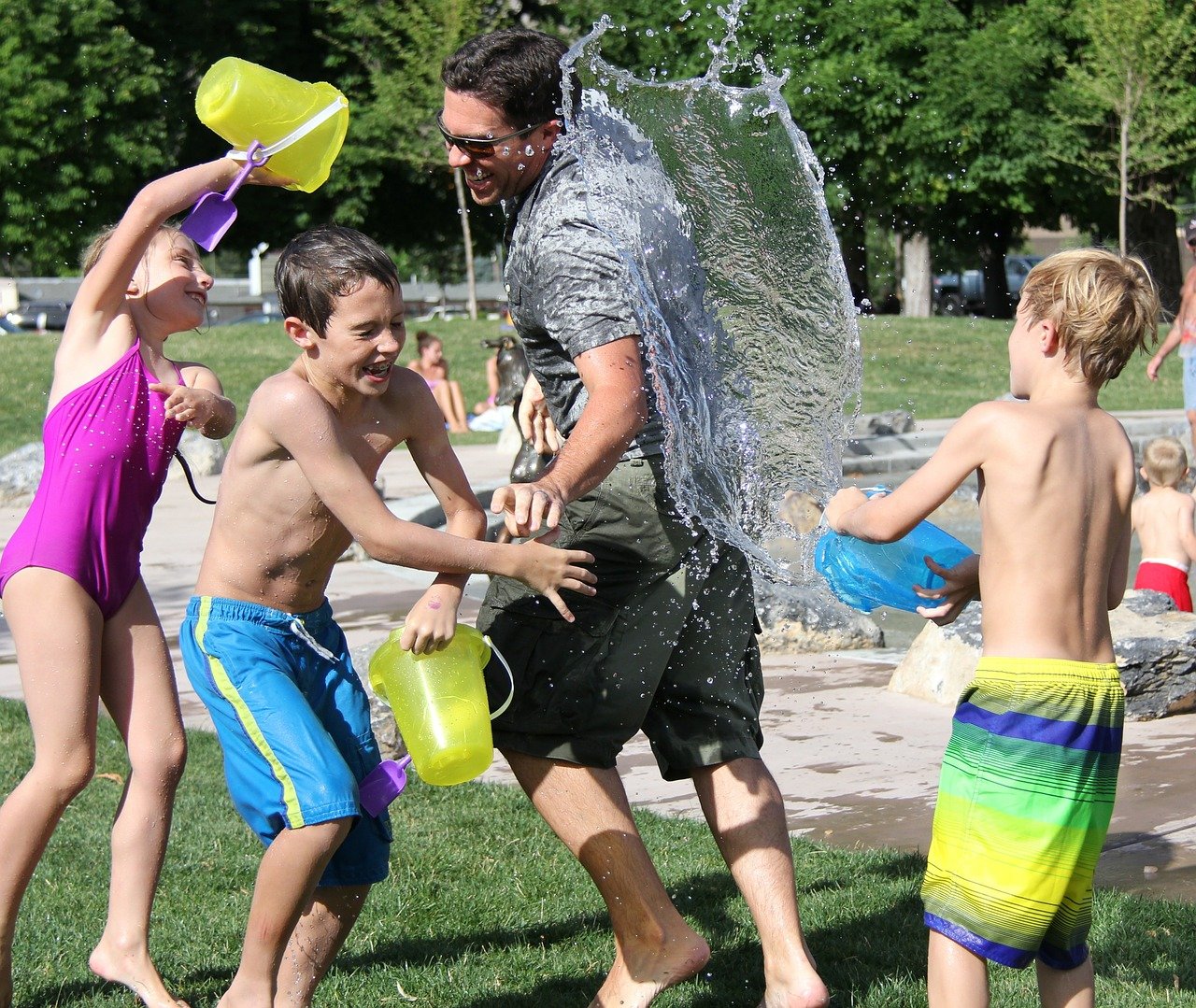
Maybe you make a fort and read books together, perhaps you have a picnic dinner in the living room while blasting your favorite music. This will be challenging, this will be new, but we can still have fun. Actually, fun is essential in keeping our stress levels manageable. Did you know that belly-laughs are therapeutic?


Managing your stress will help your kids manage theirs. Your children will look to see how you are managing everything. Taking care of yourself is the best way to be sure you have something left to give to your family and your work. You are important. You are worth taking care of.


Do you need some ideas to mix things up? Here you go! Write a book, have a family game night, hold a movie marathon, make a craft with household materials, write a rap! There are no limits.


Build in learning with activities.

We all need to eat, right? Cooking together is a fun way to practice practical math. Double a recipe, measure, add, figure out how many servings you will be making. Take the things you do, such as bedtime stories, and ask some reflective questions after you read. What was the most surprising part of this story? Which character do you relate to the most? How many pages are there? Anything that is age appropriate is helpful.


Speaking of learning…there are free online educational programs available while schools are closed. I like Kahn Academy and PBS Kids. If they are going to be on their tablets more, you can make it educational.


What about activity? Adults need 30 minutes of physical activity a day, children need at least an hour, preschoolers need three hours a day. Get creative. Have a dance party in the living room, use the Wii Fit if you have one, make activity stations around the house and rotate them for two minutes each. For example, kitchen: jumping jacks, living room: sit ups, dining room: wall presses, and so on. The main idea is to stay active. A healthy body and a healthy mind are connected. The healthier you stay, the better you will feel.


Work together.

Thinking of doing something fun? Share the list of fun active things to do at home and let the kids choose. Swap menu planning and chef duties among each other. Take turns caring for pets. This will give you some variety, and be an example of how everyone is working together.


Stay connected.

Schedule times you can reflect with your colleagues via teams or Zoom. Pick up the phone and check in on someone you work with to see how they are doing. Connect with your family via Skype or over the phone. Just because we are may be physically distanced does not mean we should not be connected. It will take us all working together to finish getting through this.


You are doing your best. Have compassion for yourself and others. We can get through this.

Deputy Director of the MSU WorkLife Office. Jaimie Hutchinson holds a BA in Psychology from Michigan State University, a MA in Community Counseling from the University of Northern Colorado, is a licensed professional counselor, licensed school counselor, and holds a Global Career Development Facilitator certification.

Excerpted with permission from the Summer 2021 issue of Health & Happiness U.P. Magazine. Copyright 2021, Empowering Lightworks, LLC. All rights reserved.