Wild rice is known for its rich, black color and mild, earthy flavor, but did you know that it is a fantastically healthy food that can help slow the signs of aging?
Its high antioxidant levels, thirty times higher than other rices, can help do this and offer many other health benefits. Antioxidants neutralize free radicals, the dangerous by-product of cellular metabolism that may cause healthy cells to mutate or turn cancerous. Our bodies may form free radicals from eating refined processed food, smoking, drinking, environmental pollutants, eating sugar, and taking pharmaceutical drugs.
When you eat wild rice, the high antioxidant content may help neutralize the free radicals that accumulate under the skin, which can cause wrinkles and other blemishes. It is important to note that white rice has no antioxidant capabilities.
Wild rice offers other wonderful health benefits too. It has high fiber content, which can help improve digestion, is good for the heart, and may help reduce the risk of colon cancer. Wild rice’s high phosphorus, vitamin K, and zinc levels are good for strong bones, bone mineral density, and healthy joints. Wild rice also contains vitamins A, C, E, B6, niacin, calcium, iron, magnesium, selenium, and omega-3 fatty acids. Wild rice is best cooked with other brown rices to create a nice chewy texture, sweet, earthy flavor, and colorful combination.
Wild Rice Mushroom Pilaf
1/4 cup wild rice 1/4 cup short grain brown rice 1/4 cup long grain brown rice 1 1/2 cups water 1/2 onion (diced) 2 garlic cloves (minced) 2 cups chopped assorted mushrooms (shiitake, maitake, cremini, or your favorite) 1 carrot (diced) 2 celery sticks (diced) 1/2 cup walnuts (chopped) 2 T. minced parsley 2 T. raisins (optional) toasted sesame oil tamari 1/2 tsp. thyme 1/4 tsp. rosemary 1/4 tsp. sage 1/4 tsp. sea salt
Directions
Put the rices and water in a pot and bring to a boil. Reduce to the lowest possible temperature, cover, and simmer for one hour until all the water has been absorbed. Sauté the onion in a little toasted sesame oil and tamari until soft and translucent. Put the sautéed onions in a large mixing bowl. Using the same pan, sauté the carrots in a little toasted sesame oil and tamari for a couple of minutes until they are browned and add to the bowl. Sauté the mushroom and celery the same way, then add to the bowl.
Chef Valerie Wilson has been teaching cooking classes since 1997. She offers weekly, virtual cooking classes that all can attend. Visit http://www.macroval.com for schedule, cookbook purchases, phone consultations, or radio show, and follow her on Facebook at Macro Val Food.
Excerpted from the Fall 2022 issue of Health & Happiness U.P. Magazine. Copyright 2022, Empowering Lightworks, LLC. All rights reserved.
L’Anse-raised Mary Wright was a homesteader, a teacher of health education, English, history, and art, a cancer survivor, and a feminist. Most people remember her, however, as a community art organizer.
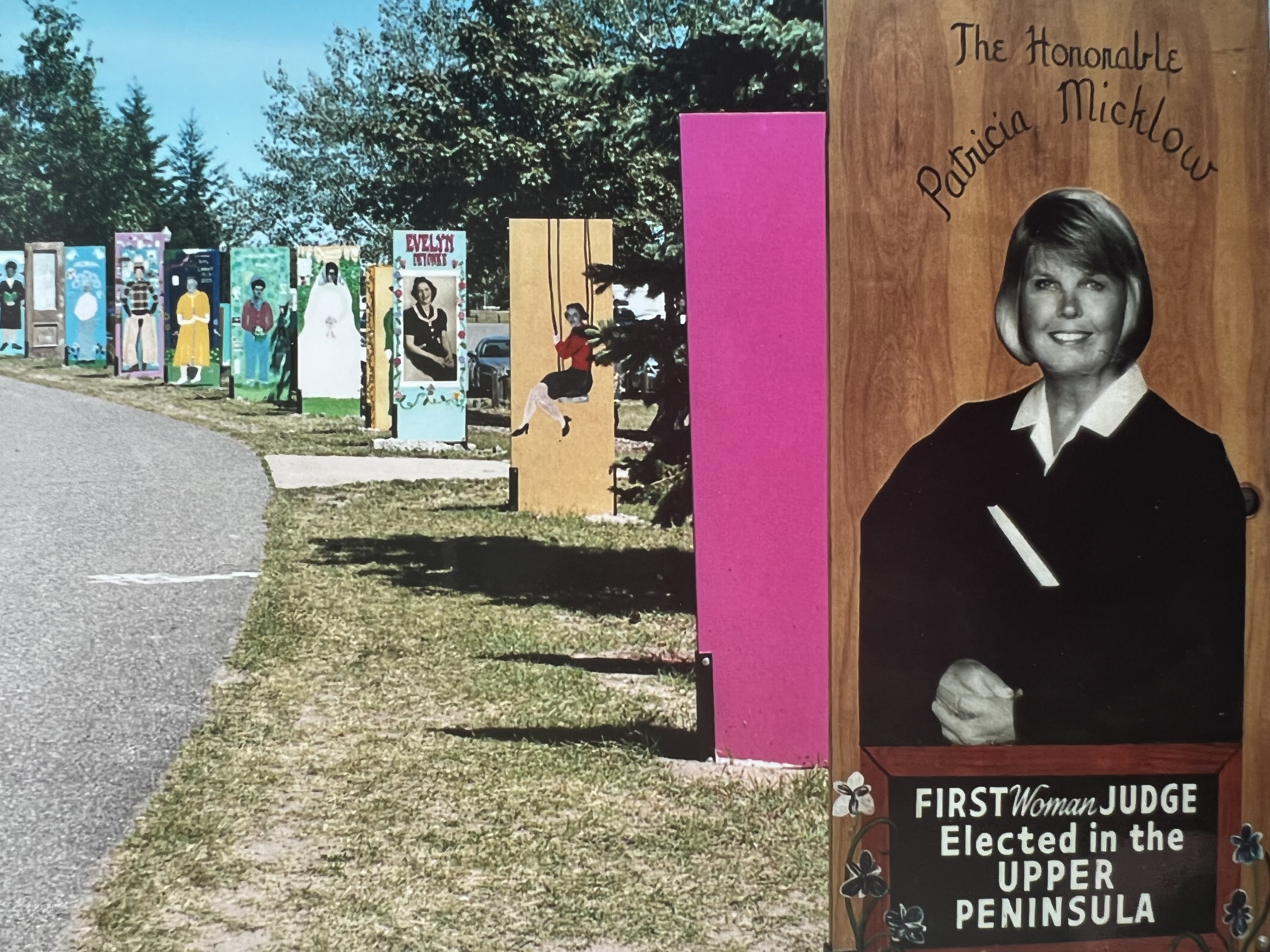
Well over three-thousand blue and white hand-painted chairs brightened NMU’s campus during FinnFestUSA 1996 and 2005. 50 colorful fish shanties appeared at the Lower Harbor parking lot during the World Winter Cities Conference held in Marquette in 1997. Residents painted 400 book covers to represent their city block and raise money for their library. The history of pioneer settlers and families of today were recreated on one of the 500 Heritage Family Poles, set up to celebrate the Marquette Sesquicentennial in 1999. In 2007, 200 doors told the stories of grandmothers, past and current. Over the years, many thousands of people participated in these and other projects, and uncountable locals and tourists viewed them.
When Mary Wright dreamed up these community efforts, the sky was the limit.
No idea was too big or impossible to carry out. Her criteria for any of these undertakings were straightforward: The project had to involve fun, collaboration, and community spirit. Mary believed that every person has the capacity to be creative if provided the opportunity, and that working on joint art projects, reflecting the spirit of old-time barn-raising events, could create miracles.
This community aspect was essential. All participants, from elementary school child to grandmother to prisoner, were welcomed. The wilder the inspiration, the better! If you wanted to cover the wall of your fish shanty with left-over socks gathered at laundromats, or hang shoes of your relatives from your family tree, why not?
Mary Wright’s Doors Project
To make these complicated events happen required multiple skills. Mary had a knack for roping people in, persuading them to help paint a mural, create a prototype, drive logs from Munising to Marquette, give money, or procure materials. She networked with local and state art organizations, city government departments, labor unions, and corporations, found donors and sponsors, and worked with the news media. She made countless presentations in schools, clubs, and to any group. And she did it all without a computer or the Internet! Her persuasive powers and persistence were legendary. Mary Wright did not take “no” for an answer.
Mary Wright had a special gift for finding the perfect expression of a particular event:
Blue and White Chairs, Finland’s national colors, were the perfect symbol for FinnFestUSA, an annual international festival held each year in a different city. They gave people of Finnish heritage a chance to honor their families and to define what being Finnish meant to them. They were an expression of hospitality, an invitation to sit down to strike up a conversation, to recycle old furniture, to create an heirloom. All fifteen UP counties participated. Chairs were set up by their painters’ regions, so visitors could find the chairs, benches, stools, and rockers they had decorated. A calendar was later created to provide a lasting souvenir of the event.
Mary felt Fish Shanties symbolized the spunk, spirit, and sisu of UP winter culture. Some grandparents used them to create playhouses for their grandkids. Book Covers were a natural for a library fundraiser. The project was organized around city blocks. This created special pride for residents and helped distribute the covers widely. Family Poles were perfect to portray the 150-year history of Marquette. The many different stories of individual families and organizations told through these poles formed a kaleidoscope of the community’s past and present.
Mary Wright learned how to draw the attention of the news media. Her flamboyant way of dressing in bright exotic costumes, colorful hats, and artful jewelry made her stand out. She managed to get herself on the Today Show in New York, at which she presented a bench decorated with portraits of the show’s luminaries. In the days before drones, she had an aerial photo taken from a helicopter to help advertise her book project. Family poles rode in the Fourth of July Parade. Outdoor working sessions gave visibility to a given project. There were interviews, photographs, and editorials in the newspaper.
Mary’s unique style is featured in Yoopera, a film documenting the production of the Rockland opera and the creation of Mary’s Storyline project in which thousands of white panels strung on wires fluttered in the wind like layered prayer flags from their spots around the Rosza Center and more Michigan Tech campus areas. Primarily made by schoolchildren, each panel had a photo transfer of someone’s image and the story of that person’s life told in the first person.
Mary Wright’s activities were not restricted to Marquette and Houghton.
She organized over thirty-five community projects, including in places like Alpena, Ypsilanti, and Port Huron, and also worked internationally in Toronto and Finland. Her themes were often based on ordinary objects such as shovels, stepladders, pillow cases, spring flowers, or winter mittens. In 1999, she received Michigan’s Governor’s Award for Arts and Culture.
Participating in one of these community projects has had a lasting impact on many. Often it was the first time someone had created an art object. Mary Wright supporter Doug Hagley said about Family Poles, “Some families were reunited after years of separation. Dialogues were fostered… Children honored their parents and grandparents…. The community and its visitors experienced the healing and community-building power of art.” School children became interested in their family history and realized that you could be an artist at any age. Poet Sandy Bonsall’s experience painting blue and white chairs with her students prompted her to write My Mother’s Story Is My Story. I myself was inspired to create a family pole to explore the Finnish background of my husband, and Grandma Doors led me to research the life of my Bavarian grandmother whom I had never met.
We lost Mary in November 2021. To honor her and her work, the Beaumier Heritage Center at Northern Michigan University will feature her in an exhibit in the spring of 2023. If you are willing to loan Mary Wright project object for the exhibit, please contact Dan Truckey at (906) 227-3212 or email heritage@nmu.edu.
Austrian writer and visual artist Christine Saari has lived in Marquette since 1971. She has published memoir Love and War at Stag Farm (2011) and poetry book Blossoms in the Dark of Winter (2018). Find her visual work at The Gallery and Wintergreen Hills Gallery.
Excerpted from the Fall 2022 issue of Health & Happiness U.P. Magazine. Copyright 2022, Empowering Lightworks, LLC. All rights reserved.
If you were asked to write about health and happiness, what parts of your life would you think about? What parts of yourself would you focus on?
How would you rate your own health and happiness?
The most sacred part of my wellness is my mind and how much I am able to challenge it.
I was indoctrinated into a cult-like religion from birth. I didn’t have access or control of my mind and its beliefs. The religion chose my life for me–where I went, who my friends could be, what I could or couldn’t do with my body.
At forty-six, when a young niece shared with Family Protective Services that “Grandpa touched me,” I became aware that I had been sexually abused as a child by my father.
I also became aware that my body and its emotions and feelings always lived in the truth. My body shook and my steadfastness to stand by my niece and believe her was unshakeable.
My body and its unexpressed emotions, and the way it never lied showed me the fragility of my mind and its false nature.
It became my priority to set my mind right. To bring it back to my body and reality. To use my mind and not let my mind use me.
The wellness of my mind and how it sits with reality is critical in my choice-making and ultimately how I live my life.
Without a mind set in reality, you cannot see life or who you are clearly.
I had lived with so many falsehoods and ill-conceived ideas both of myself and the outside world.
If on your stage of life, you don’t see the backdrop and the other characters in their true form, how will you know how to interact with them?
At forty-six years of age, I woke up in my life and realized I had seen the stage incorrectly and I was playing a part in a play in which I no longer wanted to participate.
The character of who I was fit into the play, but it had no place in reality and with the truth inside of me.
It is ironic to see the darkest parts of your life, to feel the vast emptiness of losing so much and at the same time feel empowered, strong, brave, and deep levels of love.
As I attempted to right my world and to re-adjust the stage, to find the character of me, I brought in new levels of happiness, joy, love, and peace.
I was embracing my history of abuse and acting in the present with new information, and making new choices that honored me.
This did not serve the requirements of my family of origin. It did not serve the silence abuse needed in order to thrive.
I became a new me with a voice and a choice.
The new me brought in new hurdles in many relationships. The open and free relationships welcomed the new me, and we experienced new levels of deep love and connection.
The relationships that were conditional died.
I see this time in my life as one of my greatest achievements—leaving the cycle of abuse. I changed how I interacted with abuse and that changed the trajectory of my lineage.
My breaking the silence and responding differently than my mother is the most difficult thing I have done, yet became one of the most healthy periods of my life.
I broke out of the family dynamic that supported abuse for generations.
The happiness that has slowly seeped back into my life is pure.
It has no hidden agenda or the false realities such an agenda was based on. Nor is it dependent upon the behaviors of others. My happiness is based on me—how I see myself and my worth, and how I love myself.
The levels of happiness I have found as I walked through decades of denial and recovered my innocence is life-changing.
What I know to be sure is that health and happiness live with truth. They grow and thrive in its presence.
My ability to be myself and to know myself and to love myself all stemmed from my ability to live with dark truths.
As Gloria Steinem once said, “The truth will set you free; but first it will piss you off.”
Even my anger and rage and overwhelming sorrow—after expressed—left me in peace. I made sense. The world made sense. The truth is so much easier to live with than trying to prop up a false relationship with both myself and others.
I loved me, the broken, twisted me that stumbled out of denial. I loved her courage and the bravery she showed to admit she didn’t know who she was.
I woke up at forty-six a stranger to myself.
The new me was a stranger in my relationships.
So began the second half of my life living life as Me.
Discovering and choosing what made me happy, what felt like love, where peace lived, and what I felt was true for me became my way of life.
I love this healthier me, one that is filled with so much happiness and knows deep love, even if she is completely estranged from her family.
I want others to know it is possible to live a good life after abuse.
To be happy.
To know joy.
To feel deep love of self.
What I know to be true is that we love as deeply as we love ourselves.
Abuse isn’t who you are. It is what was done to you. A healthy response is one that honors and respects you.
At sixty-three, I feel very grateful for my mental wellness and the sheer amounts of happiness I experience. Perhaps it’s because of all the years I lived codependent on others to make me happy that I am now so appreciative of my ability to find happiness alone.
Just being at peace with who I am and the choices I have made, and who that makes me as a person, brings me great happiness.
There are moments in our lives when we have the opportunity to become more ourselves or to find a deeper level of awareness. These are moments that will define your life either negatively or positively, with more growing or shrinking.
To me, health has always had an evolutionary spin to it—a feeling of growing and changing. Life is not static.
I feel happiness comes when you are free in the spaces you live and the relationships you have. The freer you become, the more happiness you gain.
Married thirty-five years, mother of four, grandmother of three, retired mail lady, and fiber artist Beth Jukuri‘s art has become her therapy, her therapy her art. She co-founded WIND (Women in New Directions) to explore oneself and grow more empowered through nature and art.
Excerpted from the Fall 2022 issue of Health & Happiness U.P. Magazine. Copyright 2022, Empowering Lightworks, LLC. All rights reserved.
We finally got our all-wheel-drive plug-in electric vehicle (PEV)—no gasoline engine and no more CO2 emissions. We’ve been driving it hard for a couple of months and tallied over 6,000 miles, including a few 400-mile trips from the U.P. to Chicago and to Detroit.
Based on my experience, you should order yours now because it takes 6 months to more than a year for delivery. As you hesitate to order, the prices keep increasing. They can now cost as much as a new crew cab fossil truck, but cheaper models are available.
Fossil gas drivers have “range anxiety” (fear of running out of battery) but PEVs today have plenty of range, some over 300 miles on one charge. We rarely drive more than 100 miles a day and we recharge at home. It’s like having a gas station in your garage. Charge overnight with an ordinary 240V garage outlet and wake each morning to a fully charged vehicle ready for another long day of driving. For apartment dwellers, there are programs for owners to add parking lot chargers or just fill up at your local public charger, then drive home, just like you do with a gas guzzler. Either way, PEVs drive cheaper.
We drive electric for about $.04 per mile.
Our gasoline car averages a respectable 28 MPG but still cost $.16 per mile. Our PEV gets 131 MPGe in the city and 117 MPGe on the highway. It’s 75% cheaper to drive, saving about $300 per month in gasoline expense. Plus, there is almost no maintenance–no oil changes, muffler, catalytic converter, or tune-ups. PEVs have few moving parts, there is much less to fail so there are fewer repairs. We do occasionally add a windshield washer.
People worry that the batteries will die in a couple of years but federal law mandates that batteries be warrantied for a minimum of eight years or 100,000 miles. Old PEV batteries don’t die, they just have about 5%-10% less range. Experts suggest today’s batteries will last 10-20 years–300,000 miles or more.
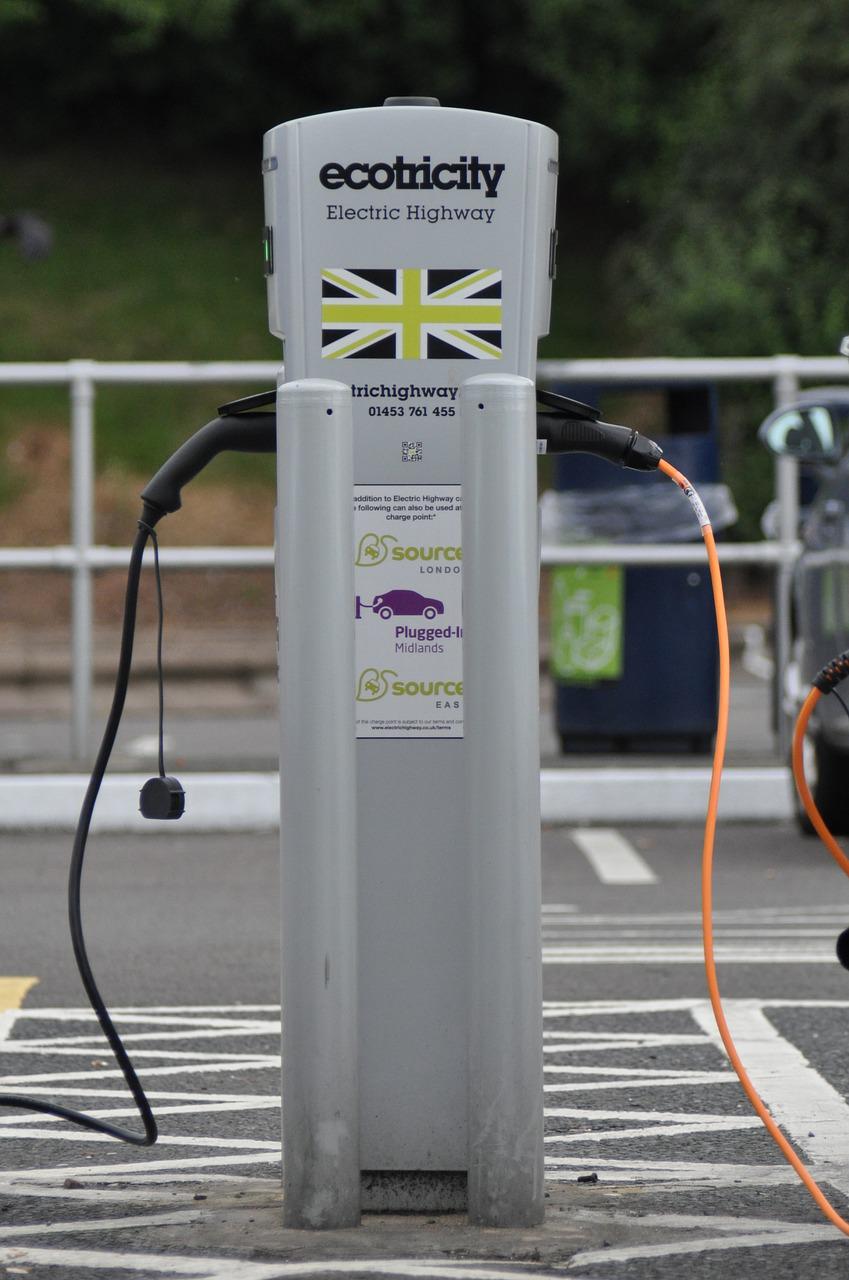
On our 400-mile trips, after about 250 miles we needed to recharge as expected, but plenty of rechargers are available. We never experienced “range anxiety.” It takes 20-40 minutes, depending on the recharger’s power, to recharge to about 80% capacity, enough to finish the trip. Rechargers are usually in the parking lots of major grocery chains or near snack areas, and more are being added nationwide. Recharging takes just enough time to stretch your legs, tap a kidney, visit the stores, enjoy a snack, or just lay back and relax for a bit. After hours of continuous driving on a long trip, the break is welcome and healthy. We recharge while the car recharges.
The experience of PEV driving is different—tons of power, electric everything. It’s like driving a computer with wheels except that PEVs often do much of the driving for you. With multiple cameras and sensors, PEVs are very good at adjusting your cruising speed to traffic, keeping the car centered in the lane, and avoiding hazards. It sees and senses more than you can and reacts faster, making PEVs some of the safest cars on the road. People express fears of battery fires, but records show that you are ten times more likely to have a gas-guzzler car fire than a battery-car fire.
Michigan charges a $100 electric registration fee and a $40 electric tax to compensate for road maintenance gasoline taxes that PEVs don’t pay. One month’s gas savings easily exceeds Michigan’s fees, so drive safer, save money, and stop emitting CO2. Order your PEV today.
Steve Waller’s family lives in a wind- and solar-powered home. He has been involved with conservation and energy issues since the 1970s and frequently teaches about energy. Steve can be reached at Steve@UPWallers.net.
Excerpted from the Fall 2022 issue of Health & Happiness U.P. Magazine. Copyright 2022, Empowering Lightworks, LLC. All rights reserved.




 Health & Happiness U.P. Magazine