Blog

Community Improvement: NOT for Women only – The Women’s Center’s Support for Children, by Katelyn Swanson

domestic violence prevention and support to survivors, Marquette and Alger CountyMI Women's Center, support services for children in Marquette MI, U.P. wellness publication

Have you ever needed a safe place to escape from someone who was trying to hurt you or your children?

Hopefully you can answer with a confident “no.” The sad reality, however, is that many in our community can’t. According to the National Intimate Partner and Sexual Violence Survey (NISVS), nearly 20 people per minute are physically abused by an intimate partner in the US. In one year, that is more than 10 million men and women affected by abuse. What’s even more upsetting is 90% of the time, children are eyewitnesses to this type of violence. Domestic, sexual, stalking and dating violence happen much more often than you might think. Those residing in Marquette and Alger counties are very fortunate to have the easily accessible Women’s Center to provide protection and resources if they find themselves in these terrifying predicaments.

The Women Center’s Harbor House is a safety shelter for adults and children fleeing from violence. It is also a place where staff and volunteers can help implement safety plans and assist in organizing personal protection orders, if necessary. The Harbor House offers counseling, support groups, and childcare. It also provides transportation for those attending counseling, seeking employment, or attending court hearings. The Women’s Center helps residents find employment and affordable housing. By uplifting and supporting mothers, it also gives hope to the children of broken families.

Sudden new living situations can be an exceptionally hard adjustment for youth. The Women’s Center focuses on providing an inviting setting to make the transition as comfortable as possible. Every year, the Marquette Breakfast Rotary supports the youth program by providing money supporting fun activities for the children such as play room furniture, art supplies, sporting equipment, and more. Even with an inviting space, those evading intimate violence usually need more material support. They typically arrive with only the clothes on their backs, and the children have had to leave their favorite blankets or stuffed animals behind. That’s where the PakRatz Resale shop comes in! PakRatz Resale is a space where clothing and home goods donations are accepted from the public, then distributed to those who find themselves in need before the remainder is made available for sale to the public, helping to sustain services. If you’re looking to donate, one of the shop’s biggest necessities right now is quality children’s clothing.

The Women’s Center provides a Sexual Assault Response Program which is an on-call emergency response program available 24/7.

This program provides counseling, support groups, and educational information to any woman or child who has survived sexual assault. The staff and volunteers will accompany survivors to the hospital and to interviews with the law enforcement officers on-scene. The Women’s Center’s staff and volunteers have been trained to provide exceptional care and support. This is a much-needed service for adults, but also especially beneficial for children. Sadly, current numbers indicate one in three girls and one in seven boys will be sexually assaulted by the time they reach eighteen (Department of Justice).

Just in the last fiscal year, the Women’s Center’s staff and volunteers helped nearly three thousand people escape domestic and/or sexual violence in the Marquette and Alger communities. The Center is so thorough it even has a program in place to help survivors keep their pets out of harm’s way–the Sasawin Project. Since 1973, the Women’s Center staff and volunteers have been committed to helping not only women affected by abuse, but also the children. According to the Journal of Family Psychology, more than 15 million children witness domestic violence each year in the United States. Such situations are hard enough on adults, and can be particularly detrimental to the impressionable minds and souls of children. The Women’s Center offers counseling for youth survivors to learn coping mechanisms and lay down a hopeful path to recovery. They also host Children’s Group, open to youth residents of Harbor House and children whose parents attend the Domestic Violence support group. In Children’s Group, participants can learn how to stay safe, develop problem-solving skills, and understand that what happened to them is not at all their fault.

The Women’s Center does everything in its power to create communal awareness of these unfortunate situations happening around us.

The Women’s Center hosts fundraisers and family friendly events, and makes special efforts such as decorating the local courthouse with purple pinwheels for domestic violence awareness. They’ve even had a free self-defense class for those ages twelve and older. In addition to hosting events, they help with necessities by providing items such as socks and warm boots, an absolute must-have here in the U.P.

Annually, the Women Center’s Harbor House provides over three thousand shelter nights to men, women, and children, with the average stay lasting between forty-five and ninety days. These stays run an average of over $1,000 per person. That doesn’t include the many other services provided which are all free of charge. Without community donations, these acts of compassion within our community wouldn’t be possible. Monetary (tax deductible) donations can be made online at wcmqt.weebly.com/donate or over the phone at (906)225-1346. The Women’s Center also accepts used cell phones, and donations can be made at PakRatz Resale. Your donations will go to those who desperately need them, and to help out a center that greatly improves our community!

Emergency hotline: 906-226-6611 or 1-800-455-6611

Sources:

Statistics


http://wcmqt.weebly.com/

Katelyn Swanson is a women’s health enthusiast and doula at Katelyn Swanson Birth and Family Services. She also creates social media content under the figure Really Rosemary and joins together a community of women by sharing her vulnerable and honest mothering of three young children.

Reprinted with permission from the Winter 2019-2020 issue of Health & Happiness U.P. Magazine. All rights reserved.

Positive Parenting: Simplify This Holiday Season, by Angela Johnson

holistic U.P., U.P. well-being publication, simplify holildays

The holidays are meant to be a time of peace, connection, and celebration. However, in our consumer-driven culture, the holidays seem to be more about guilt-driven gift giving than the deeper meaning of the season. There are many reasons to want to share more meaning than money this holiday season. You may want to simplify the holidays for less stress, environmental concerns of unnecessary consumption and waste, or maybe you can’t afford to spend that much this year. When I was looking for some resources to support this article, I came across a lovely quote that inspires my reasons for wanting to simplify the holidays:

If you want your children to turn out well, spend twice as much time with them, and half as much money. – Abigail Van Buren

I have two teenage daughters, and for me this quote rings true. Over the years, it is the quality time that I have shared with them, not the gifts I have given, that forms our strong bond, cherished memories, and the base of their overall well-being. This quote is a good reminder of that truth and it makes me want to do even better for them. Yes, do better for them by giving them less. I even like the mathematical formula for this and may try it out this year. “Twice as much time, and half as much money.” This might be a good place to start.

Okay, so maybe you’re sold as I am, but now what? How do we fill the void of piles of presents under the Christmas tree? We still want Christmas to be special, and depending on the age of your children, Santa may still be visiting. So how exactly does this whole simplifying the holidays thing work? According to the “Simplify the Holidays” booklet by The New American Dream (www.newdream.org), the best place to start is with some personal reflection:

“Before deciding how to simplify, take a moment to reflect on what kind of holiday celebration you want. Are you looking for more activities to enjoy with your children? A celebration focused more deeply on nature? New charitable or community-based traditions? A clearer confirmation of your spiritual beliefs? Or are you trying to reduce stress and get a little extra time to sleep? Once you have decided what you want to do differently, it’s easier to decide how to act.”

Once you’ve done a little contemplation, I suggest checking out “The More Fun, Less Stuff Catalog,” also created by the Center for the New American Dream (https://newdream.org/downloads/New_Dream_More_Fun_Less_Stuff_Catalog.pdf).

My favorite idea from the catalog is a coupon book.

In the catalog, you can download a free, easy-to-use coupon template which you can customize. I have done this for my husband in the past, and he loved it. (He keeps all his coupons in the drawer next to his side of the bed with all his special keepsakes.)

The catalog has great ideas for all the people in your life—from children to other family members, and friends. Whether it’s art lessons, concert tickets, donations to a charity, or handmade gifts, there are tons of wonderful ideas. Some people, especially those with children, may still want to purchase a few store-bought items.

What I usually do with my children is use the holiday gift-giving time to buy them one or two things they need and also some things we can share as a family. Things they might need include socks, or a pair of jeans without holes in them (when they were younger the holes were from playing and now as teenagers, they are because they bought them ripped!). Either way, this mom prefers the no-holes version. Another idea, if you still want to purchase something simple to put under the tree, consider family-fun items such as a good board game or outdoor play gear (sled, fishing pole, etc.). Right now, my daughters and I are totally hooked on Scrabble. Back in the day, it was Memory and Sorry! If games aren’t your family’s thing, think of what is, and take this holiday season to invest in quality time doing that.

When thinking about buying less this holiday season, a good place to focus instead is on quality family traditions.

This might be something classic such as making Christmas cookies together or watching or reading a favorite holiday story. Children (and adults) love family traditions, and if you want to focus less on gift giving, creating a new holiday family tradition is a great place to start. It could be a simple as a walk through the woods, but oh, how fun it could be to traipse through the snow as a family under the stars on Christmas Eve! Maybe that’s just me, but whatever you choose, tailor it to your unique and wonderful family, and have fun!

Simplifying will mean different things to different people. No matter what you decide to cut back on materialistically speaking, I wish you and your family a holiday filled with “less is more” meaning, so here’s wishing you less stuff, and more quality peace, meaningful connection and celebration this holiday season.

Angela Johnson, Great Start Collaborative (GSC) Director for Marquette and Alger Counties, works at Marquette-Alger Regional Educational Service Agency (MARESA). The Great Start Collaborative (https://www.maresa.org/early-on/marquette-alger-great-start-collaborative/) works in communities throughout the state to ensure Michigan is making progress towards four priority early childhood outcomes.

Reprinted with permission from the Winter 2019-2020 issue of Health & Happiness U.P. Magazine. All rights reserved.

Healthy Cooking: Whole Grain Bread Stuffing for the Holidays, by Val Wilson

healthy cooking, whole grain stuffing, U.P. wellness publication

When I was young, my family would spend most Thanksgivings at my grandparents’ farm in Carney, MI. When we were all there for the holiday, the little farm house would be packed with eight adults and seven kids. Their farm was a secluded place on 900 acres of forest land. As a kid, it seemed like a magical place. My fondest memories are of us all sitting down to a big family dinner. My grandmother, mother, and aunt would be busy all day cooking and getting ready for our dinner. It did not reflect the vegan, organic, whole-foods lifestyle I now live, but the food was made with love, and all from scratch.

One of my favorite Thanksgiving dishes was stuffing. I have created my healthier version, also made from scratch, and cooked with love. This recipe, along with many of my best holiday recipes, can be found in my new cookbook, Year Round Healthy Holiday Dishes, along with stories of my childhood memories spending holidays at my grandparents’ U.P. farm, and the foods I remember as a kid, now made with a healthier twist.

Sprouted grain bread is a heavier, nutrient-rich choice for your stuffing.

It has higher protein content, and the sprouted grain is high in fiber, and digests slower than flour. Some people with blood sugar issues find the slower process of digesting sprouted grains stabilizes their blood sugar levels. If you have digestive issues, sprouted grains may not cause the bloating that can occur from bread made with flour. If you follow a gluten-free diet, you can substitute your favorite gluten-free bread. The addition of the short grain brown rice adds a creamy texture and all its strong antioxidant health benefits.

Shiitake mushrooms add a tremendous amount of flavor to the stuffing. Cooking the dried mushrooms with the brown rice is the key to this stuffing being so delicious. When you cook shiitake mushrooms with brown rice, you create a powerful cancer-fighting combo. Polysaccharides compounds found in the rice bran in brown rice, when eaten with the enzymes in shiitake mushrooms, have shown they can destroy cancer cells.

Whole Grain Bread Stuffing 

8 dried shiitake mushrooms
1 cup short grain brown rice
2 cups water
1 onion (diced)
3 celery stalks (diced)
3 garlic cloves (minced)
2 tsp. sage
2 tsp. thyme
2 tsp. marjoram
4 T. tamari
1 T. toasted sesame oil
Approximately 3/4 loaf of sprouted whole grain bread

Soak the dried shiitake mushrooms for 15 minutes. Remove the mushrooms and cut in thin slices, removing and discarding the stems. Use 2 cups of the soaking water to cook the brown rice, adding the sliced shiitake and brown rice, then bring to a boil for 2 minutes. Reduce to the lowest possible temperature, cover, and simmer for one hour. Meanwhile, sauté the onions in a little toasted sesame oil with a dash of tamari until translucent. Remove from pan and put in a large mixing bowl. Using the same sauté pan, sauté the celery and garlic for a couple of minutes and add them to the mixing bowl. Put some water in a shallow bowl. Soak the bread slices in the water for a minute, break them up with your hands, and add to the mixing bowl. When brown rice is done, add to the bowl. Add the sage, thyme, marjoram, tamari, and 1 T. toasted sesame oil, and mix all together. Put in a casserole dish, bake at 350 degrees for 20 minutes, and serve warm.

Article adapted from Year Round Healthy Holiday Cooking, copyright 2019, Valerie Wilson.

Chef Valerie Wilson, a.k.a, Macro Val, has been teaching cooking classes since 1997. Visit her website to purchase her new cookbook, Year Round Healthy Holiday Cooking, set up a phone consultation, or listen to her radio show, http://www.macrval.com. Facebook, Macro Val Food.

Reprinted with permission from the Winter 2019-2020 issue of Health & Happiness U.P. Magazine. All rights reserved.

Working with Medicine Wheels: West (Part 2 of 4), by Jude Catallo & Scott Emerson

medicine wheel, native teachings, U.P. holistic wellness, U.P. wellness publication, U.P. wellness publication, U.P. holistic health publication, U.P. health magazine, U.P. holistic health magazine, U.P. wellness magazine, holistic health in the U.P., holistic health in MI's Upper Peninsula, wellness publication in MI's Upper Peninsula

Know this. Wherever you place your personal intention, into fear and contraction, or into expansion and light, you will give it power.

The use of the Medicine Wheel and its four compass points in the spiritual and healing practice of the indigenous peoples of the western hemisphere of Earth stretches back a least 5000 years, likely much longer. This is actually the traditional and original “Western medicine”—a knowledge and practice almost lost to those of us living today. Although some of the details of different tribes’ medicine wheels, such as the animal archetypes for each direction, differ from North to Central to South America, the major concepts appear similar.

Each direction is associated with one of the four energetic bodies that make up the human energy field:

the particle or physical world (the body), the realm of emotions and thoughts (the mind), the realm of myth (the soul), and the world of spirit (energy). In North America, the Lakota Sioux also associate each direction with the time of day, the time of year, and the time of life. For many thousands of years, the shamans of the Americas have used each direction of the Medicine Wheel as an interdependent doorway to unique perceptual levels, or “ways of being,” in order to recover an individual’s true essence, personal power, energy, and inner wisdom for healing. The Laika people, isolated in the Peruvian Andes Mountains, seem to have a well-preserved and undistorted record of the use and meaning of their Medicine Wheel. Thus, their version is used in our personal energy medicine and integrative medicine practice.

The realm of emotions and thoughts (the mind) is associated with the WEST direction. Within the Americas, West is predominantly represented by the JAGUAR archetype. In North America, the Lakota Sioux word for the west direction is Wiyopeyata, and is associated with evening, autumn, and adulthood. Red is the Lakota color for the South, and black is the color of the West.

The word “jaguar” comes from the Native American word “yaguar” which means “he who kills with one leap.” For the indigenous peoples of the southwestern United States, Mexico, and South America, Jaguar represents the healing power of fearlessness. The perceptual state here is that nothing is exactly as it appears to be. This archetype journeys and can track through the darkest domains beyond death and back, revealing that death is part of life, not to be feared, and not the end of our being. Jaguar medicine can also provide sudden leaps of clarity, especially when dealing with complex situations and confusing landscapes in our lives. Jaguar’s presence gives us the confidence to step out and boldly explore, with the certainty that life provides us with everything we need.

The Four Teachings of the West provide a portal to the way of the luminous warrior “who has no enemies in this world or the next.”

They are: Fearlessness, Non-Doing, Certainty, and Non-Engagement. Because anger and violence are rooted in fear, letting go of fear allows us to approach people and situations as a luminous warrior, projecting our light instead of our shadow. Discover the power of just observing the way the universe and events are flowing. Don’t jump to fix everything, but in communion with Spirit, allow time and the world to create some of its own resolution. Be efficient with your energy. If you do decide to act, use your luminous sword with ethical and impeccable action. Allow yourself no other option but success. Don’t allow yourself to get dragged down into the drama of rescuer, perpetrator, or victim roles.

Each direction also offers a unique perspective on any aspect of your life that you feel you are ready to change in order to affect personal healing—the South, things with which you strongly identify, the West—things from which you are mentally differentiating yourself, the North—things you are newly integrating into your life, and East—transcendence and full integration into your luminous energy body. Movement around the directions and perspectives of your Medicine Wheels over time possesses great power for spiritual growth. To have the most power, they should be done by you privately, electronic gadget-free, in a special natural setting, and accepting the Earth’s wildcard role in the process. The days of a new or a full moon, or solstices and equinoxes are preferred. It is most important that your ceremony be held within a sacred space.

You can create sacred space as a healing bubble around your chosen Medicine Wheel site by “calling” to the four direction master archetypes (S-Serpent, W–Jaguar, N–Hummingbird, E–Eagle, as well as down—Mother Earth, and up—Father Sky). With humility and gratitude, ask for their power and assistance in your personal healing work. We have found soft rattling or drumming and offering tobacco gifts to the “spirits of the site” greatly facilitate this “calling.” Use a compass if you’re not certain of the directions. The creative and intimate process of constructing your Medicine Wheel in a natural setting, using natural items that come to you at your chosen site, quiets the mind and creates a highly meditative state. In sacred space there is no time, and you can trust your instincts and synchronicity.

Healing work with the Medicine Wheel honoring the West and the Jaguar archetype begins with the creation of a mandala

in the sand, snow, or grass, preferably with a westward vista. Reflect on your last Medicine Wheel honoring the South. How successful have you been with letting go of the conscious attachment to your roles you threw into the fire last time? Are you ready to let go of these further and relinquish not just the mental and emotional attachment, but also the feelings they may exert at a deeper level, masking the true essence of your soul? If so, find a stick for each of these roles, and place these into the North quadrant of the Medicine Wheel. If not, leave them in the West quadrant for a further time and a future fire ceremony.

What about the teachings of the South you may have placed in the West? Are you ready to move any of these from the level of mere mental acknowledgment to actually incorporating them into the way you act within life’s laboratory, and place them into the North quadrant of your Medicine Wheel? If not, leave the two objects from your last Medicine Wheel in the West quadrant for further work.

Lastly, are you ready to mentally and emotionally acknowledge any of the teachings of the West?

If so, find one or more objects to place in the West of your mandala. If not, leave that for a future Medicine Wheel. Leave and return the following day. Powerfully blow the distortion your roles may be causing to your soul’s true essence into the chosen role sticks in the West, but retain the lessons the role has taught you. Put them into the North space of the mandala. Place any of the new “West teachings” objects into the West space as you also move these “teachings” firmly into your awareness. Move any of the South teachings from last time into the North if you are ready to fully incorporate them into your new life. Savor, in timelessness, how this all feels.

If you can’t honestly do this, and no further movement seems possible at this time, just leave things as they were with the last Medicine Wheel ceremony, and continue to work on those roles and teachings. Keep it comfortable and simple. Leave and return the next day. Feel if any further movement is possible (roles, teachings). Collect your role sticks and “teachings” objects. Destroy your Medicine Wheel. Leave no trace! Close sacred space by thanking and releasing the four archetypes as well as Mother Earth and Father Sky. Within the next two weeks, build a fire safely somewhere, open sacred space, and in a fire ceremony, throw your role sticks and their perspectives into the fire as you stomp your foot, intending for a mental or a soul’s attachment to them to be destroyed. Retain the objects representing “teachings” as daily reminders, and to be used in the next Medicine Wheel. Now take the time to see how these mental, emotional, and soul-liberating changes begin to work in your life until your next Medicine Wheel ceremony, honoring the North direction.

*Sources for information referenced here are available from the authors upon request.

Jude Catallo and Scott Emerson, MD of timelesshealing.org are both graduates of The Four Winds Society: Shamanic Energy Medicine Intensive Apprenticeship 2017 – ongoing;   members of the Oklaweva Native American Church 2016 – ongoing; & Andean Cosmic Vision Apprenticeship, Don Theo Paredes 2003 – ongoing.


Reprinted with permission from the Fall 2019 issue of Health & Happiness U.P. Magazine, copyright 2019. All rights reserved.

Inner Nutrition: Your Recipe for Juicy Living Roslyn Elena McGrath

authentic living, self-expression,U.P. wellness publication, U.P. holistic health publication, U.P. health magazine, U.P. holistic health magazine, U.P. wellness magazine, holistic health in the U.P., holistic health in MI's Upper Peninsula, wellness publication in MI's Upper Peninsula

Does the crisp air and brilliant hues of autumn sharpen your senses and bring out your zest for new ventures?

Or do you feel you’re returning to a more hum-drum existence after all the warmth and activity jam-packed into a U.P. summer?

The back-to-school season can bring new opportunities to feel more engaged in your life and excited by new possibilities. Those times when you are tired, bored, or frustrated may stem from unconsciously avoiding your true priorities, allowing distractions to shift your focus away from them.

Fear is a part of our human experience and gives us the opportunity to move through, and potentially transform, our experience of this emotion. Fear is ultimately at the root of what generates distractions from fully and authentically expressing ourselves. When you allow yourself to surrender to your inner being’s true priorities, in tandem with support from your outer being/personality, “juicy living” begins. Each person’s recipe for this is as unique as their individual nature, but certain ingredients remain consistent.

Authenticity

Your being, particularly your body, continuously signals whether you are being true to your unique nature in thought, word, and deed. Joy, peace, enthusiasm, and lightness are a few examples of your “yes” signals; anger, frustration repression sorrow, and dis-ease of your “no.”

This is not meant to indicate that your “yes” signals are how you “should” feel, and your “no” signals how you should “not.” All emotions provide valuable experiences. They can help clarify your true priorities, and also realize when you may need to take a different approach.

Courage

It takes courage to authentically express yourself in a world filled with challenges, not knowing for sure if or when you’ll receive the benefits you desire, or if those around you will accept you and your choices. Courage allows you to step through your fears to discover your own wholeness and claim your place in the world. What requires courage for one person may be completely different for another, but it is a hero’s journey for all.

Commitment

Your deep “yes” is fundamental to receiving meaningful benefit from your choices, for you really do reap what you sow. Hesitant and partial commitment tends to bring a mixed bag of consequences. Full commitment opens you to receive its benefits, as well as to respond constructively to challenges encountered, helping you to maintain the long view.

Self-Expression

Acting upon your heartfelt desires is required to live your fullness. Not doing so means the energy you naturally have for this becomes stagnant, eventually culminating in dis-ease-mentally, emotionally, physically, and/or spiritually. When you move this energy out into the world, the world is then better able to support you in response. That is not to say you won’t have challenges, for the challenges are part of the juiciness as well.

Flexibility

As challenges present themselves to you, it’s vital to remain flexible, keeping the essence of your desires as your focus, for your rewards may reveal themselves in a variety of unexpected forms. Remind yourself that you are indeed a growing and changing being, and as such, the forms of your authentic expression and commitment may metamorphose, keeping your living juicy.

In gathering your ingredients for a juicier life, remember also to call upon all the forms of trustworthy support available to you mentally, physically, emotionally, and spiritually, and be open to discovering additional ones too. The Universe is vast, so its possibilities and your own potential are also.

Here’s to your uniquely juicy living, adding to the richness of what life has to offer us!

Adapted with permission from Messages for Personal Growth with Roslyn Elena McGrath, Spring 2005 issue of Inspired Times: Sharing Discoveries along the Path of Total Well-Being.

Roslyn Elena McGrath of Empowering Lightworks LLC offers real world options for helping you create a more uplifting life experience through her personal growth and inspirational books, workshops, private sessions, meditations, recordings, card sets, YOOPtopia in Action, and this magazine. Visit http://www.EmpoweringLightworks.com for more info.

Reprinted with permission from the Fall 2019 issue of Health & Happiness U.P. Magazine, copyright 2019. All rights reserved.

Healthy Cooking: Pumpkin Power, by Val Wilson

healthy cooking, U.P. wellness publication, U.P. holistic health publication, U.P. health magazine, U.P. holistic health magazine, U.P. wellness magazine, holistic health in the U.P., holistic health in MI's Upper Peninsula, wellness publication in MI's Upper Peninsula, health benefits of pumpkin, vegan pumpkin recipe

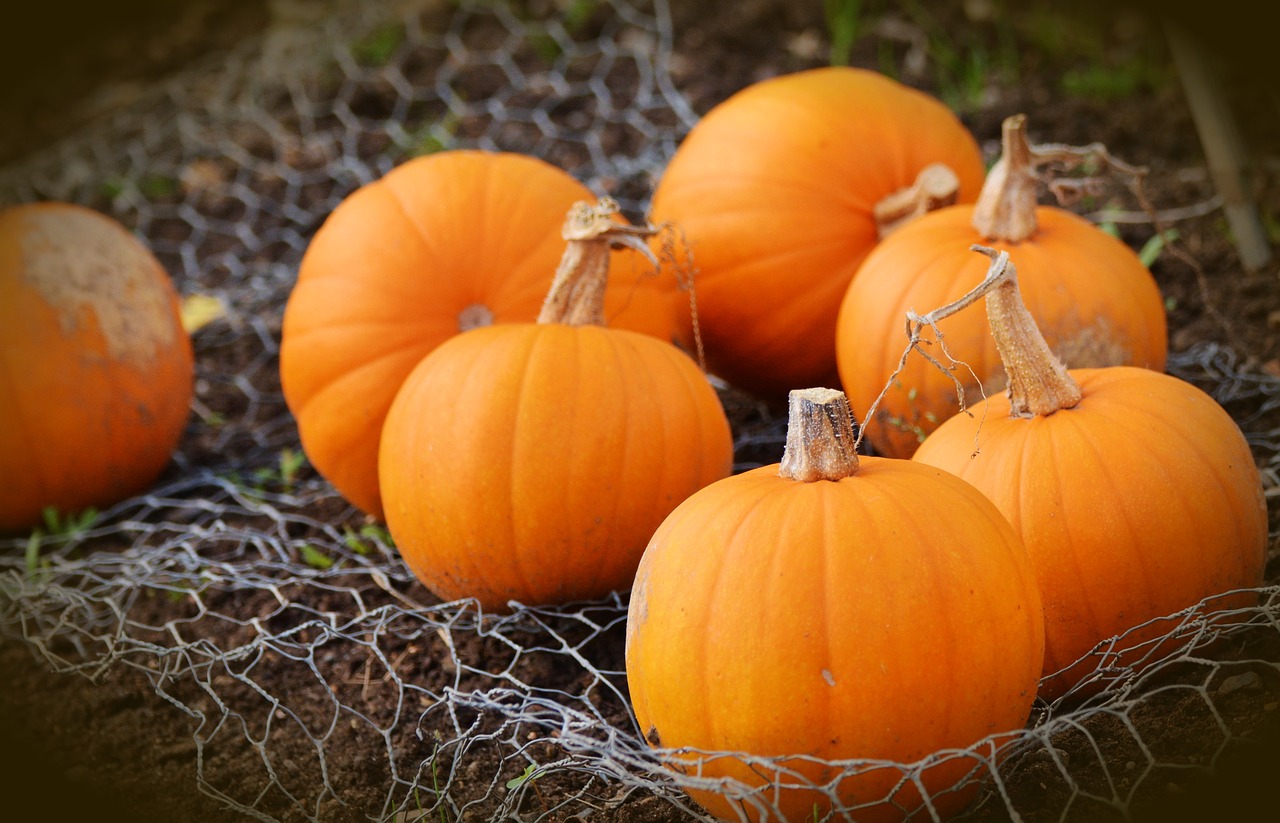
Before you know it, there will pumpkins everywhere!

This signals it is Halloween time. The temperature will start to cool down, all the colorful leaves will fall from the trees, and many of us will take part in an ancient celebration of our ancestors. Halloween’s origins date back to the ancient Celtic festival of Samhain (pronounced sow-in). The Celts, who lived 2,000 years ago in the area that is now Ireland, the United Kingdom and northern France, celebrated their new year on November 1st. At the end of summer, the Celts thought the barrier between our world and the world of ghosts and spirits became thin. As part of the celebration, people lit bonfires and wore costumes to ward off ghosts. To outsmart these ghostly beings, people would put on masks when they left their homes after dark so the ghosts would think they were fellow spirits.

Every year around October, people start asking for pumpkin-flavored desserts.

Pumpkin is very versatile. I have used it in many sweet dessert recipes, and created many savory pumpkin dishes too. It is in the winter squash family of vegetables. Pumpkin is high in fiber, making it a great food for heart health. It’s also high in beta-carotene, a carotenoid that turns into Vitamin A in your body, which can help your body fight off infections and strengthen your immunity. Pumpkin also contains lutein and zeaxanthin, compounds that help protect your eyes from macular degeneration and cataracts. This incredibly healthy vegetable also contains potassium, manganese, iron, phosphorus, zinc, magnesium, vitamin C, E, and several forms of B.

Pumpkin used in baked goods, such as cookies or muffins, gives an incredibly moist texture and tremendous flavor. If you use fresh pumpkin instead of canned pureed pumpkin, look for the small pie pumpkin. It’s smaller, sweeter, and has better overall flavor than the others. Leave the large pumpkins for decorative carving. Simply cut the small pie pumpkin in half, lay flat side down on an oiled cookie sheet, and bake at 350 degrees for 45 minutes until fork tender. Let cool, then scoop out the flesh, and puree for a smooth texture.

Pumpkin Spice Oatmeal Cookies

½ cup dried apricots
1 cup pumpkin puree
¼ cup olive oil
¾ cup brown rice syrup
2 tsp. cinnamon
¼ tsp. each: ginger, allspice, cloves
Pinch sea salt
1 ½ cups rolled oats
2 cups oat flour
Raisins

Put the apricots, pumpkin puree, olive oil, brown rice syrup, spices, and sea salt in a food processor. Puree to chop the apricots into small pieces. Put the rolled oats and oat flour in a mixing bowl. Add the pureed mixture and mix all together. Spoon the dough onto an oiled cookie sheet. Press the cookie dough down with a fork. Decorate the cookies with raisins to create faces on the cookies. Bake at 350 degrees for 15 minutes. Let cool before eating.

Adapted from Year Round Healthy Holiday Cooking, copyright 2019, Valerie Wilson.

Chef Valerie Wilson, a.k.a, Macro Val, has been teaching cooking classes since 1997. Visit her website to purchase her new cookbook, Year Round Healthy Holiday Cooking, set up a phone consultation, or listen to her radio show, http://www.macrval.com. Facebook, Macro Val Food.

Reprinted with permission from the Fall 2019 issue of Health & Happiness U.P. Magazine, copyright 2019. All rights reserved.

Holistic Animal Care: Easy Training Ideas for Your Dog, by Jenny Magli

dog training tips, U.P. wellness publication, U.P. holistic health publication, U.P. health magazine, U.P. holistic health magazine, U.P. wellness magazine, holistic health in the U.P., holistic health in MI's Upper Peninsula, wellness publication in MI's Upper Peninsula, holistic animal care

For many pet parents and families, coming home to a bouncing and happy bundle of fur can’t be beat!

All the kisses and playful antics that come with such warm greetings can really help us forget any troubles we may have encountered earlier in the day. These furry friends have waited all day for their “pack” to come back together, and they are filled with total joy at our arrival. This is the time to interact with them in one way or another (besides taking them out). This could include talking to them, playing, cuddling, sitting with them, walking, or whatever it takes to show our love. Pets crave our positive attention, and look forward to whatever time and affection we can give them.

Sometimes when the weather begins to cool off, it becomes more “comfortable” to be inside. There are some easy activities you can do with your pet to ward off boredom, stimulate the mind, and enjoy each other’s company. Examples of this might include teaching some tricks or basic commands, which can be useful training as well. There are many resources available for training tips and tricks in books and on the internet. Have fun investigating! Here are a few examples to get you started:

Kiss – If you enjoy wet doggy kisses, this is an easy trick to teach. All it takes is applying a small amount of a sticky treat to your cheek. Natural peanut butter (no sugar free or artificial sweeteners in this!) or a little glob of cream cheese should work well. Then add the command/cue of “kiss.” (Of course, if you have a biting puppy or an aggressive/unmanageable dog, it’s likely best to skip this lesson!) Once the trick is done, be sure to reward with praise as well. Kids will likely get a real charge out of this too! Once taught, this trick can also help prevent unwanted licking.

Sit – This is a basic command that is also easy to teach. Repetition and patience are necessary. Grab a handful of treats, and while in a quiet room with no distractions, watch and wait for your dog to sit. When your dog does, reward him or her generously with a treat. Then wait again for another “sit.” Say “sit” right away, and reward with more treats and pets. Repeat this several times. Eventually your dog will figure out it’s worth “sitting” to get a treat!

Come – This trick/command could save your dog’s life! This is pretty easy. Just go up to your dog and give the command you will use to call him or her (for example, “Here, Peaches” or “Fido come”) and give the dog a treat (bacon, chicken, dried liver, etc.). Each time your dog comes to you, give a pet and place a few fingers under his or her collar before you give a treat. This last is to get the dog accustomed to being held).

It’s important to vary the types of rewards during the training process.

Repeat this trick/command at different times throughout the day and in different situations, such as when the dog is interested in something else. Try this when you’re in different rooms as well. Eventually your dog should be willing to honor the command without hesitation!

I hope this article has shown you that with a little searching, there are many ways to learn to entertain both you and your pets when colder weather makes outdoor activities a little more challenging. Regardless, enjoy and have fun with your furry friend!

*Readers are reminded it is entirely of their own accord, right, and responsibility to make informed and educated decisions/choices regarding interaction with your pet. Jenny Magli and Health & Happiness U.P. Magazine disclaim any liability for the decisions you make based on the ideas provided here.

Jenny is a Certified Natural Health Consultant for pets and their people, Healing Touch for Animals (Level 2) and NES Bioenergetics Practitioner. Consultations are done over the phone and via email. To contact, call (906) 235-3524 or email at 1healthlink@gmail.com.

Reprinted with permission from the Fall 2019 issue of Health & Happiness U.P. Magazine, copyright 2019. All rights reserved

Creative Inspiration: Music to Our Ears & Lives, by Kevin McGrath

creative inspiration, benefits of music, U.P. wellness publication, U.P. holistic health publication, U.P. health magazine, U.P. holistic health magazine, U.P. wellness magazine, holistic health in the U.P., holistic health in MI's Upper Peninsula, wellness publication in MI's Upper Peninsula

Whether you’re listening to the wind dance through the leaves or the song of a robin while sitting under a tree,

or perhaps the rhythmic caw of a resident crow, music is and has always been around for those willing and able to allow themselves to appreciate it. Even the thunderous beat of the big lake during an autumn storm creates a percussive melody for those paying attention.

Taking a walk along the shoreline near Picnic Rocks in Marquette, especially during the morning hours, brings a symphony of chatter among the gulls, creating wonderful music for all to hear within a sonic breeze.

Nature and humanity’s music is available to us in all volumes, tempos, and genres. For me, it’s my fuel. It energizes me, motivates me, relaxes me, gets me in the zone, takes me to another place and time.

Most every trip I take, I look into all nearby concert venues to see if a band or musician is performing. More times than not, I’m able to include a concert in my plans. I’ve attended hundreds over the years, and they always make my trips worthwhile.

I also partake of the U.P.’s ever-growing musical offerings at local venues and festivals throughout the year, and have enjoyed many amazingly talented well-known and lesser known soloists and groups within a five-minute to two-hour reach.

I have learned to enjoy the music while dancing, but simply sitting back and absorbing it never disappoints me. They are two totally different experiences for me, and both of the charts in their own ways.

Music brings flavor and richness to my creative pulses, and keeps me moving forward with a project.

Though I prefer live over recorded, I still enjoy the secondhand option immensely. It can take me through a whole series of emotions. And with YouTube, I can put together a repertoire to my liking, knowing which pieces play on certain emotions.

I wonder about those who don’t care for music. Are they truly happy missing out on one of life’s greatest pleasures? I read recently that music uses your entire brain and is extremely healthy for you. There’s plenty of research available showing the healthy benefits music may offer each of us, such as possibly promoting heart health, elevating your mood, helping to reduce stress and relieve symptoms of depression, stimulating recall, increasing workout endurance, and more. But to me, regardless of what any leading health authorities have to say, the most important thing is to feel the benefits for yourself by opening up and giving yourself permission to go wherever the music is going to take you by listening to it at a strong, yet safe volume.

Music isn’t given enough credit in the creative process,

even though most creative people I know listen to it without hesitation when working on a project. I end this tribute to music by referring you to the chorus of an ABBA song entitled “Thank You for the Music.” May its lyrics ring through your heart and head, and inspire you to bring more music and appreciation for it into your life!

Kevin McGrath is a music lover and can be found at music festival, concerts, or other live music venues.

Reprinted with permission from the Fall 2019 issue of Health & Happiness U.P. Magazine, copyright 2019. All rights reserved.

Spotlight On… Rohana Yoga & Wellness with Owner Be Embley-Reynolds

U.P. yoga business, U.P. holistic health, yoga in Marquette MI, U.P. wellness publication, U.P. holistic health publication, U.P. health magazine, U.P. holistic health magazine, U.P. wellness magazine, holistic health in the U.P., holistic health in MI's Upper Peninsula, wellness publication in MI's Upper Peninsula

What is Rohana Yoga & Wellness?

Rohana is a wellness center that incorporates traditional yoga, bodywork, acupuncture, ayurvedic healing, and other modalities. Through our offerings, you can achieve relief from pain, find improved physical functioning, a balanced mind, and a heightened sense of body awareness, vitality, and well-being.

We have a wide variety of highly trained teachers sharing a traditional approach. Our restorative healing classes are very accessible to people of all levels of ability and experience. Some of our yoga teachers offer private sessions. We also have practitioners offering bodywork, massage, doTerra aromatherapy, AromaTouch massage, cranial sacral work, Reiki, reflexology, acupuncture, Chinese massage, and other types of Chinese bodywork. Ayurvedic healing services are also available.

People feel really comfortable in the space and with the teachers, no matter where they are in their practice. Our yoga studio focuses on yoga as a whole, so it’s not just the physical aspect. Meditation is also a big part of it. You just come as you are. People feel welcome and good, and it’s not intimidating.

When and how did Rohana start?

Rohana began in May, 2017 with the intention of creating a wellness center with pro-active, restorative and preventive practices to help people with their health issues, and to live well and help avoid health issues. We offered yoga and massage to start, and now have thirteen teachers and practitioners offering a full spectrum of yoga classes and wellness services.

What is your role in Rohana?

I facilitate the business end, and work with our teachers and practitioners to support them in providing the services we have.

I’m honored and humbled to work with the women who make Rohana what it is–the training they have and the energy and love they have that goes into their teaching and treatments is pretty incredible. I’m really grateful to be involved in something that helps people heal and address chronic issues in a more natural way, or find more peace in their life. It’s a big deal to me to be a part of Rohana because our intention was to create a healing space. In fact, the name Rohana was chosen because it roughly translates to healing in Sanskrit.

I began practicing yoga regularly in 2016, and completed my 200-hour RYT yoga teaching training this past April. It brought lots of benefits to my personal practice and knowledge of yoga as a whole. I look forward to continuing to develop by learning more from the very well-trained teachers we have here to further prepare me to teach yoga classes in the future.

So who comes to Rohana & why?

We have such a wide variety of students. Many are just beginning their practice. Because we have a lot of different teachers, people can find what they’re looking for in a class. Friends have told them they’re feeling better, and having a good time, and they continue coming because they connect with the teachers and practitioners.

The women who make up Rohana are genuine in their approach, and communicate and treat people with love in a genuine space of wanting to help people find their center on the mat, or relief from pain. From our wide variety of offerings, people find some healing, centering, and peace in our space.

We’re also blessed to overlook Marquette’s ore dock and lower harbor. The studio has a lot of windows, and will get the breeze off the lake. It’s a beautiful space to practice in—the trees and Rosewood Walkway make it feel like you’re in a treehouse. And overlooking the lake gives an incredible view to enjoy while you’re practicing yoga or receiving a treatment.

What would you most like people to understand about Rohana?

We want to help people try something new or address issues in a different way. It doesn’t matter if you’re brand new to a more holistic approach to self-care—everything we offer is very accessible and there are a lot of people who are happy to explain or introduce anything the person may be new to or have question about. We offer a two-week unlimited membership for $20 so new yoga students can try several classes and different teachers. Our Restorative Yoga & Slow Flow Yoga classes are especially good starting places for many people.

What are the newest developments at Rohana?

We’ve brought in a very highly trained acupuncturist this year–Rachel DeLuca. Her practice also includes Chinese herbal medicine, moxibustion (an herb often used in combination with acupuncture), and cupping (special cups used on the skin to create suction, helping to relieve muscle tension, move congested phlegm, detox one’s system, etc.).

Rachel is a Doctor of Oriental Medicine, a Diplomate in Oriental Medicine recognized by the National Certification Commission for Acupuncture and Oriental Medicine (NCCAOM), and has also completed a four-month residency in Qi Gong & therapeutic Tai Chi. She’ll be teaching four-week series of classes for each season. “Staying Healthy with the Season According to Chinese Medicine,” incorporates Chinese medicine, some tai chi, chi gong, yoga poses, and suggestions on how to live well in each season. The first series begins September 21st.

Rachel will describe more about the series at a tea ceremony she’s conducting on Aug. 31 in which she’ll share knowledge learned on a trip to China on loose leaf tea and its health benefits.

What’s next for Rohana?

We intend to continue to expand our wellness offerings, and to partner with other like-minded businesses in the community. For example, we’ve held classes at the Marquette Food Co-op the last two winters because it may be less intimidating for some people to drop into a class there for the first time than at the yoga studio.

Reprinted with permission from the Fall 2019 issue of Health & Happiness U.P. Magazine, copyright 2019. All rights reserved