Breathe in. You are here, in this body, at this time. You are aware of and immersed in your surroundings. Perhaps you’ve arrived stressed, scared, weak, or in need. A peaceful simplicity welcomes you. Breathe out. Why not unplug, unwind, reset, recharge? Where? The porch, the beach, the woods, the mountains. All viable options are yours for the indulging.
This time you choose to flee to the wilds, submerging yourself into the elements. It feels sneaky, thrilling, fearless, or empowering. The mind is silent and the senses vital here. Now you can feel with the subtle, deeper parts of yourself. It is quiet in a different way. The present sounds are more alive. The surrounding scents invite you to remember to smell them. You realize you are holding the tensions of the day in your body, and that you can release them. Observing other living beings, you realize the grass and bird hold nothing but what is essential.
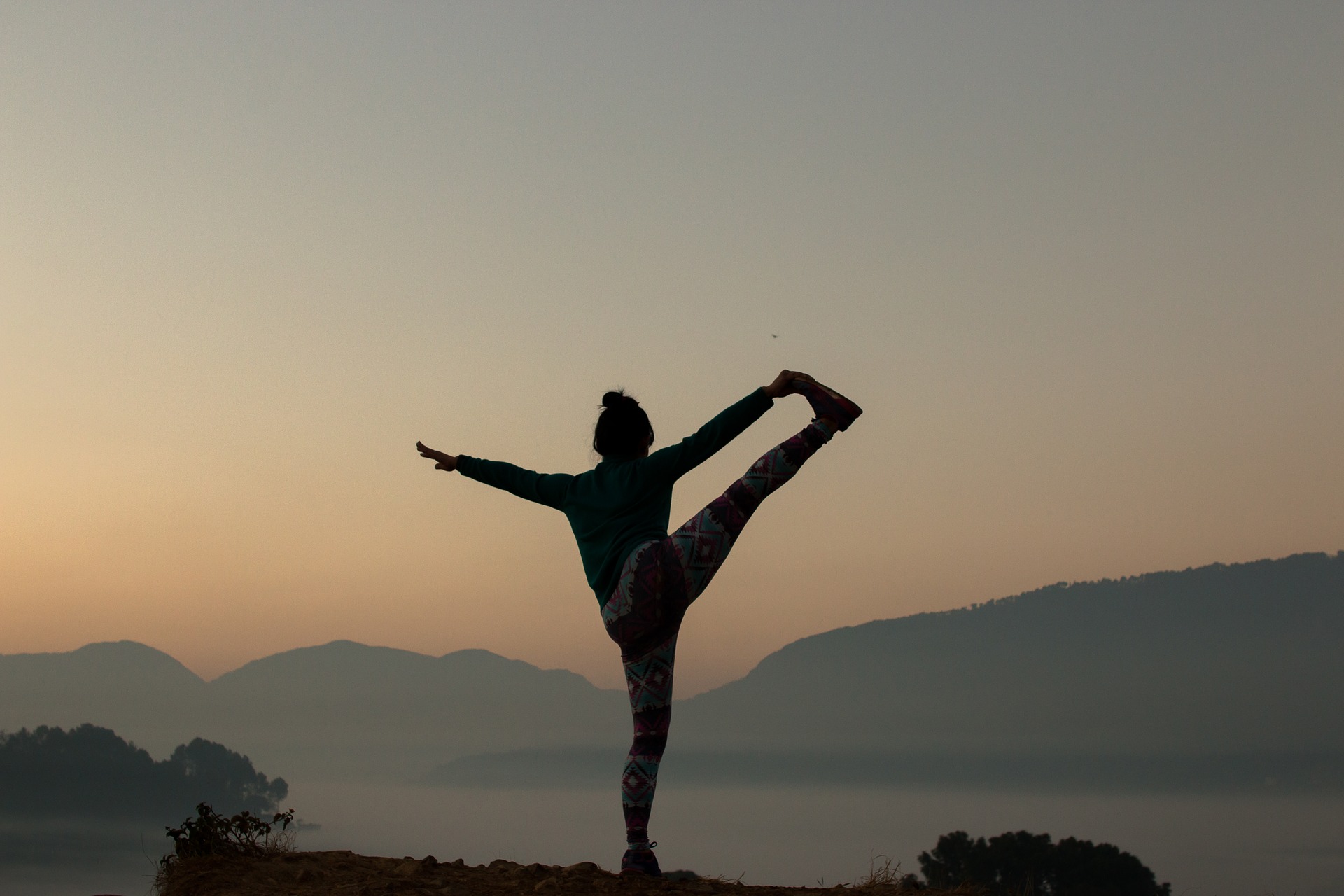
You move into downward-facing dog pose, pressing your hands and feet into the wood, grass, soil, or rock. Breathing in, you fill to your capacity, then exhale. The earth is pressing back, supporting you. Your body is being rejuvenated—the stresses and pressures of the day and your life being gently released or powerfully pushed out. Fully released and truly connected to this space, you receive a glimpse of understanding that you are indeed one with all.
. . .
We make choices every day, every moment. Time and energy are utilized for all that life requires and offers. How mindfully and intentionally are these resources prioritized? Consider the idea of taking back our time and energy from those entities that abduct it, deviation for the greatest good. What a wily, wholesome way to protest the perpetual adversity faced, rallying for our inherent life force.
Cleansing and growing the connection to our vitality, we can practice yoga outside, additionally healing the human connection to earth. This is good work. This is an individual grassroots movement to be built upon in times to come. This foundation gratifies immediately and long-term, fortifying personal resilience. Immersed in a natural yogic practice, one does not require proof or over-thinking—the facts of goodness and righteousness are felt, known.
Yoga means union, the harmony of awareness and intention, body and mind, soul and earth.
Physically, yoga can allow vast synergistic opportunities—oxygenating tissues, lubricating joints, and restoring and strengthening subtle, vital connections throughout the body. A yoga practice begins with the breath and mental presence. No matter the origin of one’s practice, the purpose is an honest, focused communion. This can begin in the living room with a book or Youtube video, in a studio on the mat, or simply with gravity, the earth, and your body.
Once an understanding of the poses exists, like words, they are sequentially placed to make an intentional sentence. Each sentence, or stream of poses, is mindfully carried out to compose a paragraph, eventually telling the story of your yoga practice. Within this story line exist possibilities to get curious, experimental, creative, and playful!
Life offers us the occasion to be in our bodies and to go be out in the world.
We can reproduce our own energy, free of charge. No flexibility, strength, or shape is required. These qualities are inherently cultivated through each small, practical step of the practice. Sustainability on a large scale begins with reviving our sovereignty on an individual level. Allowing our leadership to shine through in our personal choices, yoga can act as a brilliant mirror throughout life.
Crystal Cooper has called Marquette, MI home for a decade. Her communion with the northwoods deepened upon beginning yoga in 2013. Passionate about natural healing modalities as well as personal and global sustainability, Crystal advocates yoga and other resiliency-promoting actions within the community.
Reprinted with permission from the Summer 2019 issue of Health & Happiness U.P. Magazine, copyright 2019. All rights reserved.
There is nothing more delicious in the summer than wild blueberries grown in the U.P. They are sweeter and juicier than any other blueberries I have tasted. It is always a thrill when you come across some wild blueberries growing in the woods and get to pick them for yourself. And you are getting extra health benefits from the wild ones.
Although all blueberries have a high amount of antioxidants, wild ones contain more of the powerful antioxidant anthocyanin. Anthocyanin may be responsible for some biological activities such as preventing or lowering the risk of cardiovascular disease, diabetes, arthritis, and cancer. And it’s responsible for the beautiful blue color of the berries. If you are lucky enough to pick a bunch of blueberries, you can make some ice cream with them.
Have you heard of Aquafaba?
It is an exciting ingredient used in many vegan recipes. Aquafaba is the water left over when you cook chickpeas. You can cook the chickpeas yourself and save the water, or you can use the water from canned chick peas. Something amazing happens when you whip the Aquafaba in a mixer for about 10 minutes—it gets fluffy similar to a meringue created by egg whites! It increases five times in volume when you whip the chickpea liquid. For best results, you need to add a stabilizer. Cream of tartar works best.
Once the Aquafaba is whipped up and you’ve added the flavors you want, you freeze it to make great ice cream. Because Aquafaba is basically bean water, it contains very low amounts of calories, fat, protein, or carbohydrates. The ice cream is vegan, and the only fat or calories it contains are what you add to the Aquafaba, making it a great low-fat, low-calorie dessert. It is a soft ice cream and melts fast, so packaging it in small, one-serving containers to freeze works best.
Aquafaba Blueberry Ice Cream
1/2 cup Aquafaba
1/4 tsp. cream of tartar
1 cup blueberries
1/4 cup maple syrup
Put the Aquafaba and cream of tartar in the mixing bowl of a standing mixer. Using the whisk attachment, start on low speed, slowly increasing the speed until you reach high speed. (With a Kitchen Aid Mixer, whipping it on #8 works great.) Whisk the Aquafaba for 8 to 10 minutes until you have achieved a stiff consistency and it has increased in volume about 5 times.
While whisking the Aquafaba, put the blueberries and maple syrup in a sauce pan and heat on low until warm. Gently fold the blueberry syrup into the whipped Aquafaba. Put in small, one-serving containers (half pint containers work well). Cover and put in freezer for a couple of hours until completely frozen.
Chef Valerie Wilson, a.k.a, Macro Val, has been teaching cooking classes since 1997. Visit her website to purchase her new cookbook, Vegan Cooking with Kids, set up a phone consultation, or listen to her radio show, http://www.macrval.com. Facebook, Macro Val Food.
Reprinted with permission from the Summer 2019 issue of Health & Happiness U.P. Magazine, copyright 2019. All rights reserved.
Have you noticed how creativity is bubbling over through myriad arts endeavors throughout the U.P.? As Marquette Arts & Culture Center Director Tiina Harris explains, “If you don’t have anything to do, it means you’re not looking. There are a lot of really dynamic choices out there-everything from knitting, painting, and ceramic classes to more pop-up, learn-to-paint options-lots and lots of art opportunities, even metalsmithing.” Harris adds, “More community members are taking art classes, whether at the university or local art center. We have a strong tradition of painting, ceramics, and fiber arts but now the sector has expanded to include more film, graphic design, and the literary arts… Everything seems to be booming.”
This boom is woven into the fabric of U.P. communities.
47 North Belly Dance, a fusion belly dance troupe based in Houghton/Hancock, has swelled to include fifteen dancers from a start of three just four years ago. The troupe performs at all kinds of local venues, including half-time at local roller derby home shows. Co-leader Allison Mills says, “We’ve seen classes grow, but not nearly as much as our audience—they’re an explosion of positivity and enthusiasm!”
And how many communities with populations under 21,000 do you know of that not only have a city band, symphony, art museum, and chorale societies, but also a professional modern dance company? TaMaMa was founded in 2016 by Tara Middleton, Maggie Barch, and Marissa Marquardson to “create innovative movement-based art and integrate it into the community… pushing the boundaries of traditional dance.” TaMaMa has performed in art galleries, art festivals, even on rock walls and in busy downtown crosswalks, as well as more traditional venues such as the Forest Roberts Theatre, where they’ll perform “Collections” in early June.
Photo from TaMaMa Dance Company
Those up for developing their own moves can check out new options with free classes by local instructors during the Blueberry Dance Festival. Held in late July, the Marquette festival also includes master dance classes, a professional dance performance, and a dance showcase and competition.
MACC Director Harris says, “People are desiring to get together and collaborate more, and do more—there’s a new Drink & Draw group meeting at local bars. The local knitting guilds have younger members now, so people in their 20s to 80s are knitting together. The Marquette Poet’s Circle is making its mark across the entire U.P. They have readings, exhibits, and are strong advocates for writers living in the U.P. They’re doing some really interesting projects connecting artists and poets together. Our senior arts classes have a waiting list – they never used to. We’ve added a senior theater class. Eight-twelve seniors attend local theater performances and rehearsals together. Many of those taking these classes have no previous experience in the arts or theatre. Retirees are looking for something to do…. The100DayProject has increased people’s desire to pick up a new creative habit or get back into an old one.” elaborates Harris.
Originality, a tell-tale sign of a healthy arts scene, is also blossoming.
The Vista Theatre recently went beyond tried-and true favorites with a production of “The Brain Trust,” by local playwright Bill Hager. Cindy Engle, founder of online source MarquetteMusicScene.com, notes local bands are playing more of their own original tunes. She says the number of bands overall has increased too, as well as new venues for them with more coffee shops and restaurants having live music nights.
Original poetry is shared publicly in places such as The Preserve in Marquette. Original writing is encouraged at the Marquette Poet’s Circle’s monthly workshop and open mike nights, and at U.P. Poet Laureate Marty Achatz’s monthly poetry workshops at Ishpeming’s Joy Center.
The center’s monthly Out Loud nights foster sharing of all kinds of creative forms. Owner Helen Haskell Remien also points out, “People appreciate when a visual art exercise is a component of a retreat — yoga retreat, energy-related retreat, writing retreat, coach-led retreat. It brings a deeper spiritual depth and meaning and context to the art. And this seems to be desired by many.”
Remien adds, “Another desire among attendees has been art offerings for kids,” which Ishpeming resident Mark Hall has begun meeting through monthly art workshops for all age groups.
Amber Edmondson and Raja Howell’s book arts workshops at Joy Center have been so popular they are now bringing their vision to reality with a place of their own—Wild Pages in Ishpeming’s Historic Gossard Building, with art and writing supplies, workshops, and locally-created books and art.
In fact, Ishpeming is experiencing a bit of an arts renaissance, with artwork and art classes available at multiple locations—Nook ’n Cranny Art Studio and UPTown Gifts, which are also in the Gossard, Rare Earth Goods, which holds informal weekly music jams too, and Inspired Art & Gifts within Globe Printing.
Feeding that artistic flame is imperative to keeping it burning brightly, and artists are doing just that at the Marquette Artist Collective, a new group which, as their website explains, welcomes all visual artists and “strives to support each others’ creativity and the arts in our community,” with twice-a-month gatherings, plus art shows in their downtown gallery, and other local spaces. And new art studios have also popped up along Marquette’s Third Street area, offering visitors glimpses of the art-making process, artwork for sale, and art classes.
In Munising, UP~Scale Art, owned and operated by the Munising Bay Arts Association, provides a cooperative option for local and regional artisans to exhibit and sell their art, a yearly internship program teaching the business side of art, and eventually, a range of workshops and art classes. More art can also be found at businesses throughout the area.
The Calumet Theatre, a National Historic Landmark offering symphony, folk music, jazz, opera, theatre, dance, and community events, is bringing more big names to this intimate 700-seat venue, with five Grammy award winners and nominees performing there this year. New Executive Director Marlin Lee is passionate about making the theatre a go-to for outstanding performances, and utilizing his media marketing and independent concert promotion experience to bring in even more big name acts.
At Michigan Tech, the Rosza Center is focusing diligently to provide memorable, consistent programming for all ages so that “not just kids but the entire family can come together,” explains Programming and Development Director Mary Jennings. More events are being scheduled on the weekend too, so those from other parts of the U.P. can attend more easily.
In Ironwood, non-profit Downtown Art Place (DAP) worked hard to renovate its beautiful structure alongside the Historic Ironwood Theatre with help from dedicated volunteers, private donations, grant funding, and city government. Now in its seventh year, volunteer-run DAP exhibits juried displays of work from fifty to sixty regional artists, has a complete ceramics studio plus classroom space for an array of art classes, and provides the city’s lowest rental cost to 12 – 18 artists leasing art studios there. Board President Howard Sandin also notes an increase in the number of both artists and visitors DAP serves, with tourists from each state as well as other countries in the past year.
New art galleries have sprung up in town since DAP began. Ironwood is also home to Theatre North, the oldest still-functioning theatre group in MI, the Range Art Association, established in 1954, and emphasizes music in the schools, with HIT Idol run annually for youth by the Historic Ironwood Theatre with a guest judge from TV.
Sandin notes, “There’s a tremendous economic benefit for any area with ongoing support for the arts. For every dollar spent, $8 – $10 comes back…. The city is smart enough to know there is a real benefit to having an active art culture downtown, and has helped make buildings available.
He elaborates, “After 5 p.m., downtown Ironwood used to be dead. It’s thriving now, with nine new businesses opening in the last year, including a brewery. There’s greater enthusiasm. It’s lively now.”
U.P. communities are also coming to life with the addition of murals. “CUPPAD (Central Upper Peninsula Planning and Development) received an Art Place grant to help create murals in the U.P.,” says Harris. “There are three or four in Iron Mountain, one in Manistique, and more in the works in Gladstone and Munising. There has been interest in Marquette as well.”
In addition to the numerous long-running arts festivals already established throughout the U.P., new ones are further livening things up—Forestville, a craft beer and music festival at the Forestville Trailhead in Marquette is now in its fourth year with almost double its initial attendance; the Upper Peninsula Shakespeare Festival and Calumet’s Dam Jam Music Festival, both also founded in 2015; Fresh Coast and 41 North annual film festivals; and five-year-old Arts Week in Marquette.
“The initial idea for Arts Week was to showcase local artists and provide opportunities for the community to participate in free and low cost art experiences outdoors,” says MACC Director Harris. “The City of Marquette contributes $1,500 plus staff time as well as revenue from the sale of ads in our program. Yet, Art Week leverages over $15,000 investment through events coordinated by groups such as Pine Mountain Music Festival, Hiawatha Music Co-op, Marquette City Band, and countless others.
People want an opportunity to experiment with something new.
The level of participation in Art Stroll has skyrocketed with 38 participating businesses this year, up from 20 when we started. There are more signature events during Arts Week now too, such as the Fresh Coast Plein Air Painting Festival,” explains Harris. “The idea is to get people outside to enjoy the natural environment Marquette has to offer. It’s an opportunity not only for artists but also for art appreciators to watch a painting happen in real time. Now in its third year, the Painting Festival has grown and received over $5,000 in sponsorships.
There are more artist-in-residencies throughout the U.P. now also, including in Munising, Marquette, and Mackinac Island, along with long-established ones in the Porcupine Mountains and Rabbit Island. This will be the second year for Evolve MQT’s Creative Residency made possible through the Marquette Chamber of Commerce and the Michigan Film and Digital Media Office. “This year we welcomed a woodcarver, writer, and photographer. All three are well-respected in their fields,” says MACC Director Harris. “Our hope is that they share their experiences of living and working as creatives here in Marquette with the rest of the world, and connect and work with local artists too.”
Harris continues, “This area always has been a cool place to live, but now more than ever… and with that there are more creative people… I think you’re seeing more young people moving here. A recent study shows young people are moving for quality of life first rather than jobs leading their decision. I think we’ve all met people who’ve moved here because it’s an interesting place and then they try to find out how to make a living here. It’s made easier through technology and working from home.
The arts are “a bigger leader than outdoor recreation and growing faster than many industries in the U.S.,” explains Harris.
“This can be seen throughout statewide and local marketing efforts. Travel Marquette released a video last year featuring artisans and makers, and how the U.P. inspires their work. There’s also been more support from local government. The City of Marquette gives annually to public art. Ironwood is working on an arts and culture master plan. Munising integrates public art projects throughout the downtown, and Iron Mountain recently welcomed several murals into theirs. I think that will soon be the norm in the U.P. – municipalities participating in public art, and supporting arts and culture.”
Arts in the U.P. are also benefiting by connecting across the miles. U.P. Arts & Culture Alliance (UPACA) “hosts meet-n-greets across the U.P. to hear what what’s important to people,” explains Harris, who is also chair of the non-profit. “With representatives from almost all fifteen counties, this very new group is sharing resources, connecting creatives, and advocating for the arts in the U.P.”
State and regional connections led to Escanaba’s Bonifas Arts Center’s application to host an exhibit of early American paintings from the Detroit Institute of Arts’ Manoogian Collection, which occurred last year. And experts through novices from throughout the U.P. and beyond come together to share and learn valuable information at the U.P. Publishers & Authors Association’s Spring Conference, and through their newsletter and Google forum. Out of this has come the U.P. Reader series, showcasing U.P. authors’ work.
“The U.P. has a strong tradition of arts and culture—it’s growing and it’s changing, but it’s always been there,” adds Harris.
There have been periods when the arts have been invested in more than others. I think we’re at a high point right now, because we understand the impact arts make on both our quality of life and economy. Whether it’s an illustration on a locally crafted can of beer, or reading a book by a local author, the arts are an integral part of our daily lives.”
Reprinted with permission from the Summer 2019 issue of Health & Happiness U.P. Magazine, copyright 2019. All rights reserved.
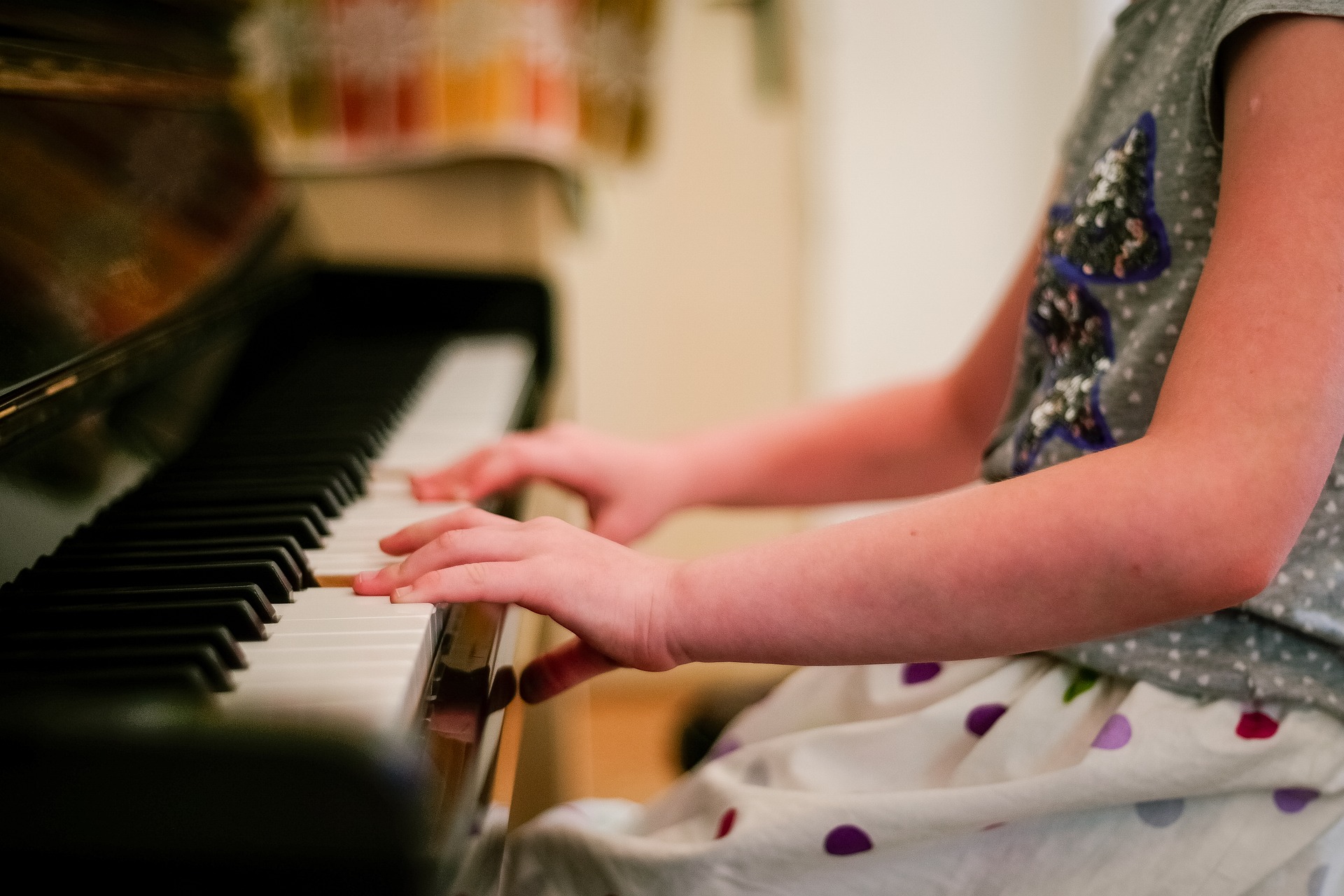
One of my favorite memories from my childhood was listening to my mother play the piano. I loved how smoothly her fingers went from key to key, playing each note. She furthered my interest with an interactive musical game for my siblings and me. She would play various tunes, each offering different tempos. When she played the faster music, we would dance with quick moves around the whole house. As it slowed, we would too. It was a marvelous way for my mother to introduce us to the world of music. The bonus may have been that it also tired us out eventually. This was the beginning of my love for music and dance. My mother was always finding ways to nurture our creativity. Our house always had a supply of simple visual arts materials, and no end to creative ways to keep our imaginations blossoming.
The impact of the arts on the developing brain is essential.
The brain is stimulated in positive ways while creating art, dancing, or playing an instrument. The research for this is even included in the Search Institute’s forty developmental assets for youth. These are building blocks to help children grow up healthy, caring, and responsible. The more assets our children experience, the healthier they will be—not just as young people, but as they transition into adults as well.
By introducing creative activities into our children’s lives, we can help them develop skills that will create healthy habits. The arts can support creative problem-solving as well as celebrate our individuality, uniqueness, and diversity. Creativity encourages self-expression, a way to create something from personal feelings and experiences. This can increase self-worth and self-esteem.
Though here in the Upper Peninsula we may have fewer offerings such as art museums, programs, and concerts than a larger metropolitan area,
we do have abundant opportunities to share the arts with our children in many ways. We have art galleries and art centers in many of our communities. It is my belief that children are never too young to start interacting with or in art. Bring them to an art gallery, outdoor art fair, symphony concert, or take the time to pick up books about the arts at the library and start conversations with your child. If discussing art makes you feel nervous, that’s all right. Learn with your child.
This type of conversation does not have to happen only in a gallery or concert setting, though. You know the game of lying down outside on a blanket and looking up for images in clouds. That is a creative activity that can help stimulate your child’s imagination. Point out what you see and ask your child if they see it. Then ask them to find something. Observational skills are important to your future scientist, mathematician, artist, or engineer. The arts help greatly in fine-tuning those skills.
Studies have concluded that it’s very important to introduce art education at a young age because children are developing their critical thinking skills.
Our children fine-tune their motor skills while creating art. The cognitive processes involved in learning to draw, choosing shapes and colors, and creating detail in visual work help develop the skills associated with these tasks. The musical arts can translate into better math skills. Musical rhythms can provide a way for students to learn fractions, counting, and patterns.
We do have opportunities to meet artists, musicians, dancers, and performers in the Upper Peninsula. You know the Michigan State motto, “If you seek a pleasant peninsula, look about you”? Well, I truly believe if you seek creative activities in this pleasant Upper Peninsula, look about you. Here we are more likely to meet talented artists face-to-face. We are a personable group of neighbors. Ask local friends and family about local opportunities. We have galleries, art class opportunities, creative businesses, and children’s museums.
As you introduce your children to these types of skill-building creative activities, you’ll be having fun right along with your child.
Try collaborating on a painting or drawing. One of my favorite drawing opportunities as a child was having an adult draw a simple scribble on paper. Then I would take it and see if I could make an image from it. A simple figure 8 might turn into a twirling dancer or an animal. That kept me occupied for hours. The adults seemed to have fun coming up with odd scribbles just to see if I could find anything to make out of it. I did this with my own children, and you can try this too. You might ask your child to make a scribble for you and you try to make something out of it. This type of dialogue between adult and child can help to develop not only the budding artist in the youth, but also help further communication between you and your child.
Through the arts and nurturing creativity, both you and your child will have fun while developing lifelong skills and the blossoming of imagination.
Joy Bender Hadley is an award- winning art educator working in schools and as an artist-in-residence throughout the region. She believes in the importance of art education in the development of all youth. Aurora Artworks, her art service business, offers creativity coaching for adults.
Reprinted with permission from the Summer 2019 issue of Health & Happiness U.P. Magazine, copyright 2019. All rights reserved.
I have to admit, I am a total marshmallow when it comes to pets. I’ve had a lot of pets over the years, all rescues. Presently I have three dogs and two cats… all of which are geriatric. My oldest dog is between fifteen and seventeen (we aren’t exactly sure of her age), and the youngest is eleven. We’ve had all but the 11-year-old for almost their entire lifetimes. Thankfully, we have the room, ability, time, patience, and finances to care for them and manage their needs. Their health needs are changing now and veterinary costs are increasing dramatically. But regardless, we took these precious creatures on knowing it was a lifetime commitment and were prepared from the start to see things through until their lives end. It’s a package deal. We love them and wouldn’t have it any other way!
So, if you are pondering the idea of getting a pet, there are some things to seriously consider beforehand. Pet ownership is a long-term commitment and requires careful consideration before actually bringing a pet into your home.
Things to Consider When Considering a Pet
Why: Think about your “why.” What are the reasons you’d like to have a pet?
Lifestyle and Finances: Consider your lifestyle and what you can afford. Different breeds of dogs have varied needs. Some are high energy and need an outlet for that. They do best when kept very active or they have a job to do (such as herding sheep). Others are less active and are fine with limited activity. Certain dog breeds require daily and monthly professional grooming. This can get very costly. Then there is basic veterinary care (spaying or neutering, vaccines, routine health care) and the potential of unforeseen costs due to health issues that may arise. Can you afford these things?
Time: Do you have time to attend to a living creature in your home? Or can you afford to have someone come and let your dog outside, walk and feed them, or hire a pet sitter if you have to be gone for several days? Puppies require training which can be time-consuming and requires a lot of patience. Dogs require walks at least two to three times a day and need human interaction (playtime) and attention. Please, if you don’t have time for a pet, don’t get one! It’s unfair to the animal to take it on only to surrender it later because you underestimated certain needs, costs, etc. Instead, you might consider fostering or helping rescues/shelters by spending time with animals that are awaiting adoption (by walking, grooming, or reading to them). Another option is pet sitting—you can set your own schedule, and still get a “pet fix.” If you really want a pet but don’t have a lot of time for them, consider fish or small animals like gerbils, etc., that are easy for others to come in and care for.
Care: Dogs need more of your time and attention than cats, and generally do not like being left alone for long periods of time. There is also potential for noise with dogs. Do you live in a place that will tolerate this? Is there a yard or can you take your dog to a park? If there is a chance you will have to move at some point, are you able to take the pet with you? If you have children, make sure beforehand they are not allergic. If you have a family, are they all on board with getting a pet, and willing to help with its care?
Please do careful research and consider all aspects of your life before choosing to take on a pet. Be brutally honest with yourself regarding the overall commitment. It can save you and a pet a lot of heartache!
Jenny is a Certified Natural Health Consultant for pets and their people, Healing Touch for Animals (Level 2) and NES Bioenergetics Practitioner. Consultations are done over the phone and via email. To contact, call (906) 235-3524 or email at 1healthlink@gmail.com.
Adapted with permission from the Summer 2019 issue of Health & Happiness U.P. Magazine, copyright 2019. All rights reserved.
When I moved to the Upper Peninsula, one of my first excursions was to a Marquette bakery. Jubilant over finding a local supplier for my long-running pastry fixation, I ordered a croissant and a coffee to go. My heart sank when the barista handed me a piping hot Americano in a Styrofoam cup. I must’ve looked as though she’d fixed me a hemlock latte.
“Is something wrong? Did you need more room?” she asked.
“Umm… no…,” I trailed off, not wanting to make a fuss; there was a substantial queue of customers behind me. I walked out of the bakery feeling frustrated that I didn’t speak up.
A Greener Change
Enter Ron Carnell. He attended Northern Michigan University, followed by the University of Washington (BA), then earned a Master’s degree from Kansas State University. Carnell has a long history of activism, including field fundraising for Public Interest Research Group, Greenpeace Action, and the Northwest AIDS Foundation.
Upon moving back to Marquette from Seattle in July of 2018, Carnell noticed that most restaurants he visited were still using Styrofoam TM (expanded polystyrene, or EPS) containers for takeout items.
“I began talking about it and found there was enough interest to lay the groundwork for a campaign to urge the City of Marquette to get behind a resolution.” He started StyroFree Marquette, a grassroots group of local citizens and business owners promoting the benefits of replacing EPS take-out and beverage containers with healthier, environmentally safer options for Marquette and, maybe one day, all of the U.P.
That said, Carnell maintains that StyroFree Marquette is not out to ban anything. Rather, this group hopes to inspire restauranteurs and bakery and coffee shop owners to consider what can be better choices for their bottom line, the community’s image, and the environment.
The Problem with EPS
Pieces of EPS cups and food containers are a common choking and death hazard when birds, fish, and wildlife consume them. The more an EPS takeout container breaks into smaller pieces, the more difficult it is to clean up. EPS is also petroleum-based, is nearly impossible to recycle (there are no EPS recycling options in the U.P.), and is known to leech cancer-causing chemicals like toluene and benzene into hot foods. EPS is already banned in dozens of cities across the country, with many more considering joining the list. Recent big-city bans include New York City and San Diego.
We all know Marquette is growing. We offer so much as a place to live and as a tourist destination—lively arts and entertainment, wonderful winter and summer activities, and expanding culinary tastes. Offering consumers alternatives to EPS takeout containers and beverage cups is but one easy and cost-effective step toward strengthening what makes our town so appealing. With the support of citizens and city government, Marquette can be the first city in Michigan where restaurants and coffee shops actively use alternatives to EPS containers.
Feedback & Action
Since October 2018, the StyroFree Marquette citizen coalition has received virtually 100% positive responses from local restaurant owners, city officials, students, and residents. The coalition invites the public to share their questions, concerns, and input with members of StyroFree Marquette. The coalition’s next meeting will be held Wednesday, June 5 from 7:00-8:30 pm, at Peter White Public Library’s Heritage Room.
To learn more, call Ron Carnell at 206-227-0867 or visit http://www.styrofreemarquette.org or Facebook – Twitter/StyroFree Marquette.
Vicki Londerville is a Marquette artist/illustrator and an active member of the Marquette Artist Collective. She is currently writing and illustrating an environmentally-themed children’s book set in the Upper Peninsula. Vicki loves exploring the UP’s wild places on her horse or in her kayak.
Reprinted with permission from the Summer 2019 issue of Health & Happiness U.P. Magazine, copyright 2019. All rights reserved. Click here for U.P. distribution locations.
If creativity is a habit, then the best creativity is the result of good work habits. They are the nuts and bolts of dreaming. – Twyla Tharp, choreographer and author of The Creative Habit
Do you yearn for more creativity or art in your life? Have you had an itch to make something or explore a creative idea? If you answered “yes” to any of these questions, you might consider doing a 100 day project. The100DayProject is a creativity excavation that grows a creative habit through a daily, hands-on practice of 100 days. It gives us permission to play, explore, and experiment for an extended period of time.
The100DayProject is not about making perfect or beautiful artwork; it’s about the process of creativity and developing new ways of seeing and thinking. It grows our capacity to imagine, innovate, and problem-solve. The end product – the work that gets made – is secondary to all of that.
Many people think we’re either born creative or we’re not. The100DayProject challenges that assumption with the idea that creativity is a skill that can be developed. What we practice, we get better at, right? Through practice, we develop a creative habit. Through habit, we reconnect with and know ourselves again as creative beings.
Nurturing Ourselves & Others Artists are among the most generous of people. Perhaps inherent in the appreciation of creativity comes a deep, underlying love of humanity and our Earth. – Kelly Borsheim
Each year, The100DayProject chooses a theme for its community-wide arts initiative, now in its sixth year. The theme, which is optional, is meant to offer a nudge, a glimmer of inspiration, an overlooked opportunity for those who might be looking for that.
We chose “Art’s Capacity to Nurture” as the theme for 2019. It was inspired by Donna Miller from Temperance, Michigan. Donna completed a 100DayProject in 2018 and sent a box of beautiful hand-crocheted project work for us to distribute as we saw fit.
Donna wanted to get out of her comfort zone and try new stitches. She was inspired by our 2018 theme, “Mirrored Light,” and made a variety of infant hats and mitts, adult hats, fingerless gloves, and ear warmers. She wrote to us saying, “I hope you will find a place to donate them. The warmth they offer is the Mirrored Light I hope to have reflected from my heart to those who wear them.” We were awestruck and humbled by her unexpected and generous gesture. We added Donna’s project work to the Chocolay Girls Scouts’ Giving Tree on display last December at the Peter White Public Library. Individuals in need of something were invited to take it from the Tree. Any items left over after the holidays were donated to foster families in the area.
We often see firsthand how art/music/film/dance nurtures the soul, provides comfort and healing, and rejuvenates the spirit in ourselves and others. For example, one Arter* told us that the “creatures” he drew as a child were comforting presences for him as he moved through difficulties in his early life. Adulthood pulled him away from all of that, so his 100DayProject focus is to reconnect with and draw his creatures again.
We’ll be collecting stories from 2019 project participants later this year and look forward to discovering how their projects nurtured them and others.
Creativity is dynamic, it asserts life, frees the human spirit, conquers mental lassitude and illness, and makes real the outrageous potential of the universal imagination. – Robert Genn
Cultivating a Creative Habit And suddenly you know: It’s time to start something new and trust the magic of beginnings. – Meister Eckhart
If you feel inspired by what you’ve read so far and are curious about how to begin, it all starts with an idea that you’re excited about exploring for 100 days. If an idea doesn’t immediately come to mind, you really don’t have to look that far. Exploring new materials or mediums in new ways may be all it takes.
One artist loved colored paint samples and incorporated them into a daily habit of paper cutout designs. Another artist wanted to explore some materials she had an abundance of and built her project around reclaimed building materials.
Projects don’t have to be limited to the visual arts. Poetry, writing, practicing a musical instrument or dance steps are all wonderful ideas to explore for 100 days.
Look around you. What motivates you? What skill do you want to grow? What “off the wall” idea do you want to test-drive? What project idea has been sitting on the back shelf of your mind? What’s calling you to come out and play? There may be an idea or two there.
You don’t have to complete a piece every day. You need only to do something hands-on with your project every day. Track what you’re working on daily so you can see your progress. Journaling works great for that. So does photographing your progress. Or simply hang your work on a wall or put it on a shelf where you can see your progress. It’ll keep you motivated – and you’ll see the thread of your project idea grow, which can germinate further ideas.
Maybe you’ll decide to do your 100DayProject first thing in the morning, or maybe later on in the day. Creating a routine or rhythm might feel clunky at first – like any new habit it may take some getting used to. Our best advice is to try and do it at the same time each day. Choose something that’s got juice for you and allows you some freedom to play and explore. Simply do one small creative exercise daily, even if it’s just for five minutes, and then move on with your day. This is not about judging what you create – it’s about doing one thing each day for 100 days that nurtures your creative spirit.
Practicing an art, no matter how well or badly, is a way to make your soul grow, for heaven’s sake. Sing in the shower. Dance to the radio. Tell stories. Write a poem to a friend, even a lousy poem. Do it as well as you possibly can. You will get an enormous reward. You will have created something. — Kurt Vonnegut, A Man Without a Country
*We use the term Arters to indicate 100DayProject participants who have registered their projects on our website.
Ann Russ is co-organizer of The100DayProject with Catherine Benda. You can visit http://www.The100DayProject.com and subscribe to its newsletter for weekly inspiration and project developments. Visit http://www.facebook.com/The100DayProject for inspiration and to share images and comments about your project. Find more project images at Instagram site @thecreativepractice.
Reprinted with permission from the Spring 2019 issue of Health & Happiness U.P. Magazine, copyright 2019. All rights reserved.
Want to reverse the impact of aging? Improve your glucose metabolism? Increase your heart health and aerobic capacity? Would you like to burn more calories in less time, and enjoy yourself in the process? Then HIIT may be for you!
HIIT (high intensity interval training) simply requires alternating short bouts of intensive activity (such as thirty seconds or so) with longer intervals (three or four minutes) of less intensive activity. This can be any activity you choose, so no special training or equipment is required.
For example, if you’re fit enough to jog, you could intersperse short jogs within a longer brisk walk. If you’re more sedentary, you might take a leisurely stroll and briefly walk faster from time to time during it.
HIIT dates back to Olympic athletes at least as early as 1912; however, it has only become popular for the average exerciser more recently. And scientific studies have followed, providing evidence of HIIT’s many benefits. For instance, Mayo Clinic researchers found HIIT appears to alter cellular DNA in such a way that one’s muscles become able to produce more energy. It prompts new muscle growth too.
Mayo Clinic researchers have also compared HIIIT, resistance training and combined training in a twelve-week study. All three improved cardio respiratory health, lean body mass and insulin sensitivity, however “only high-intensity and combined training improved aerobic capacity and mitochondrial function for skeletal muscle. Decline in mitochondrial content and function are common in older adults…Exercise training significantly enhanced the cellular machinery responsible for making new proteins. That contributes to protein synthesis, thus reversing a major adverse effect of aging.”(1)
In fact, the improvement in mitochondrial functioning, which usually decreases with age, was even more marked in the over-65 participant group–69 percent improvement, as compared to 49 percent in the 18-to-30-year-old group.
It’s important to check in with your doctor before starting a new workout routine, especially if you have a chronic health condition or haven’t been exercising regularly. To help prevent injury, start slowly rather than rush into a workout that might be too strenuous. Mayo Clinic specialists suggest starting with just one to two higher intensity intervals during each workout. Slow it down if you feel you’re overdoing it; then challenge yourself to vary the pace as your stamina increases.
Mayo Clinic Sports Medicine Center Co-Director Dr. Edward Laskowski cautions HIIT programs need to be carefully designed as higher impact activities aren’t a good fit for everyone, “Especially those with a musculoskeletal injury, a poor musculoskeletal foundation or improper movement patterns. But low-impact HIIT options include bicycling, elliptical trainer or water running activities to provide an aerobic exercise challenge without significant joint or impact load. And the intensity, frequency and progression of each program can be tailored to a patient’s diagnosis and abilities.”(2)
Also, Dr. Laskowski explains, “There’s solid evidence that older, less active, overweight, and obese individuals can benefit from HIIT training. HIIT has also been shown to be very safe and effective in patients with heart disease and type 2 diabetes.”(3)
This doesn’t mean you should do HIIT daily though. Many experts recommend keeping it to once or twice a week, alternating light to moderate exercise on other days so your bones and muscles get the time they need to rebuild. But keep in mind that to noticeably improve your muscle strength, you’ll need to include resistance training in your routine twice per week.
But perhaps best of all, HIIT seems to help many people exercise regularly on an ongoing basis. Why? Many find it makes their exercise more fun! Researchers have noted study participants’ preference for HIIT and their self-reporting that they’re more likely to stick with routines that include it. So if you’re not doing HIIT, consider choosing a favorite type of exercise and adapting it to your HIIT needs!
Spring is a natural time of cleansing, making it an ideal time to feed and nurture our liver, gallbladder and nervous system. The main job of these organs is to purify the blood. The flavor associated with spring, and that helps to feed and nurture these organs, is sour. Foods that make your mouth pucker are sour, such as limes, lemons, plums, pomegranates, sauerkraut, and naturally fermented pickles. The signature flavor of sour is featured in the recipe below and complemented by sweet and bitter chocolate.
A couple of ingredients you may not be familiar with in the recipe are agar flakes and kudzu. Agar flakes are small, almost-clear flakes to thicken the dessert once the dessert has cooled. Agar is freeze-dried red algae, making it one of the healthiest foods you can consume. It’s high in calcium, iron, phosphorous, Vitamin, A, B complex, C, D, and K.
Kudzu root is the root of the kudzu plant that has been dried. You will find it in stores in a bag and it looks like white chunks of chalk. To cook with kudzu, you have to dissolve the white chunks in water before adding them to any recipe. Kudzu thickens liquid and in the recipe below, it helps to create a creamy texture for the filling. Kudzu helps to alkalize your body, lower cholesterol, reduce high blood pressure, and contains bioflavonoids that dilate blood vessels to help alleviate migraine headaches.
Chocolate Lime Squares
Crust: 2 cups cookie crumbs 3/4 cup vegan chocolate chips 2 T. rice beverage (or favorite non-dairy beverage)
Topping: 1/3 cup vegan chocolate chips 4 T. rice beverage (or favorite non-dairy beverage)
Filling: 1 cup rice beverage (or favorite non-dairy beverage) 1/2 cup lime juice 3/4 cup brown rice syrup 2 T. maple syrup 5 T. agar flakes pinch sea salt 4 T. kudzu root (dissolved in 1/4 cup water)
To make crust: Using low heat, slowly melt the chocolate chips and 2 T. rice beverage. Stir as it melts. Mix in the cookie crumbs. Press firmly into the bottom of an oiled 8” square casserole dish. Refrigerate until cold.
To prepare filling: Put the 1 cup rice beverage, 1/2 cup lime juice, brown rice syrup, maple syrup, agar flakes and sea salt in a pot. Bring to a boil, reduce to a simmer and simmer for 10 minutes. Add the kudzu mixture. Whisk as it starts to thicken to prevent clumps. Once it has thickened, pour over crust. Refrigerate until cold and firm.
To make topping: Using low heat, slowly melt the chocolate chips and 4 T. rice beverage. Once it is melted, drizzle over the top of dessert. Put back in refrigerator for topping to set. Cut and serve.
Chef Valerie Wilson, a.k.a, Macro Val, has been teaching cooking classes since 1997. Visit her website to purchase her new cookbook, Vegan Cooking with Kids, set up a phone consultation, or listen to her radio show, http://www.macrval.com. Facebook, Macro Val Food.
Reprinted with permission from the Spring 2019 issue of Health & Happiness U.P. Magazine, copyright 2019. All rights reserved.











 The100DayProject is a creativity excavation that grows a creative habit through a daily, hands-on practice of 100 days. It gives us permission to play, explore, and experiment for an extended period of time.
 Health & Happiness U.P. Magazine