Blog

Compiling Your Family History

The following advice is from www.familytreemagazine.com’s 20 Questions for Interviewing Relatives, 7/21/10. You can also find a more extensive list of questions from the UCLA Library’s Center for Oral History Research Family History Sample Outline and Questions at www.oralhistory.library.ucla.edu/familyHistory.html.

The best tactic for oral history interviews is to ask open-ended questions (rather than ones with yes or no answers), and to focus on people’s memories and experiences. It’s much more interesting – for you and the interviewee -to talk about the stories and emotions behind the events in your family’s past. Use these questions as a springboard for planning your interview:

  1. What’s your first memory?
  2. Who’s the oldest relative you remember (and what do you remember about him or her)?
  3. How did your parents meet?
  4. Tell me about your childhood home.
  5. How did your family celebrate holidays when you were a child?
  6. How did you meet your spouse?
  7. Tell me about your wedding day.
  8. Tell me about the day your first child was born.
  9. What were your favorite school subjects?
  10. Tell me about your favorite teacher.
  11. Tell me about some of your friends.
  12. Describe your first job.
  13. What did you do with your first paycheck?
  14. What was your favorite job and why?
  15. Who are some of your heroes?
  16. Where were you when you heard that President Kennedy was shot? (Add or substitute other important historical events.)
  17. What is your experience with or opinion of computers? (Add or substitute other modern conveniences, such as television, microwaves and cell phones.)
  18. Tell me about some of your favorite songs (also books, movies and television shows).
  19. Tell me about some of the places where you’ve been happiest.
  20. What haven’t we talked about that you’d like to discuss in the time we have left? (This is a good way to begin wrapping up the interview.)

Where Should the Money Go?

In honor of our 5th Aniversary, Health & Happiness U.P. Magazine has made a 5-year commitment to additional support for a particular area of community life each year, beginning this year with Elder Care. As part of this commitment, we will be contributing money to a local Elder Care non-profit agency or project. There are many worthy candidates to choose from, so we need your help! Please tell us where you think the money should go and why by using the comment box below or emailing hhupmag@charter.net by November 1st, 2012. And please ask your friends and neighbors to weigh in too!

With thanks & best wishes,

Roslyn Elena McGrath, Publisher

Celebrating Our Fifth Anniversary!

by Roslyn McGrath

Anniversaries can be a great opportunity to reflect upon and celebrate what got you there, as well as what is and what can be, and refine and recommit to your vision of what you’re celebrating as you move forward.

Five years ago, I recognized the need for a truly local wellness publication, one where community members share their expertise and insight with us, increasing our understanding of the many ways we can increase our health and happiness and the many wellness resources available locally to support us in this

A big thank you to each of our writers –regular column writers Barb Dupras, Victoria Jungwirth, Jenny Magli, Miriam Moeller, Jessica Nagelkirk, Heidi Stevenson, Steve Waller and Val Wilson, as well as all those who’ve contributed articles and photographs along the way, (see full list on p.3), who so impress me with the quality and care they bring to each article. I and our many readers get to learn so much every time!

A big thank you to all our advertisers, whose passion and purpose are a big part of what makes our community tick, and who help make presenting this wealth of wellness information possible. I think you’ll enjoy discovering more about what their big hearts and expertise gift our community on pages 10 and 11 of this issue! And please consider letting them know how much you appreciate all they do.

A big thank you to proofreader Tyler Tichelaaar for his expert eyes and mind, kind heart and helpfulness, Curtis Kyllonen for his years of cheerfully and faithfully getting over a quarter of our many copies to where they need to go, to Tom O’Connell for making our early covers beautiful, to the various photographers whose eyes for local scenes have also helped create beautiful covers, to all our print shop helpers who’ve assisted me in getting the job done right, the many businesses and organizations who’ve made a place for Health & Happiness to be easily picked up, and to my husband, Kevin McGrath, for always pitching in with whatever’s needed, whether it’s a warm hug and smile, sound advice, listening ears, great ideas, timely deliveries, inspiring, light-hearted articles or encouraging words.

And a big thank you to YOU, our readers, for all your support and appreciation. You make it all worthwhile!

It’s the support of all of you that has made it possible to cover topics ranging from cooking with rutabaga to traditional Chinese medicine, child rearing tips to overcoming writer’s block, mortgage and energy-saving advice to mindfulness practices, pet treat recipes to U.P. kayaking, long distance elder care to wild crafting and so much more; increase our distribution to 7,500 copies at over 250 locations, five times where we started five years ago, (and there are still places where we run out of copies!); and further invest in our community with donations to the Beaumier Upper Peninsula Heritage Center, Devos Art Museum, Great Lakes Recovery Centers, Hiawatha Music Festival, Huron Mountain Club Gallery, Lake Superior Hospice, Marquette Arts & Culture Center, Marquette County Health Department, Marquette Maritime Museum, Marquette Regional History Center, Medical Care Access Coalition, Northern Initiatives, Oasis Gallery, UPAWS, Upper Peninsula Children’s Museum, and Upper Peninsula Environmental Coalition’s Celebrate the U.P.

Below are a few excerpts of the congratulations I’ve received on our fifth anniversary. Thank you so much to all those who’ve made a point of expressing their appreciation, whether in person or in writing!

I look forward to continuing to serve our community’s wellness information needs with high quality and creativity, as well as launching our five year commitment to supporting a different area of community life each year through increased coverage and donations, starting this year with the increasingly important issue of elder care.

So fittingly, this issue of Health & Happiness U.P. Magazine is dedicated to the topics of celebration, age and “fives” – enjoy!

Roslyn Elena McGrath, Publisher, Health & Happiness U.P. Magazine

 I want to congratulate you on your fifth anniversary of Health & Happiness. Every cover has been beautiful and the wide array of articles has provided a wealth of information and insight to readers. Your vision of a need and your willingness and excitement to fill that need has been remarkable. Here’s to many more issues! – Gareth Zellmer 

Congratulations on the 5th anniversary of Health and Happiness!  It’s some of the best reading to come out of our “far northern outpost” community.  May the coming year be the best yet; here’s to five more! – Sue Schenk Drobny 

Congratulations from Natural Connections!  We celebrate you for your commitment and passion in providing a wonderfully effective information connection between our holistic community and U.P. residents through your beautiful magazine, Health & Happiness!

Happy 5th Anniversary from Lake Superior Holistic Connection!   Your magazine is a bright light in our community!  It’s a beacon illuminating paths of possibility to those seeking natural ways to align their body, mind, spirit!  Congrats! – Diana Oman

It’s a joy, truly an inspiration to witness this evolution of Health & Happiness, how you have brought this brilliant idea, an idea that lit you up and lit us up as well, into manifestation.  I look forward to receiving this uplifting publication with its focus on our possibilities and potential, and the labor of love that you as creator, as bridge-maker, as editor, as publisher, as marketer have put into each and every issue.  It is a template for all of us, the way that you have taken a dream and made it reality, learning the next step and the next step as you’ve walked this creative path.  And look how we all benefit, what you have brought to all of us!  – Helen Haskell Remien

Health & Happiness’s Contributing Writers & Photographers, 2007 – 2012:

Leslie Allen, Linda Andriacchi, Stuart Baker, Leslie Bek, Gina Brown, Audra Campbell, Lisa Cerasoli, Joan Chadde, Pam Christenson, Amy Clickner, Stuart Cooper, Patty Cornish, Martha Crenshaw, Kim Danielson, Sarah Dean, Chuck Delpier, Sara DeFrancesco, Melinda Dollhopf, Barb Dupras, Cindy Engle, Sydney Giovenco, Lee Goodwin, Genean Granger, Kathy Harsch, Victoria Jungwirth, Kristen Karls, Kim Kee, Mick Kiaros, Virginia Kleaver, Amanda Klein, Tammy Krassick, Lucy LaFaive, Jamie LaFreniere, Betsy Little, Jeaneen Luokkala, Alanna Luttenton, Dawn Lundin, Jenny Magli, Karen Mallinger, Amy Mattson, Kevin McGrath, Roslyn McGrath, Lisa McKenzie, Brian McMillan, Kristine McPeak, Miriam Moeller, Neil Moran, Mohey Mowafy, Jessica Nagelkirk, Kim Nixon, Colleen O’Hara, Valerie Olson, Diana Oman, Marissa Palomaki, Kris Harris Pfaffle, Phil Poutinen, Gretchen Preston, Diane Raven, Robert Regis, Helen Haskell Remien, Carol Rose, Sherri Rule, Christine Saari, Jon Saari, Diane Sautter, Deb Sergey, Dar Shepherd, Mary Soper, Jennifer Stelly, Heidi Stevenson, Tyler Tichelaar, Lynn Vanwelsenaers, Cassandra Vore, Steve Waller, Nicole Walton, Fran Walters, Cynthia Whitehouse, Val Wilson, Gareth Zellmer, & Joseph Zyble.

Reprinted with permission from the Fall 2012 issue of Health & Happiness U.P. Magazine, copyright 2012.
The Gifts of Aging by Barb Dupras

The definition of aging is “the process of growing old or maturing.”  A synonym for aging is “obsolescence” (becoming obsolete).  Of course, no one wants to become obsolete.  We are constantly bombarded by the media with messages telling us we should not look old but instead try any product we can to regain our youthful appearance.  It’s as if aging is a terrible malady we should avoid at all costs.  Our youth-oriented culture has lost touch with the deep meanings that can collect around being old, as if it would be better to eliminate autumn and winter from the four seasons. “Let’s get rid of the hideous autumn foliage and withered leaves so everything can be green all the time.”  But then the world would miss out on the true spirit of elders.

This mysterious process called aging has been part of the greater rhythm of life since life began.  For me, one of the gifts of this later phase of life, as a result of all my life experiences, is the opportunity to be more inner-directed.  As we come closer to the realm of the spirit, we have the opportunity to look back at our life and glean the lessons that we may or may not have learned earlier. We can learn to be more conscious, as we are no longer so distracted with children, the roller-coaster ride of hormones, or the outer challenges inherent in making a living. And we have the wisdom to look at it all.  We may identify patterns in our life reoccurring time and again.  It’s as if the original situation, (which may have occurred in childhood or when we were younger), keeps repeating itself throughout our lives in a futile attempt to resolve itself.  Now we have the opportunity to identify unhealed issues and look to whatever means we are drawn to to heal or integrate them. I believe everything that happens in our lives is for our growth, and that we can come to a sense of peace about challenging experiences.  One book that really helped me with this is The Presence Process by Michael Brown.

As we grow older, many of us focus on the physical changes.  At sixty-two, I do notice the changes in my body.  More and more, my body seems to have a mind of its own!  It will no longer tolerate my pushing it to the limit and has announced to me in various ways that the pace is different now.  And I am more focused on maintaining my health.  I know that the “golden years” can be fraught with pain and disease.  But I invite you to take a different perspective about your body.  It has served you well for many, many years.  And the natural state of our bodies is one of perfect health.  No matter what state your body is in, it is always trying to rebalance or heal itself, (even if it means compromising other systems).  For example, one day my lower back was giving me great discomfort.  I sat and meditated for a while and totally relaxed.  When I got up, the pain was completely gone.  When you relax, your body has the opportunity to address the issues at hand.  There are probably some reading this who have severe health issues thinking, “Sure, you are younger and in good health – easy for you to say!”  But I do invite you to take some time every day to relax completely and think positive loving thoughts about your body.  Your body does respond to the thoughts you think about it. Experiment and see what happens!

A friend in her sixties shared with me that she feels more like herself than she has since she was a child. I also feel that way. She explained that she is not dealing with midlife responsibilities so now she can pursue her passions.

I remember my life loving adventures – camping, solo canoe camping, backpacking, etc.  Now I don’t feel the push to do those things.  It was almost like I needed to prove something to myself.  Now I feel peaceful and more grounded, with the opportunity to put things in a healthier perspective. A friend in her seventies said she did not start feeling old until her friends started dying.  Then she started thinking about her age and her body started giving her challenges.  She also said she no longer does things to mark them off her list; instead, she only does things she finds fun.

Historically, cultures have turned to the elders for answers to life’s deepest problems. Unfortunately, in this modern age the reins of power and leadership often go to individuals who have not yet gained the experience and wisdom necessary to make good decisions.  There is a new philanthropic effort acknowledging that we once again need to access the wisdom of the elders to solve problems.  “The Elders,” an international non-governmental organization of twelve elder public figures – peace activists, noted statesmen and human rights advocates, was brought together by Nelson Mandala in 2007.  Its goal is to use the “almost 1000 years of collective experience” to work on solutions for seemingly insurmountable world problems such as poverty, human rights abuses, environmental issues, peace, and climate change.  Some of the elders are: Desmond Tutu, Kofi Annan, Jimmy Carter and Mary Robinson. You can learn more about this organization at http://www.theelders.org.

With all the years that we seniors have lived, how wonderful it is that we can guide the next generation toward making good choices! There is groundedness and power in that.  This phase brings the opportunity to explore life in a whole new way.  Let’s embrace all the qualities in us that have served us well and share our innate wisdom. Let’s nourish our precious relationships And above all, let’s honor each other and be supportive of one another’s life journeys.  There are more opportunities for us to explore than ever before.  Let’s not waste time!

Barbara Dupras is a retired Senior Center Social Worker and practices Energy Medicine.  She loves gardening, hiking, and kayaking in the Chocolay River, on which she lives.

Reprinted with permission from the Fall 2012 issue of Health & Happiness U.P. Magazine, copyright 2012.

Healthy Cooking: Anniversary Cake!

by Valerie Wilson

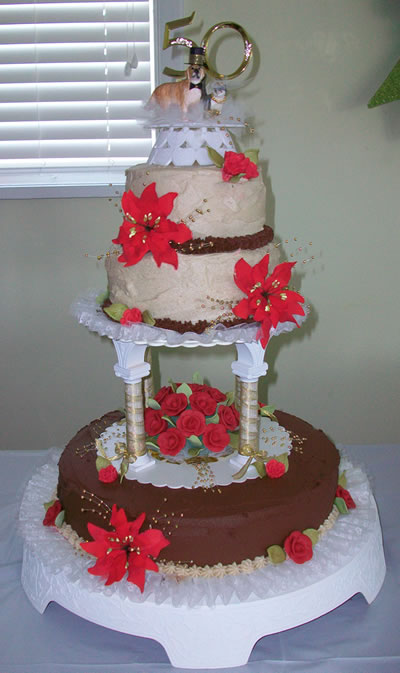
Everyone who knows me knows that my favorite sweetener is brown rice syrup. But recently I made a cake for my parents’ fiftieth wedding anniversary, which would serve many people who eat the average American diet. I was very concerned that everyone like the cake, so I made three attempts in order to perfect the recipe. I wanted it to be moist, light, sweet enough for the crowd, and delicious. I believe I achieved all those things – my family said it was the best cake I had ever made and I received compliments from the rest of the guests as well!

To make the cake sweet enough for everyone without using refined processed sweeteners that my health-conscious guests would not eat, I used Sucanat. It’s a dehydrated, granular, brown, all-natural sweetener found in most health food stores. It’s made by pressing the juice from natural cane sugar and cooking it down to a thick syrup. The syrup is then dehydrated and ground into sweet small pits. All the nutrition from sugarcane remains in Sucanat.

I originally wanted to create a vanilla cake, but using Sucanat turns the cake a light brown color with a rich maple, almost molasses-like taste to it. To create additional moisture, I used apple sauce. I made my own by simply cooking down some chopped up organic apples. You can also use store-bought apple sauce.  I chose spelt flour because it does not have the distinct taste whole wheat flour has. Spelt is also light and does not create a dry cake.  For the frosting, I used maple syrup and amazake for sweeteners. Amazake is made from brown rice. You can find it n the freezer section of health food stores.

For your next special event, here is one of my best recipes!

Anniversary Cake (thick 9” round cake)

Wet:

1 T. flax seed meal

1 cup rice milk

1/4 cup canola oil

1/4 cup applesauce

1/2 cup Sucanat

1 T. vanilla

1/4 tsp. sea salt

Dry:

1 T. baking powder

1  3/4 cup whole grain spelt four

Blend the flax seed meal and rice milk in a blender or food processor for about a minute until it looks frothy. Add the remaining wet ingredients. Blend until smooth. Sift the baking powder and flour into a bowl. (Sifting creates a lighter cake.) Now mix together the wet ingredients with the dry. Pour into oiled 9” cake pan. Bake at 350 for 35 minutes. Let cool completely before frosting.

Anniversary Frosting

3/4 cup rice milk

1/2 cup amazake

1/4 cup maple syrup

4 T. agar flakes

pinch sea salt

2 T. kudzu (dissolved in 1/4 cup water)

1/4 cup Earth Balance vegan natural buttery spread (has to be cold)

1 to 2 tsp. rice milk

In a sauce pan, heat the rice milk, amazake, agar flakes, and sea salt. Let simmer 10 minutes. Whisk in the kudzu mixture. It will thicken as it cooks. Once thickened, remove from heat and place in refrigerator a couple of hours until completely cold. Put in food processor along with cold Earth Balance. Blend until smooth. Add the rice milk slowly while it blends to create the desired consistency. Be very careful not to add too much or the frosting will become runny. Frost cake.

Valerie Wilson is the author of Perceptions in Healthy Cooking. She teaches cooking classes and offers counseling in Westland, Michigan. She can be reached at (734) 722-4553 or http://www.macroval.com.

Reprinted with permission from the Fall 2012 issue of Health & Happiness U.P. Magazine, copyright 2012.

Exercise Your Age? by M. Moeller

When speaking with women in their 40s, 50s and 60s about what it takes to stay fit while getting older, these three qualities were mentioned across the age groups –  recognition, acceptance and adjustment.

Recognition: Deanna Koscielny, 41, of Marquette had children at a very young age, was always on the heavy side, smoked and besides hiking and an occasional aerobics class, never exercised until she was in a serious car accident in her mid-thirties. Luckily, her injuries were minor, but the accident confronted her with the reality that she only had one life to live. “You can’t take your health for granted,” Deanna said. “If I had not changed, I know I would now be on high blood pressure meds and probably have diabetes.”

Deanna quit smoking and started biking with a women’s bicycling group called Women Shifting Gears. She not only very much enjoyed her first mountain bike ride, she also connected with many other women in the group. Soon she had exercise routines and new friends. Over the years, Deanna became very fit, competing in races and challenging herself with different types of activities, including running a marathon this spring. Her job also changed – she now teaches others how to maintain a healthy and fit lifestyle as part of a Marquette General Hospital program.

Acceptance: Marion Johnson, 53, of Ishpeming, was just entering high school when Title IX was introduced, and consequently ,women’s sports.  As a result, Marion participated in track and field and quickly became a successful sprinter. With her priority of raising children, Marion remained active throughout her 20s and 30s by introducing her children to outdoor activities like skiing, hiking and swimming.   As she entered her mid-40s with her children grown, Marion was able to shift her priorities back to her own activities with health and longevity now her primary goals for exercise: “As you age, you want to be fit to enjoy life.” So Marion stepped it up with road riding, mountain biking, running, and intense Cross Fit training.  She not only enjoyed the results of the training but thrived on the workouts as an important part of her daily routine.  Now in her 50s, Marion recently experienced a setback, tearing her meniscus while running.   She is still working through her recovery following surgery and realizing she may have to rethink her workout routines and perhaps scale the intensity back a bit. “It’s a reality check.”  Marion has accepted that the unexpected injury requires she make some adjustments in her   active lifestyle. Rather than quit, she will learn new ways to stay active and injury free.

Adjustment: Janet Koistenen, 61, of Gwinn has been an athlete all her life. As a child, her father encouraged her to be active outside, and as she grew older, she became a competitive runner and cross-country skier. Nowadays, Janet sees her sports as a way to have fun and to enjoy nature, so she is still very active in her 60s. However, over the years she did have to adjust some of her routines. For instance, after running on pavement for many years, knee pain prompted her to switch to trail running. Although trail running is often much more irregular than running on pavement, Janet said the softer surface makes it easier on her body. She also began adding bicycling and swimming to her routines. Mixing up activities, Janet said, contributes to her staying healthy enough to still run, swim, bike and ski regularly to this day. She even competes here and there, including the Copper Harbor triathlon, the Copperman, this August.

Adjusting to change, especially adjusting her mindset, has not been the easiest thing for Janet. About five years ago, during a cross country ski race, she realized it was time to change the way she was going about the sport. She said during the race she felt very competitive, thinking about beating the others. “I wanted that attention,” she explained. “I was doing it for all the wrong reasons.” Janet recognized she had forgotten to have fun with it, so she stepped away from racing and instead focused on teaching others. Teaching prompted further insight. Janet began surrounding herself with younger generations, whom she helped improve at sports and whom in turn motivated her to stay active, a win-win situation. Now Janet encourages folks her age and older to stay fit by being active with younger people. The Marquette area offers endless opportunities for generations to mix and exercise. A good introduction might be to start a sport with a grandchild or join a local sports club.

All the women agreed that no matter one’s age, fitness and a healthy lifestyle is achievable. It may take a bit of a leap for some, but very often that first step leads to not only a happier but also a longer life.

Miriam Moeller is a former journalist and creative writer. She currently works at Northern Michigan University in the International Programs Office. She loves biking, skiing and her dog Marla.

Reprinted with permission from the Fall 2012 issue of Health & Happiness U.P. Magazine, copyright 2012.

Top 12 Marquette Co. Attractions

Whether you’re a visitor or longtime resident, Marquette County has much to see and do. We can’t include every favorite location, but we’ve narrowed it down to twelve we guarantee will please you.

In Marquette

Presque Isle Park: The Jewel in the Queen City’s Crown is Presque Isle Park. This natural park has been a favorite of Marquette residents and visitors since 1891. Presque Isle is home to the grave of Chief Kawbawgam, last Chief of the Chippewas. It contains great walking trails and stunning sandstone cliffs, a charming cove, and the unique geographical feature of the Black Rocks. It’s not uncommon to meet a deer in your path and the lucky visitor might even spot a moose. Don’t forget to stop at the Island Store for ice cream and to visit Moosewood Nature Center—a great learning experience for children and adults.

Sugarloaf Mountain: Just six miles north of Marquette on County Road 550 is Sugarloaf Mountain. This cliff towers over Lake Superior and has been a popular hike for Marquette residents for a century. Today, flights of wooden stairs help visitors climb to the summit, which can usually be reached in about twenty minutes. At the top, a monument built by the Boy Scouts around 1920 pays homage to their leader Bartlett King who died in World War I. The view is breathtaking and includes Presque Isle Park and Marquette to the right and Partridge Island and Little Presque Isle to the left. After your hike, continue north on County Road 550; soon on your right are roads to Wetmore Landing and Little Presque Isle. Little Presque Isle is an island you can walk out to depending on the tide and songbird nature trails are nearby. Wetmore Landing is a popular beach with surfers.

Marquette Regional History Center: Marquette has had a historical society since the 1890s but in 2011 this phenomenal new history center opened. The entire history of the area of Marquette and its neighboring communities is depicted here. From early Ojibwa communities, to dioramas of local wildlife, the cultural history of the community, farming, military, and logging history—the Marquette Regional History Center has it all. Events are also regularly scheduled, including auctions, special exhibits, and cemetery and city walking tours.

Marquette Maritime Museum & Lighthouse: Located in the old sandstone Marquette Waterworks building constructed in 1890, this museum depicts the area’s long love affair with Lake Superior. A film and numerous displays tell the history of shipping on the lake, from early schooners to ore boats, and of course, shipwrecks. The museum also offers tours of the Marquette Lighthouse, built in 1866.

Downtown Marquette Shopping & Architecture: Marquette’s main streets, Front, Washington, and Third (“The Village”) offer a variety of Marquette originals for shopping, dining and live music. Enjoy ethnic specialties, fresh locally grown food, chocolates galore, all Michigan-made products; artwork by U.P. artists, unique gifts, fashionable clothing and a great selection of books. While you shop, be sure to admire Marquette’s fabulous architecture including the 1892 Savings Bank, Marquette’s first skyscraper, and Wells Fargo, originally the First National Bank of Marquette, the most expensive building in the world per square foot when it was built in 1927. Marquette’s Old City Hall with its prominent roof is a true original, and the movie classic Anatomy of a Murder was filmed in the Marquette County Courthouse.

St. Peter’s Cathedral: Built in 1881, St. Peter’s has been called the world’s most beautiful sandstone building. The original cathedral was a small church whose cornerstone was laid by founding bishop Frederic Baraga, known as “the Snowshoe Priest” and currently up for sainthood for his work converting the Ojibwa and serving the early mining communities. The cathedral contains beautiful stained glass windows and impressive marble columns and has been the spiritual home to generations of Marquette’s Catholics.

Northern Michigan University: Northern Michigan University is not just for college students. Several cultural and artistic venues include the Beaumier Heritage Center, which continually features exhibits about the people and history of Upper Michigan. The Devos Art Museum has hosted nationally known artists as well as the university’s own student artists. Finally, the Superior Dome—the world’s largest wooden dome—pays homage to NMU’s athletic past, including nationally known coaches Tom Izzo and Steve Mariucci. Don’t forget to stop at the NMU Bookstore in the University Center to get your green and gold gear. Go Wildcats!

Mount Marquette: By now you may think you’ve seen all of Marquette, but you haven’t really seen the Queen City of the North until you view it from Mount Marquette. Go south on US-41 and to the left you’ll find the road (if you pass the prison entrance you went too far). The road is a bit rough but the glorious view is worth the trouble, especially when the autumn colors are vibrant.

In Marquette Township

Dead River Falls: Locals sometimes keep mum about this relatively unknown gem hidden just a few minutes from downtown Marquette. You often can hike this series of waterfalls without seeing a soul. It has its challenges—you must cross a small creek over fallen trees near the start, followed by a steep incline; however, step-like spots similar to a twelve-foot ladder are helpful. Afterwards, you’re rewarded with an easy meander through several waterfalls. Walkable rock outcroppings bring you to the base of a thunderously beautiful thirty-feet plus of water rushing down, as well as to soothing views from above. Small but wide falls create pools swimmable if temperatures are warm or you are hardy enough.

In Chocolay Township

Lakenenland: This sculpture park features countless works by local artist Tom Lakenen, including dinosaurs, bears, alligators, UFOs, ships, flowers, and pigs riding bicycles. Everything imaginable is here in one of Marquette County’s favorite tourist destinations. The park is just east of Harvey on M-28 heading toward Munising.

In Negaunee

Michigan Iron Industry Museum: Marquette County was developed because of the 1844 discovery of iron ore near present-day Negaunee. The Michigan Iron Industry Museum is devoted to telling the story of that discovery and all that resulted from it. Learn the history of iron ore production and shipping, watch how a pocket dock works, and enjoy regular educational programs.

In Ishpeming     

U.S. Ski and Snowboard Hall of Fame and Museum: Ishpeming, the birthplace of organized skiing, is proud to claim this national landmark. Complete with a ski slope roof, the museum houses an extensive collection of artifacts and archives relating to the history of skiing. Displays include over 375 Honored Members, trophies, clothing, and equipment, as well as a library on skiing, a theater, and soon a ski film institute.

By now, you understand why Marquette County has been voted one of America’s favorite destinations. But we’ve only scratched the surface. Here’s our runners-up list: in Negaunee: Antique Shops; in Ishpeming: Cliffs Shaft Mine Museum and the Tilden and Empire mine tours; in Marquette: historic homes of Ridge and Arch streets, McCarty’s Cove, the Children’s Museum, the Peter White Public Library, and the Lake Superior Theatre. We hope you visit and enjoy them all!

Reprinted with permission from Health & Happiness U.P. Magazine, Summer 2012

Gifts from Nature: Older Than The Hills

by Robert Regis

Having grown up in the U.P., I was intrigued by the rocks and minerals and the spectacular rock outcroppings seen in my nearby travels.  One such place is Pictured Rocks National Lakeshore.  There you see rusty red and orange sandstone rising abruptly from the deep blue waters of Lake Superior, making a dramatic visual contrast.  Beautiful indeed, but the young scientist in me asked where did those sandstones come from? And what makes them so red? Why are the cliffs so dramatic?

Turns out the sandstones are quite young, compared to other rocks around the U.P. They are a mere 500 million years old! They were deposited along an ancient shoreline, with streams depositing sand across a gentle, rocky plain. Except at that time, the PRNL was located just south of the equator. That’s right, the equator. There were no palm trees lining the beach, though, for land plants had not yet made their appearance on Earth.  It was a barren scene.

The rocks tell a story of change over time, like pages in a book. At the base of the cliffs, right at or below water level, is the Jacobsville Sandstone, named for sandstone quarry owner John Henry Jacobs. There, the rock was quarried for building stone, and may be seen in many buildings around the U.P. (Marquette Courthouse and the Cathedral, etc).  Above the Jacobsville Sandstone is the Munising Formation, which forms most of the vertical cliffs.  The lower member is the Chapel Rock Sandstone, and above it is the Miners Castle Sandstone. Although similar, the sediments that make up the Chapel Rock Sandstone came from a different source than the Miners Castle, and hence have a slightly different appearance.  The structures and minerals in the rocks show the sediments first came from highlands to the south (Chapel Rock) and later from the east (Miners Castle) as seas encroached on the land and became  deeper and deeper.  The red color comes from hematite, which stains the sediments.  Above the sandstone cliff is a bed of dolomitic sandstone, which indicates that the deepening ocean was warm but still shallow.  Dolomite forms a resistant layer that is difficult to erode, and is the “caprock” that protects the layers below. It is responsible for the many waterfalls and abrupt topography in PRNL because streams have difficulty eroding through the layer.

Moving west toward Marquette, you can see the Jacobsville Sandstone again at Presque Isle Park. In some places, the sandstone has lost its red hematite coloration by chemical leaching and is now white.

The name Presque Isle means “almost an island.” In fact, not too many years ago (to a geologist) the park was an island.  You can observe the old shorelines of glacial Lake Nipissing (pre-Lake Superior) from about 5,000 years ago at the bandshell and the gazebo near the entrance to the park.  The bluffs were formed by waves eroding into the island when the lake was about twenty-five feet higher.  An underwater ridge of sand developed between the island and the mainland, and when the lake lowered, the ridge became a land connection which geologists call a “tombolo.” The road to the Park is on the tombolo.

Underneath the sandstone is rock that locals refer to as “Black Rocks.” The Black Rocks are a metamorphosed igneous peridotite about 1.7 billion years old! The rock was exposed previously, because the Jacobsville Sandstone rests directly on top of that ancient erosional surface (called a nonconformity). You can see this nonconformity at many places in the Park, but probably best along the west side, south of “Sunset Point.”

Robert Regis has been a geology Professor at Northern Michigan University for over twenty years. His degrees are from NMU, Indiana State University, and Michigan Tech University. He has published and presented numerous articles on the geology of the U.P.

Reprinted with permission from Health & Happiness U.P. Magazine, Summer 2012.

WHAT ARE THE TOP 12 LOCAL ATTRACTIONS?

Tell us what places you think are Marquette & Alger County’s best! They just might be featured in the Summer 2012 Issue of Health & Happiness U.P. Magazine!

Categories to consider:

– Architecture

– Art

-Canoeing

– Dining Area

– Family Fun

– Fishing

– Handicapped Friendly

– Historical

– Kayaking

– Outdoor Recreation

– Shopping Area

– Swimming

– Great Views

What Is A Healthy Way To Lose Weight?

by Jessica Nagelkirk

The multi-billion dollar weight loss industry has a dirty little secret: Dieting doesn’t work. You name the diet, there’s a book selling it and people buying it. The problem is, most diets have it all wrong. Dieting typically focuses on food deprivation, which actually drops your metabolism and makes your body want to store fat. Here we’ll explore the physiology of metabolism and some simple steps you can take to change your life for good.

The Anatomy of Digestion

In the center of the brain, you’ll find the hypothalamus, an important regulation control center for your body. Appetite for food and thirst, as well as metabolism, are all controlled by this little almond-size structure. Here, two important hormone regulators, CART and NYP, are released to control the brain’s biochemistry of hunger. These hormones have opposing effects (CART increases metabolism and reduces appetite, while NYP makes you hungry) and are in a constant battle for control of your appetite. The release of CART and NYP are controlled by events that occur in the gut.

In the gut, when you eat healthy fat or protein, your intestines release a messenger called CCK that turns on the “rest and digest” parasympathetic nervous system, allowing your body to focus all its energy on breaking down that meal you just ate. This messenger also causes the release of another messenger hormone, leptin, stored in fat cells. Leptin activates CART, telling you to stop eating.

NYP, on the other hand, is stimulated every 30 minutes by the stomach’s release of a substance called ghrelin. So why don’t we get hungry every half hour? It turns out the leptin pathway is able to override NYP’s response to ghrelin and keep you feeling satisfied. This is why including healthy fats and protein in your diet is so important for achieving and maintaining a healthy weight.

The Role of Food

A healthy diet is all about including healthy fat, fiber and protein. By eating the right kinds of foods, you can trick your brain into believing that you’re full. Eating a little bit of good fats, like a handful of walnuts, approximately 25 minutes before a meal, stimulates the production of CCK, activates CART, and helps you eat less at mealtime because you don’t feel ravenous. If you do this, you’ll be able to eat for pleasure rather than hunger.

An adequate intake of healthy fat, (around 25% of your daily calories), includes a healthy balance of omega-3, 6, and 9 essential fatty acids. Some good sources of fat include avocado, coconut, nuts and nut butters, seeds and seed butters, fish and fish oils from deep-water fish, and organic eggs.

Eating a diet high in fiber slows the time it takes food to move from your small intestines to your large intestines, resulting in increased appetite-suppressing signals. Studies show that bulking up on fiber in the mornings makes you less hungry in the afternoons. Vegetables and fruits, (especially leafy greens and apples), are an excellent source of fiber. The revised USDA food guidelines suggest each plate at mealtime to be 50% vegetables. It is recommended to eat size to nine servings of fruit and vegetables each day.

Protein gives you energy, helps burn off extra calories, and satisfies hunger. Studies indicate that a high protein diet does a better job of reducing hunger between meals than high-carbohydrate vegetarian meals. According to the Mayo Clinic, a good, lean source of protein should make up 25% of your diet. Try free-range beef, eggs, dairy, deep-sea cold water fish, legumes, nuts, wild game, and poultry.

Bust a Move

After you eat, your body has glucose available for energy. Normally, the pancreas secretes just the right amount of insulin to move the glucose into muscle cells for energy, keeping the blood sugar stable. Many overweight people are insensitive to insulin so the pancreas secretes more and more insulin in an attempt to get a response from the body. An elevated level of insulin in the blood stream encourages fat deposition and the development of obesity. Clinical studies have shown that regular exercise improves the muscles’ sensitivity to insulin and lowers blood insulin levels. When you improve insulin sensitivity, you also reduce your appetite by preventing large swings in blood sugar levels. Excess circulating insulin in an insulin-insensitive person can cause blood sugar to drop too low, causing hypoglycemia. Hypoglycemia makes you hungry, even if you have just eaten a large meal. Exercise sets the metabolic stage for weight loss to occur by controlling your blood sugar.

In addition to its effects on insulin, regular exercise can increase good cholesterol, reduce triglycerides, lower blood pressure, and have a positive impact on bone density.

Get Started

Here are some tips for applying the knowledge you now have about the physiology of metabolism.

Know where you’re starting. Get off the scale and pull out a tape measure. Studies show that waist circumference, not overall weight, is the most important indicator of mortality to being overweight. Measure at the point of your belly button. Measurements over 37 inches for females and over 40 inches for males indicate an increased risk to your health.

Eat before you’re famished. Eat a healthy balance of fat, fiber, and protein at each meal. Try using a nine inch plate if portion control is difficult for you.

Identify food sensitivities. Although the relationship between food sensitivities and body weight remains uncertain, according to research, chronic food allergies may lead to overeating, resulting in obesity. If you believe food sensitivities may be playing a role in your weight gain, contact your physician to talk about food allergy testing or an elimination diet.

Learn stress management techniques that work for you. NYP, the chemical in the hypothalamus that decreases metabolism and increases appetite, is a stress hormone. This may explain why some people in chronically stressful situations tend to gain weight.

Eliminate high fructose corn syrup (HFCS). Your brain doesn’t recognize HFCS as excess calories or as a NYP suppressant. It may contribute to weight gain by both making you hungry as well as unable to shut off your appetite.

Exercise. In order to gain minimal health effects of exercise, you will need at least thirty minutes of aerobic activity at moderate intensity on most days, preferably all days, of the week. It’s important always to listen to your body and increase or decrease your exercise accordingly. Strength training is an extremely important aspect of exercise and should not be neglected. Work with a personal trainer, physical therapist, chiropractor, or your physician to come up with an exercise regimen right for you.

Every person is unique, Naturopathic physicians expect the reason for weight gain to be equally individual. Before starting any weight loss plan, consult your doctor to make sure your weight gain isn’t from a medical condition that requires treatment other than lifestyle changes. Implementing healthy lifestyle habits will not only help you shed those unwanted pounds, but also help you have more energy and less risk for serious medical conditions.

For more information on dieting, including low carb diets, the danger of yo-yo dieting, and more, visit my blog at http://modernnaturopath.blogspot.com/ and click on “weight loss”.

Jessica Nagelkirk, medical student at National College of Natural Medicine in Portland, Oregon will graduate in the spring of 2012 as a Naturopathic Physician (ND).

Reprinted with permission from Health & Happiness U.P. Magazine, Spring 2012.