When Yoopers travel, they naturally contrast and compare where they are to life back in the U.P. Yoopers naturally see the world from a different perspective, a Yooper perspective.
When home, you know you are of the land of the Menominee, Dakota, and Anishinaabe (Ojibwe/Chippewa). You relate to the Finnish word “Sisu”-stoic determination, tenacity of purpose, grit, bravery, resilience, and hardiness. Your ancestors probably supplied the rest of the country and world with minerals, metals, and wood.
But when you’re downstate, far south, out west or east, even across the Big Water, you miss the meat turnover brought to the region by Cornish miners called pasties (pronounced “pass-tees”). And cudighi, the sweetly spiced Italian American sausage link (often part of a sandwich on a long hard roll with mozzarella cheese and tomato sauce), brought by Italian immigrants in 1936.
You listen to the “trolls” (people who live “below the bridge”) complain about a few inches of snow.
When you describe your normal winter of snow measured in feet, they say “I could never live up there! I’d move to Florida!” Then Yoopers quietly think to themselves “Good. Go to Florida, or Phoenix, or Denver, or wherever—anywhere but the U.P!”
In the cities you endure four, six, eight lanes of traffic, creeping along like a funeral procession. You miss the forest, the quiet, the fresh smells.
Since you grew up among clear cold trout streams and waterfalls, you shake your head in disappointment when you see their so-called “rivers” colored either green from algae, brown from sediment, or girdled into a concrete walled channel.
Where are the frogs, the turtles, the trout? Is there really any need for fish to have eyes? What could fish see in that murky water? What memories will the young have of hours spent playing at “the river”?
So instead, you head for the beach at their local lake.
It’s not the miles of open beach along the clear cold shoreline of the U.P.’s great lakes, Superior, Michigan, or the northwest corner of Huron. It’s smaller, more crowded. There are no agates. It doesn’t smell quite the same.
In October, their few trees might turn a pretty yellow color, but they don’t get our explosion of reds and oranges. They don’t have the leaf-lined, golden-carpeted roads like ours, or the near-solid walls of roadside color that reach deep into the forest and change with every turn.
In the U.P., it’s like a color-crazed artist painted a gigantic mural of color along miles of roads. Tourists must drive up to the U.P. for that experience. They must leave all that color here. They can’t take it home with them.
I recall the lyric from the old Joni Mitchell song Big Yellow Taxi about how you don’t appreciate what you have until you don’t have it anymore. You wonder, do they even know how good it once was, how good it can be?
When you grow up with waterways that are basically drainage ditches and greenery that consists mostly of lawns, how do you gain a love of the outdoors? From a zoo?
Modernity has weaseled its way between the land and its people, causing people to pay for the pleasures of good land, but we resist. Yes, we log trees and mine metals, but we also protect our land because when we travel, we see what they’ve lost.
When we anxiously head home over the Mighty Mac, our storied Mackinac Bridge, we breathe a sigh of relief as we turn back onto Hwy 2 or Hwy 41, knowing that soon we’ll soon be home. Ahhh… YOOPtopia!
Excerpted from the Winter’23-’24 issue of Health & Happiness U.P. Magazine, copyright 2023, Empowering Lightworks, LLC. All rights reserved.
There are two categories of earth caring people: evolutionists and revolutionists. Friends and relatives may lean closely to one side or the other. Which are you? A hybrid?
Evolutionists believe that, in the end, nature works. The earth is dynamic and constantly changing. Sometimes it rains, then it doesn’t. Sometimes it’s hot, then cold. Everything is born and dies. Species appear and disappear. Humans are a normal part of nature. Life may not always be what you think it should be, but just wait. You’ll see. There is no need to worry. Earth activism is radical, a waste of time and money. Life is good. Enjoy.
Revolutionists believe the earth is challenged, look for causes, and solutions. We must protect what’s good. Revolutionists organize, network, plan, raise funds, find volunteers, become volunteers, publish articles, make YouTube videos, sponsor research, donate to environmental causes, propose rules and legislation. Revolutionists are early adopters of new technologies that reduce human environmental impact. They ride bikes, install solar, drive electric cars, install heat pumps, and buy organic. They donate and shop at thrift stores. They believe that stewardship has a price, and everyone who benefits should be willing to pay. Life is good. Care for it.
Evolutionist: It’s important to maintain today’s lifestyle for ourselves, our families, and our local environment. There is little reason to monitor scientific research because science seems unsettled. Since science can’t be relied upon, taking actions, or making changes based on unsettled science could be a mistake, do more harm than good, and probably impact the good life that generations have worked so hard to create.
Revolutionist: When looking toward the future, it seems that earth’s life support system is being threatened by human actions. We must be concerned about others and the environment on a national or even global scale. Science provides the best information available, so we must depend on the latest scientific studies and consensus for checking environmental conditions and trends. Responsible lifestyles must be based on science. Ignoring science is reckless.
Evolutionist: One person can’t do much about fixing global problems. Population is not a problem because there is a lot of undeveloped land available. We are much more efficient now than we were, so the impact of population will just get better over time.
Revolutionist: Individuals working together can have a big effect. Our “continuous growth” fossil-fueled economy raises living standards but generates a large environmental footprint. There are already so many people needing so many resources that, according to science, the earth has reached its limits. Increasing the fossil-fueled American lifestyle for an increasing population negates the benefit of greater efficiency.
Evolutionist: It makes no sense to damage the economy and our lifestyle to save some obscure plant or an endangered bug or minnow. Over history, millions of species have gone extinct. Species extinction is a normal part of evolution. New species will evolve. Humans are clever and adaptable. We’ll invent some technological fix.
Revolutionist: Species typically last for at least a few million years. Without human impacts, biodiversity would continue to grow at an exponential rate, but science reports that we are currently in a sixth mass extinction event. Species are going extinct–perhaps 100 to 1,000 times the normal background rate of extinction. The decline has gathered pace in recent years. Clearly, humans dominate the earth and accelerate extinction. Human impact is so significant that the geological age we are living in is now called the “Anthropocene.” Life must adapt to radical, uncharted, environmental changes, and do it faster than we can evolve to it. All life risks becoming proverbial “fish out of water,” organisms in an environment that we did not evolve for.
Evolutionist: Renewables are expensive and unreliable. It will be a long time until renewables are practical. Some people want to install renewables on prime farmland, changing land use and the landscape. Renewables are ugly. That’s why homeowner’s associations often prevent homeowners from installing solar. Solar and wind should be kept out of sight and on wasteland. Renewables for the home are too expensive. That’s why so few install solar.
Revolutionist: We can’t switch to renewables if we don’t install them. We use a lot of energy so renewables must be a priority. Surplus farm crops can lower the value of farm acreage. Farmland might be more valuable with renewables. Landowners can make significant reliable income from land leased for renewables, harvesting sunshine directly, organically, without the expense and impact of irrigation, pesticides, fertilizers, or herbicides. Renewables give farmland a well-deserved rest. Watching clean, inexpensive, sustainable energy flow from the wind and sun directly into the grid is a beautiful thing. Tax incentives help people install solar.
Evolutionist: When government gets involved, you can bet taxes and government spending will skyrocket to pay for “clean energy” subsidies. If renewables were so good, there would be no need for subsidies. The free market would eventually make renewables inexpensive and abundant. If the government ever imposes a carbon tax, you can bet the economy and every person in it will suffer.
Revolutionist: The only way out of the climate issue is by stopping fossil fuel use. The only solution is renewables. Capitalism protects capital. It is the motive to make a profit. Oil subsidies keep the price of oil down to keep people buying gasoline. If gasoline goes above $5 a gallon, car buyers are suddenly concerned about efficiency and electric cars. When gas is $3 per gallon, buyers are more concerned about how a car looks. Renewable energy is now cheaper than coal or oil. Electric cars are much cheaper to drive than gas. Tax credits for renewables and efficiency are a wise investment.
Conclusion: We earthlings are products of billions of years of adapting to the earth’s environment at the speed of evolution. If we didn’t adapt, we would be extinct. Individuals adapt according to their personality, lifestyle, finances, and environment. The result must inevitably be an effective compromise that enables a stable future for the next generation.
It seems we haven’t been “fighting” climate change, we’ve been denying it or hiding from it with air conditioning (using extra electricity), flood insurance, fire insurance, consuming products, avoiding or ignoring scientific details, and pretending we can still burn fossil fuels in cars, airplanes, and furnaces. Installing heat pumps and buying electric cars seems too different, too radical, even though their use saves money and cleans the air.’
After revolutionists work tirelessly to address problems, evolutionists see that problems were avoided and say, “See, we were right. The predicted disasters didn’t happen. It’s much better than the revolutionists predicted!”
There is no place on earth to hide from the earth’s new climate. Since we are all in it, we all must live with it. Adapt as you must. Prevent what you can. It’s the only world we’ve got.
Evolutionists say, “Don’t worry, be happy.” Revolutionists say, “Don’t get depressed… get busy!”
Steve Waller’s family lives in a wind- and solar-powered home. He has been involved with conservation and energy issues since the 1970s and frequently teaches about energy. Steve can be reached at NonfictionSteve@gmail.com.
Excerpt from the Fall 2023 issue of Health & Happiness U.P. Magazine, copyright 2023, Empowering Lightworks, LLC. All rights reserved.
Summer is here. School’s out. Time to play. Remember what mom said years ago…. “Play nice!” She meant have fun while treating others and things respectfully. If you play nice, friends always want to play with you, and playthings won’t get broken. So, call those nice friends and schedule some fun activities in the U.P.
Take the kids to a U.P. zoo. Go whitewater rafting down the Menominee River. Google “Hiking Upper Peninsula Trails” for an exhaustive list of some of the best and most beautiful hiking in the Midwest, right here near home, healthy and inexpensive!
Google “Upper Peninsula waterfalls map,” then go. We in the U.P. have the best waterfalls. Lower Michigan has only one puny public-accessible waterfall. Too bad for them!
There are five-hundred-and-fifty miles of the famous North Country Scenic Trail running from St. Ignace at the Mighty Mackinac Bridge to Tahquamenon Falls State Park, to Pictured Rocks National Lakeshore, through Marquette to the virgin forest in the Porcupine Mountains, then to the Wisconsin border and beyond—enough to wear out two pairs of hiking boots!
Our outstanding U.P. state and national parks and forests are great for fishing, hunting, canoeing, kayaking, camping, photography, birding.
There’s no need to fly to some other state. Instead, experience what the U.P. has to offer!
We have some of the cleanest beaches in the nation thanks to the sparkling waters of Lakes Superior, Michigan, and Huron—so many beaches, so little time. There are centuries of shipwrecks to explore. If you haven’t been snorkeling, do it! Don’t let all that crystal clear water go to waste. If needed, rent or buy a wet or dry suit, mask, and snorkel. There is a whole world of subsurface surprises waiting for you.
Bike trails—some are paved and relaxing, some are rugged and exciting. Take your pick. Michigan offers more rail trails than any other state and is home to the International Mountain Biking Association Silver Level Ride Center in Copper Harbor. From top-rated singletracks to thousands of miles of family-friendly rail trails, Michigan is one of the most bike-friendly states in the nation. Some trails are e-bike friendly. Call your local bike shop for details.
The above activities all share some critical qualities. They’re local, interesting, healthy, fun, and a great way to be with friends respecting the outdoors by minimizing recreational gas burning. Notice none of the activities above require an airplane, an outboard motor, a jet ski, motorized dirt bike or ATV. I just suggested more than a few summers’ worth of activities that require absolute minimal gas burning. Don’t fly in fuel-guzzling airplanes to play in some other state. Instead, save those fuel dollars or spend those dollars on an electric vehicle rental for your “play nice” local adventure.
Burning fossil fuels just to have fun is not how we play nice in the outdoors.
The International Panel on Climate Change issued its comprehensive summary report earlier this year. They are desperately pleading to get people, especially Americans, to burn less fossil fuel. All regions, including the U.P., are experiencing “widespread adverse impacts.” Oceans and ice caps routinely break high temperature records.
People are slow to change. Marketing relentlessly entices us to distant exotic vacations, powerful, speedy gasoline engines on land, water, and in trucks, and suggests that a beach in another state is better than our own beaches. I’m not convinced.
So, play nice this summer. Leave the gas can at home. Breathe clean fresh air and less CO2. Help keep the climate stable and our amazing U.P. playground beautiful and unbroken, today and tomorrow.
Steve Waller’s family lives in a wind- and solar-powered home. He has been involved with conservation and energy issues since the 1970s and frequently teaches about energy. Steve can be reached at Steve@UPWallers.net.
Excerpt from the Summer 2023 issue of Health & Happiness U.P. Magazine, copyright 2023, Empowering Lightworks, LLC. All rights reserved.
The Fall 2022 issue of Health & Happiness UP Magazine included my article “Order Your Electric Car NOW” covering the basics of electric vehicles (EVs) after my 6,000 miles of experience, but didn’t answer questions many Yoopers have about winter driving. Now, after 16,000 electric miles, including winter miles and new tax credits, I have answers.
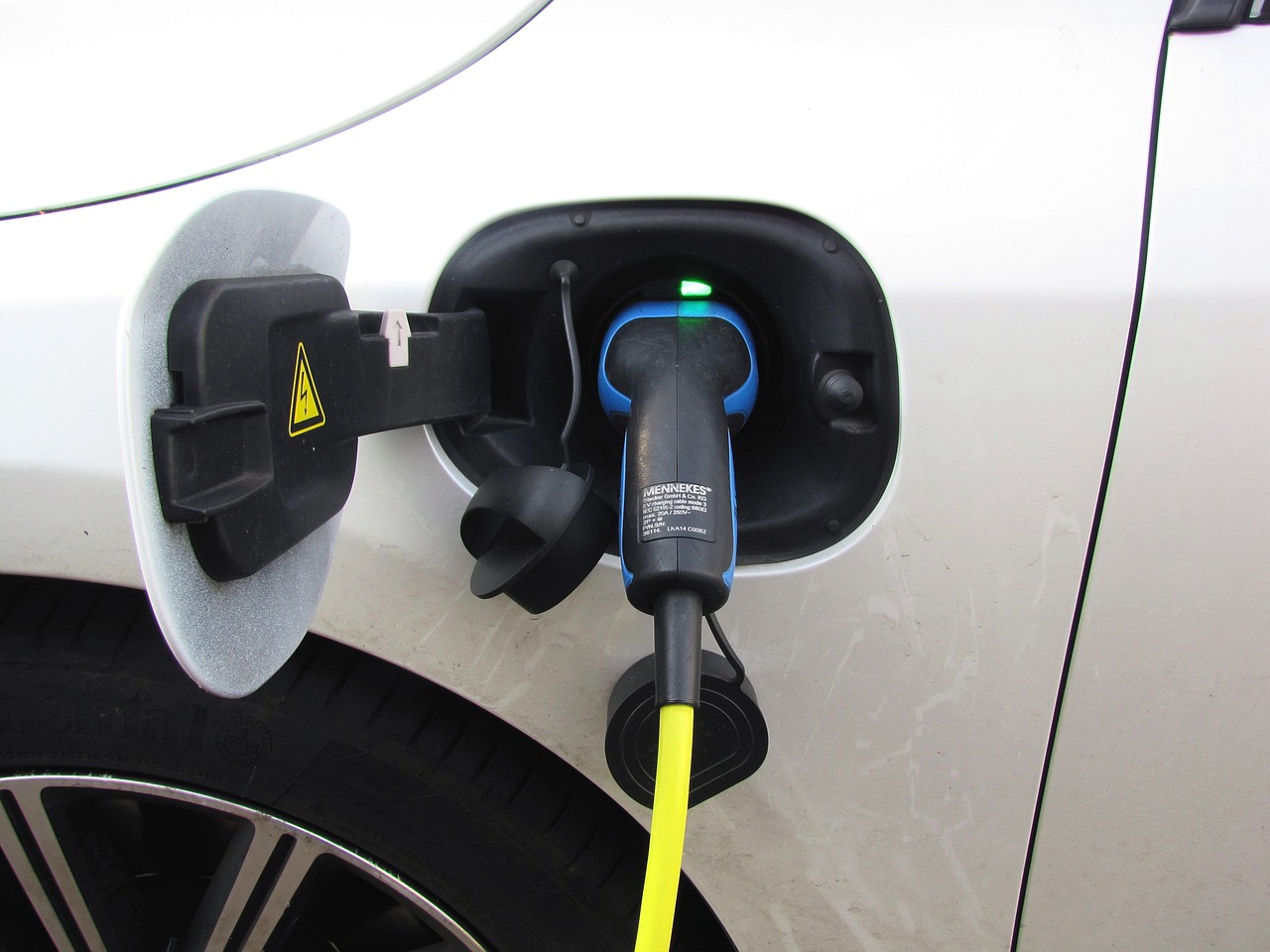
A critical detail is that 80% of EVs are charged while you sleep, at home, overnight, from an ordinary 240-volt clothes dryer-type circuit in a garage or outside fixture. Having a home or apartment/condo complex charger (30% tax credit to install) is a big winter advantage. A plugged-in EV is ready every morning to remote start, warm up, and drive all winter long. With home charging, you spend less time charging than you formerly spent pumping gas! Just plug in at night, unplug in the morning, and go.
Unlike many gas or diesel cars, EVs will start even in the coldest weather and are still very powerful. In all EVs, as the temperature drops, battery chemistry slows somewhat, but the power remains. Many EVs can be started remotely and are toasty-warm whenever you get in. Batteries heat the car interior. EVs with heat pumps warm the interior and passengers efficiently, faster than gas cars.
EV winter capabilities vary by model.
Some are absolutely ready for U.P. winters; others have some limits. Below freezing, the EPA range per charge in miles is reduced by about 25%. A daily 250-mile EPA summer charge range is reduced to 180 winter miles. Very few people regularly drive 180 miles per day so that’s rarely a problem. When road-tripping more than 180 miles from home, recharge at a fast-charger. Go to PlugShare.com to find medium and fast chargers on your route. Many EVs know where the chargers are and will route right to them.
Some people are tempted to think they need 400 – 600 miles of range and massive power. That’s usually a mistake unless you tow heavy loads long distances. If most of your driving is less than 180 miles per day, excessive range beyond 300 miles just means you paid extra for excess battery capacity which rarely gets used, which adds excessive battery weight, which drags down the EV truck’s already lower efficiency (MPGe – miles per gallon equivalent), which means you’ll spend much more time charging more energy into the truck than charging a speedy 250-300 EPA mile passenger EV on the same trip.
EV batteries on long winter road trips fast-charge fastest when warm. Cars best suited to long winter road tripping have a feature called “preconditioning” that automatically heats the battery to an ideal temperature as you drive to a fast charger. EVs without preconditioning usually charge much slower in the cold. Slow charging at home is essentially unaffected.
Most EVs are all-wheel drive. Snow and slush eat energy. Snow tires eat some energy too, but AWD EVs often handle winter road conditions better than gas cars. EVs are among the highest safety-rated vehicles on the road.
EV car shopping is fun.
For town/commuter EVs, add a 240-volt charger in your garage, then get almost any EV. For winter road tripping, consider sleek, beautiful, and sexy EVs with an EPA summer range over 250 miles, all-wheel drive, preconditioning, a CCS or Tesla charger connector, and a max charge rate over 150 kW. Tax credits are available for almost everybody—$7,500 for qualifying EVs, 30% credits for installing chargers. Go to shorturl.at/floWZ
Buying another gas car? You’ll be locked into gasoline for five more years. Yuck! Order or lease your electric car NOW!
Steve Waller’s family lives in a wind- and solar-powered home. He has been involved with conservation and energy issues since the 1970s and frequently teaches about energy. Steve can be reached at Steve@UPWallers.net.
Excerpted from the Spring 2023 issue of Health & Happiness U.P. Magazine. Copyright 2023, Empowering Lightworks, LLC. All rights reserved.
The latest Emissions Gap Report from the United Nations Environment Program (https://www.unep.org/resources/emissions-gap-report-2022) states that the world has just emitted a new annual record amount of carbon dioxide (CO2). Given this increase, to limit global warming to 2°C, we must cut CO2 thirty percent by 2030. A stepwise approach is no longer an option. We need system-wide transformation.
Who is at the top of the emissions list? Americans, emitting over twice the world average CO2 per person. Even though we like to think we are protecting our environment, that “other” people are the problem, we are the actual culprits breaking world CO2 records.
New record: U.S. population–333 million people in November 2022, increasing by 1.4 million Americans per year (https://www.census.gov/popclock/). We must build a new Dallas, Texas (population 1.4 million) each year to accommodate our new Americans. New record: world population–8 billion people by November 2022, increasing by 70 million each year.
Those new additional 1.4 million Americans, our youth, our future, need a slice of our American pie–food, water, land, housing, heat, transportation, all from the limited environment already supporting 333 million Americans. Each must share a smaller, cleaner piece of green pie.
But what more can we Americans do?
How can we emit less and still be Americans? Since most of the rest of the modern world seems able to emit less, how can we break their lower emission records?
We need to learn to live without CO2, then teach the next generation. Eliminate old, fossilized thinking and think anew. That’s hard. But if nothing changes… nothing changes!
Imagine a life without fossil fuels. Cars emit twenty pounds of CO2 per gallon of gas. How would we still drive? We must shift to electric cars (rebates available). No excuses. How would we heat or cool our homes? Homes must rely entirely on electricity so we must install heat pumps (for heating and cooling–rebates available).
How can we clean all that electricity? It still depends mostly on fossil fuels. Our only clean, cost-effective, sustainable option is using renewables. We must install solar at our homes (rebates available). Encourage wind and solar farms in our neighborhoods. Learn to love the look of solar and wind.
Some fossil fuel use will be irreplaceable, but if you think better, most can be eliminated.
Yes, there is a price to pay for changes. Fossil fuels were dishonestly cheap, so cheap that we used them for everything, everywhere. Cheap because we didn’t pay then for our CO2 consequences. The honest, responsible bill is now due. We must pay for the fixes, and fortunately, the fixes create jobs.
Existing homes and apartments must convert to all electric with solar and heat pumps. New construction needs to use less wood to keep trees alive and absorbing CO2. Use less concrete and steel. Making a pound of cement emits a pound of CO2. Making a pound of steel emits 2 lbs. of CO2.
Smaller homes are better, cheaper, have lower emissions, and are easier to clean and maintain. McMansions are fossil thinking. It’s time to upgrade to smaller. Upgrades always have a cost but fossil thinking costs more. That’s the honest price of a healthy environment. We cannot afford to wait for the environment to be on sale.
Let’s break good records this holiday season. Upgrade to eliminate CO2. Get rebates for efficiency, energy, and electric cars. Emit the least CO2 in your life, ever. Let’s have the cleanest water and air, ever. Let’s consume less than ever. These are records waiting to be broken. The next generation is counting on us.
Steve Waller’s family lives in a wind- and solar-powered home. He has been involved with conservation and energy issues since the 1970s and frequently teaches about energy. Steve can be reached at Steve@UPWallers.net.
Excerpted from the Winter ’22 – ’23 issue of Health & Happiness U.P. Magazine. Copyright 2022, Empowering Lightworks, LLC. All rights reserved.
We finally got our all-wheel-drive plug-in electric vehicle (PEV)—no gasoline engine and no more CO2 emissions. We’ve been driving it hard for a couple of months and tallied over 6,000 miles, including a few 400-mile trips from the U.P. to Chicago and to Detroit.
Based on my experience, you should order yours now because it takes 6 months to more than a year for delivery. As you hesitate to order, the prices keep increasing. They can now cost as much as a new crew cab fossil truck, but cheaper models are available.
Fossil gas drivers have “range anxiety” (fear of running out of battery) but PEVs today have plenty of range, some over 300 miles on one charge. We rarely drive more than 100 miles a day and we recharge at home. It’s like having a gas station in your garage. Charge overnight with an ordinary 240V garage outlet and wake each morning to a fully charged vehicle ready for another long day of driving. For apartment dwellers, there are programs for owners to add parking lot chargers or just fill up at your local public charger, then drive home, just like you do with a gas guzzler. Either way, PEVs drive cheaper.
We drive electric for about $.04 per mile.
Our gasoline car averages a respectable 28 MPG but still cost $.16 per mile. Our PEV gets 131 MPGe in the city and 117 MPGe on the highway. It’s 75% cheaper to drive, saving about $300 per month in gasoline expense. Plus, there is almost no maintenance–no oil changes, muffler, catalytic converter, or tune-ups. PEVs have few moving parts, there is much less to fail so there are fewer repairs. We do occasionally add a windshield washer.
People worry that the batteries will die in a couple of years but federal law mandates that batteries be warrantied for a minimum of eight years or 100,000 miles. Old PEV batteries don’t die, they just have about 5%-10% less range. Experts suggest today’s batteries will last 10-20 years–300,000 miles or more.
On our 400-mile trips, after about 250 miles we needed to recharge as expected, but plenty of rechargers are available. We never experienced “range anxiety.” It takes 20-40 minutes, depending on the recharger’s power, to recharge to about 80% capacity, enough to finish the trip. Rechargers are usually in the parking lots of major grocery chains or near snack areas, and more are being added nationwide. Recharging takes just enough time to stretch your legs, tap a kidney, visit the stores, enjoy a snack, or just lay back and relax for a bit. After hours of continuous driving on a long trip, the break is welcome and healthy. We recharge while the car recharges.
The experience of PEV driving is different—tons of power, electric everything. It’s like driving a computer with wheels except that PEVs often do much of the driving for you. With multiple cameras and sensors, PEVs are very good at adjusting your cruising speed to traffic, keeping the car centered in the lane, and avoiding hazards. It sees and senses more than you can and reacts faster, making PEVs some of the safest cars on the road. People express fears of battery fires, but records show that you are ten times more likely to have a gas-guzzler car fire than a battery-car fire.
Michigan charges a $100 electric registration fee and a $40 electric tax to compensate for road maintenance gasoline taxes that PEVs don’t pay. One month’s gas savings easily exceeds Michigan’s fees, so drive safer, save money, and stop emitting CO2. Order your PEV today.
Steve Waller’s family lives in a wind- and solar-powered home. He has been involved with conservation and energy issues since the 1970s and frequently teaches about energy. Steve can be reached at Steve@UPWallers.net.
Excerpted from the Fall 2022 issue of Health & Happiness U.P. Magazine. Copyright 2022, Empowering Lightworks, LLC. All rights reserved.
There are champion trees quietly lurking in your neighborhood and your favorite forest. You probably never noticed them. They usually hide in the background, obscured by summer leaves. You didn’t know how to see them but now, before they hide again, it’s time you find and appreciate them. Winter’s ending. Get outdoors before the leaves sprout. Take the kids with you. They can help.
I’m sure you’ve heard that trees capture carbon dioxide (CO2) from the air. Half of dry wood is pure carbon from CO2. When you see trees, you are seeing captured CO2. Trees are carbon! Ten pounds of dry wood contains 5 pounds of pure carbon from CO2 (the rest is mostly oxygen and hydrogen). The magic of chemistry changes pure black carbon to all the beautiful colors of wood. But no matter the warm woody color, 50% of dry wood, by weight, is carbon captured from atmospheric CO2. Wood floors, furniture, cabinets, even house framing, are all 50% carbon.
You don’t need any math, measures, botany, or a degree in silviculture. Carbon capture champions are simply the heavyweights! Find the absolute heaviest-looking trees in your neighborhood. Height or girth is less important. Total weight is what counts. Other trees may be taller, but carbon champions have mass. The absolute heaviest looking trees store the most carbon.
How much CO2 do trees remove from air?
Take the weight of a tree’s carbon and multiply it by 3.67. Example: 500 pounds of carbon (from 1,000 pounds of dry wood) times 3.67, means trees remove 1,835 pounds of CO2 for every 1,000 pounds of dry wood. A single champion tree could weigh 15,000 pounds—that’s a lot of captured CO2!
You can spot champions from a distance, hiding among average trees. Champion branches are exceptionally thick, wide, and dark, easy to see even when hiding in the shroud of wimpy, wispy, young, leafless, wanna-be trees. Kids can easily spot big bold trees. That’s why you bring kids along.
Once you’ve found a potential champion, your phone camera can record the shape, size, and GPS location. You can even add a caption, so name it! Kids can help with that too. Don’t ID it to scientific species. Give it a name that means something to you. What does it remind you of? “Big boy”? “Mother tree”? “Large Leaner”? “Uncle Fred”? “The Sentinel”? Use your imagination. Then keep looking. You’ll discover more. Which is the absolute heaviest? Your pictures can help you rank them in weight order. Compare with friends to find your local grand champion. It’s fun.
You may find that some of your heaviest trees aren’t in the woods.
Most, but not all, of the big forest trees have been logged. There are still some heavyweights hidden in protected areas, but your nearest champion could be a huge street tree in town, or an old farmyard tree that’s been growing for a century or more. Keep looking as you hike around and also as you drive your electric car. You never know when or where you’ll discover another champion.
It takes many decades to become a carbon capture champion. Recent studies found that big trees still capture carbon faster than young trees. That’s why carbon capture champions are so important for our climate future. Carbon champion trees are old but valuable, and need recognition. They capture and keep hundreds of years of CO2 out of the air. An old maple can store 300+ years of CO2.; white pine, 400 years; hemlock, 500 years; white cedars, over 1,000 years! Find the champions. Name them. Protect them. They’re helping you fight global warming.
Steve Waller’s family lives in a wind- and solar-powered home. He has been involved with conservation and energy issues since the 1970s and frequently teaches about energy. Steve can be reached at Steve@UPWallers.net.
Excerpted from the Spring 2022 issue of Health & Happiness U.P. Magazine. Copyright 2022, Empowering Lightworks, LLC. All rights reserved.
“You are now free to move about the country.” We love to fly, and it shows. Airports and airplanes are crowded. It’s finally affordable and possible to just jump on an airplane and “fly the friendly skies” to grandma and the distant kids for a long-awaited holiday hug. “You deserve a break today” in some warm exotic place. Leave COVID confinement a thousand miles behind. What takes days by car is just a couple of hours away by plane. The power and roar of a jet engine taking off is a sign of “something special in the air”—massive amounts of carbon dioxide, CO2.
But you can fly green. I’ll explain.
A single weekend flight, Detroit to Los Angeles, four thousand air miles round trip, emits more CO2 per passenger seat than the average American car emits in three months. Automobiles with two passengers produce only half the CO2 per person. But airplane miles and CO2 are rated per seat. Two passengers generate 8,000 miles of airplane CO2 instead of 4,000. If you and another fly to Los Angeles, that rate comes to the equivalent of almost seven months of automobile CO2 in a weekend!
Jet fuel, aviation gas, and automobile gas each emit almost twenty pounds of CO2 per gallon. On average, an airplane produces over fifty-three pounds of CO2 per air mile. A 747 airplane can carry up to 568 people and 63,000 gallons of fossil fuel. It burns about 5 gallons of fuel per mile, about 1 gallon per second! That 4,000 mile flight generates (4,000 miles x 53 lbs. CO2 per mile) 212,000 lbs.—100 tons of CO2! In 2019, the average domestic commercial flight emitted 0.39 pounds of CO2 per passenger mile. 4,000 miles x 0.39 CO2 per mile = 1,560 lbs. CO2 per person.
Today, globally, there are more than 100,000 flights per day.
Global airline passengers are expected to double in the next 20 years. Improving fuel efficiency (proudly claimed by many airlines) reduces emissions 1% per year but flights are increasing 6% per year. It’s not even close. Airline CO2 is rising.
Some airlines promise “Sustainable Aviation Fuel” (SAF – biofuels) but hardly any is available. One popular airline boldly committed to replacing 10% of fossil jet fuel with SAFs by 2030 (90% will still be fossil fuel).
Fly greener. Compensate for airline emissions by buying carbon offsets. Offsets try to neutralize airplane CO2 by preventing or removing equivalent CO2 elsewhere. However, it is hard to be sure an offset will permanently “absorb” the emissions your flight generates.
Some offsets plant trees to capture CO2, but seedlings take 20 years to grow big enough to be effective. If seedlings or trees die or are cut down or burn in a wildfire within the next 200 years, the CO2 returns to the air. Instead of planting trees, we must focus on growing and protecting trees, especially the biggest and longest-lived trees, for centuries.
Some offsets support social programs in poor countries that build schools to educate people about carbon solutions and sustainability. They build roads and ranger stations to help prevent illegal logging or provide more efficient cookstoves so very poor families burn less wood for cooking or use less fossil energy. My favorite offsets support methane capture or solar and wind energy projects which directly prevent CO2.
Steve Waller’s family lives in a wind- and solar-powered home. He has been involved with conservation and energy issues since the 1970s and frequently teaches about energy. Steve can be reached at Steve@UPWallers.net.
Excerpted from the Winter 2021-22 issue of Health & Happiness U.P. Magazine. Copyright 2021, Empowering Lightworks, LLC. All rights reserved.
Heat domes, temperature records, droughts, wildfires, smoky UP air from Canadian fires. On June 29th Lytton, British Columbia (near Vancouver, BC) recorded an all-time Canadian record high temperature of 49.6°C (121 °F). Then, the next day, that town burned in a wildfire! People were evacuated. Some died.
Is this our new normal? When will it end? Likely not in your lifetime. Humans haven’t figured out how to renounce fossil fuel, but have invented a magic pill that, like aspirin, ignores the problem but relieves the symptoms—air conditioning. As the climate changes, areas that rarely used AC before, such as the U.P., are now rushing to beat the heat by installing AC. But read this first!
We are living more like human dairy products, in refrigerated spaces behind closed doors, protected from the overheated environment. We go from refrigerated houses to refrigerated cars to refrigerated workplaces, then a quick stop at a refrigerated store on the way home.
The magic AC pill comes in two colors: Blue (conventional AC) and red (heat pumps).
Blue pill (conventional AC): Cools your house using more electricity. The blue pill makes you feel physically better, but the additional electricity generates more CO2, making the global problem worse!
Red pill (heat pump): Cools your house using more electricity, but the heat pump supplement for your furnace can also heat your house for much of the cool weather seasons as well as heat hot water. It generates more CO2 during hot weather, like AC, yes, but less CO2 in colder weather. Total annual CO2 is significantly less. Here’s why:
AC doesn’t “create cold.” It simply moves heat from inside your house to the outside. Refrigerators move heat from inside the fridge to the kitchen, making the fridge cooler and the kitchen warmer.
Home heat pumps can pump (move) heat either way. In summer, they move heat outside, exactly like AC. In cool weather, heat pumps run the AC backwards, moving heat from outside back inside, even at freezing outdoor temperatures or slightly below.
Heat pumps can heat your home while generating less CO2 than oil, gas, even electric furnaces. Heat pumps use much less energy because they just move heat to where you want it, outside or inside.
But there is a problem. HVAC contractors spend a lot of time talking people out of getting heat pumps. Heat pumps are not what they are accustomed to, so they discourage them in favor of their favorites—fossil heat and traditional AC. That locks customers into another thirty years of fossil fuels. Boo. Bad. We must move away from fossil energy. Electricity is slowly getting cleaner. Fossils never will. We must go all-electric.
Contractors will claim that heat pumps won’t work because there’s little heat to move at -30˚F. That’s true and that’s why I suggest the red pill as a supplement. On those -30˚F days, use fossils if you must. But the rest of the time, with the help of your thermostat or control system, you can use the heat pump.
There is a special cold weather heat pump option–ground-source heat pumps (GSHPs). Ground below the frost line doesn’t freeze. GSHPs can capture enough heat for your house most of the winter. Back-up is only needed on the absolute coldest days. GSHPs cost significantly more but eliminate fossils.
When it comes to home heating, especially if we end up with a carbon tax, as I believe we will, heat pumps are our best solution. We need young HVAC heat pump specialists to start new businesses providing the expertise and equipment needed to install heat pumps cost efficiently, to out-compete stubborn fossil contractors stuck in the fossil fuel era. It’s the smart move.
Steve Waller’s family lives in a wind- and solar-powered home. He has been involved with conservation and energy issues since the 1970s and frequently teaches about energy. Steve can be reached at Steve@UPWallers.net.
Excerpted from the Fall 2021 issue of Health & Happiness U.P. Magazine. Copyright 2021, Empowering Lightworks, LLC. All rights reserved.
The COVID freeze is thawing. We are waking from a yearlong hibernation, anxious for “normal,” ready to get back to work, enjoy family, friends, and summer fun. Life is restarting. Summer recreation can re-create our lifestyle and for many, lifestyle re-creation would be helpful.
The American Psychological Association’s latest “Stress in America” survey of 3,000 people indicates that since the pandemic began, about 42 percent of U.S. adults gained weight—29 pounds on average. About half of the weight-gainers added more than 15 pounds; 10 percent, more than 50 pounds. On average, men added 37 lbs., women added 22 pounds. Younger adults gained more than older people (millennials 41 pounds, baby boomers 16 pounds). Only 18 percent reported unwanted weight loss. Stress, lack of exercise, unhealthy changes in eating habits, and increased alcohol consumption are all contributing factors.
It’s time to get outside, but being dragged around by a gas-powered ATV, boat, jet ski, dirt bike, motorcycle. or even an automobile won’t help you get back in shape. Recreational gas burning burns gas, not calories. It increases your personal contribution to the global warming problem, not your metabolism. It’s time to re-create your idea of recreation.
U.P. forest trails, some of the best in the nation, are ready for hikers, talking with friends, without noisy gas burning ATVs.
Trails seem much longer, more peaceful, relaxing, and more interesting when on foot. As John Muir, the famous 19th century naturalist, said about his 1,000-mile walk to the Gulf (instead of traveling by train or stagecoach), “How can you see anything when you travel 40 miles in a day?”
Streets are ready for bicyclists running local errands instead of running gas-burning automobiles. Electric bicycles are waiting in local bike shops for those with 10 to 15-mile daily commutes to work, or for a couple of hours of awesome trail riding. Two wheels roar. Four wheels snore!
Swimming is healthy and fun. Snorkeling the U.P.’s clear-water lakes is fascinating. Even sailboats are better exercise. Noisy gas-burning boats or jet skis won’t get that beach body back in shape.
Besides, after a two-year study, the Michigan governor’s recent U.P. Energy Task Force report clearly states that we, all of us, must move away from fossil fuels.
The easy first step is to eliminate recreational gas burning and get healthier at the same time. It’s a win-win!Even converting gas-powered yard tools, mowers (including riding mowers), trimmers, and blowers to battery power reduces stress on your ears, eliminates gasoline, and minimizes fossil-powered pollution. Today, battery-powered tools are versatile workhorses that help you spend more time outdoors, peacefully.
After a 2020 dip in carbon dioxide emissions due to COVID-19, CO2 emissions are forecast to jump this year by the second biggest annual rise in history as people and global economies recover from the pandemic’s recession. Our “new normal” could easily just repeat the old toxic normal. Now is the time to start fresh with smarter habits and less fossil fuel.
Once you’ve paid your bills, put COVID relief money to good use. Don’t blow it on another couch-potato TV, cable or video game subscription. Cancel those subscriptions. Invest that money and freed time in gas-free products and activities. It’s time to dump that gas guzzler and buy an electric car. Install solar power. Replace gas furnaces and water heaters with a cold weather-rated, high-efficiency heat pump.
Explore the U.P. Keep our land, our air, and yourself in great shape. Re-create that pre-COVID body naturally by abandoning recreational gas burning, and physically enjoying the beautiful local places where we live.
Steve Waller’s family lives in a wind- and solar-powered home. He has been involved with conservation and energy issues since the 1970s and frequently teaches about energy. Steve can be reached at Steve@UPWallers.net.
Excerpted with permission from the Summer 2021 issue of Health & Happiness U.P. Magazine. Copyright 2021, Empowering Lightworks, LLC. All rights reserved.







 Health & Happiness U.P. Magazine