Green Living: Are You An Earth-Caring Evolutionist or Revolutionist, Steve Waller

green living, up wellness publication, up holistic business

There are two categories of earth caring people: evolutionists and revolutionists. Friends and relatives may lean closely to one side or the other. Which are you? A hybrid?

Evolutionists believe that, in the end, nature works. The earth is dynamic and constantly changing. Sometimes it rains, then it doesn’t. Sometimes it’s hot, then cold. Everything is born and dies. Species appear and disappear. Humans are a normal part of nature. Life may not always be what you think it should be, but just wait. You’ll see. There is no need to worry. Earth activism is radical, a waste of time and money. Life is good. Enjoy.

Revolutionists believe the earth is challenged, look for causes, and solutions. We must protect what’s good. Revolutionists organize, network, plan, raise funds, find volunteers, become volunteers, publish articles, make YouTube videos, sponsor research, donate to environmental causes, propose rules and legislation. Revolutionists are early adopters of new technologies that reduce human environmental impact. They ride bikes, install solar, drive electric cars, install heat pumps, and buy organic. They donate and shop at thrift stores. They believe that stewardship has a price, and everyone who benefits should be willing to pay. Life is good. Care for it.

Evolutionist: It’s important to maintain today’s lifestyle for ourselves, our families, and our local environment. There is little reason to monitor scientific research because science seems unsettled. Since science can’t be relied upon, taking actions, or making changes based on unsettled science could be a mistake, do more harm than good, and probably impact the good life that generations have worked so hard to create.

Revolutionist: When looking toward the future, it seems that earth’s life support system is being threatened by human actions. We must be concerned about others and the environment on a national or even global scale. Science provides the best information available, so we must depend on the latest scientific studies and consensus for checking environmental conditions and trends. Responsible lifestyles must be based on science. Ignoring science is reckless.

Evolutionist: One person can’t do much about fixing global problems. Population is not a problem because there is a lot of undeveloped land available. We are much more efficient now than we were, so the impact of population will just get better over time.

Revolutionist: Individuals working together can have a big effect. Our “continuous growth” fossil-fueled economy raises living standards but generates a large environmental footprint. There are already so many people needing so many resources that, according to science, the earth has reached its limits. Increasing the fossil-fueled American lifestyle for an increasing population negates the benefit of greater efficiency.

Evolutionist: It makes no sense to damage the economy and our lifestyle to save some obscure plant or an endangered bug or minnow. Over history, millions of species have gone extinct. Species extinction is a normal part of evolution. New species will evolve. Humans are clever and adaptable. We’ll invent some technological fix.

Revolutionist: Species typically last for at least a few million years. Without human impacts, biodiversity would continue to grow at an exponential rate, but science reports that we are currently in a sixth mass extinction event. Species are going extinct–perhaps 100 to 1,000 times the normal background rate of extinction. The decline has gathered pace in recent years. Clearly, humans dominate the earth and accelerate extinction. Human impact is so significant that the geological age we are living in is now called the “Anthropocene.” Life must adapt to radical, uncharted, environmental changes, and do it faster than we can evolve to it. All life risks becoming proverbial “fish out of water,” organisms in an environment that we did not evolve for.

Evolutionist: Renewables are expensive and unreliable. It will be a long time until renewables are practical. Some people want to install renewables on prime farmland, changing land use and the landscape. Renewables are ugly. That’s why homeowner’s associations often prevent homeowners from installing solar. Solar and wind should be kept out of sight and on wasteland. Renewables for the home are too expensive. That’s why so few install solar.

Revolutionist: We can’t switch to renewables if we don’t install them. We use a lot of energy so renewables must be a priority. Surplus farm crops can lower the value of farm acreage. Farmland might be more valuable with renewables. Landowners can make significant reliable income from land leased for renewables, harvesting sunshine directly, organically, without the expense and impact of irrigation, pesticides, fertilizers, or herbicides. Renewables give farmland a well-deserved rest. Watching clean, inexpensive, sustainable energy flow from the wind and sun directly into the grid is a beautiful thing. Tax incentives help people install solar.

Evolutionist: When government gets involved, you can bet taxes and government spending will skyrocket to pay for “clean energy” subsidies. If renewables were so good, there would be no need for subsidies. The free market would eventually make renewables inexpensive and abundant. If the government ever imposes a carbon tax, you can bet the economy and every person in it will suffer.

Revolutionist: The only way out of the climate issue is by stopping fossil fuel use. The only solution is renewables. Capitalism protects capital. It is the motive to make a profit. Oil subsidies keep the price of oil down to keep people buying gasoline. If gasoline goes above $5 a gallon, car buyers are suddenly concerned about efficiency and electric cars. When gas is $3 per gallon, buyers are more concerned about how a car looks. Renewable energy is now cheaper than coal or oil. Electric cars are much cheaper to drive than gas. Tax credits for renewables and efficiency are a wise investment.

Conclusion: We earthlings are products of billions of years of adapting to the earth’s environment at the speed of evolution. If we didn’t adapt, we would be extinct. Individuals adapt according to their personality, lifestyle, finances, and environment. The result must inevitably be an effective compromise that enables a stable future for the next generation.

It seems we haven’t been “fighting” climate change, we’ve been denying it or hiding from it with air conditioning (using extra electricity), flood insurance, fire insurance, consuming products, avoiding or ignoring scientific details, and pretending we can still burn fossil fuels in cars, airplanes, and furnaces. Installing heat pumps and buying electric cars seems too different, too radical, even though their use saves money and cleans the air.’

After revolutionists work tirelessly to address problems, evolutionists see that problems were avoided and say, “See, we were right. The predicted disasters didn’t happen. It’s much better than the revolutionists predicted!”

There is no place on earth to hide from the earth’s new climate. Since we are all in it, we all must live with it. Adapt as you must. Prevent what you can. It’s the only world we’ve got.

Evolutionists say, “Don’t worry, be happy.” Revolutionists say, “Don’t get depressed… get busy!”

Steve Waller’s family lives in a wind- and solar-powered home. He has been involved with conservation and energy issues since the 1970s and frequently teaches about energy. Steve can be reached at NonfictionSteve@gmail.com.

Excerpt from the Fall 2023 issue of Health & Happiness U.P. Magazine, copyright 2023, Empowering Lightworks, LLC. All rights reserved.

Senior Viewpoint: How to Choose a Healthcare Proxy

healthcare proxy, senior care, senior health issues, holistic wellness, U.P. holistic wellness publication, U.P. holistic business, senior needs

It may seem unthinkable to many of us that a day might come when we are unable to speak for ourselves. Yet according to theconversationproject.org, “half of all people over 65 admitted to a hospital need help from someone else.” As the pandemic and unexpected accidents have shown us, even healthy people may suddenly need someone else to speak for them and help make health care decisions.

A healthcare proxy, also known as surrogate decision-maker, power of attorney for healthcare, or healthcare agent, is able to speak with all of your healthcare team members and read your medical records. This person would apply what they know about your health care preferences to make decisions about tests, procedures, and treatments if you became too unwell to make those decisions yourself, such as in the case of stroke, dementia, or being knocked unconscious.

Parents and legal guardians are automatically healthcare proxies for those under eighteen in their care. If you’re over eighteen and don’t want the legal system to choose a healthcare proxy for you, you need to designate one. This is particularly crucial if you have a chronic illness, are diagnosed with a serious disease, or are going on a big trip.

In Michigan, only one person can act as your healthcare proxy, and must be over eighteen. Who would be best for this important role?

Your healthcare proxy might need to make tough, quick decisions on your behalf, including on procedures, treatments, or even life support. Health needs sometimes shift rapidly, so this should be someone who could understand your values and wishes in any situation, and will carry them out even if different from their own preferences.

Your healthcare proxy will also need to ask questions of your doctors and other healthcare helpers to get a clear grasp of your situation. They may also need to advocate strongly on your behalf to get the right care for you-—with health professionals and also with people close to you who may not agree with the proxy’s decisions. Is the person you’re considering comfortable enough to do so?

It’s helpful to also designate a secondary healthcare proxy. This person would act on your behalf if your primary choice became unable or unwilling to take this role. If you named your spouse as your proxy, and later are in proceedings for divorce, legal separation, or annulment, this designation would be suspended, and your secondary choice would become your healthcare proxy.

“Sometimes a spouse, adult child, sibling, or other family member may not be the best choice to follow your wishes. Your proxy doesn’t need to be someone local; the person you choose can act as your proxy and make choices for you over the phone,” explain the experts at theconversationproject.org.

If your proxy is a trusted friend, neighbor, member of your faith community, or other non-family member, family members may have questions.

So be sure to identify your proxy and the reason for this choice to them before a healthcare emergency arises. For example, you might explain that you want them to be able to focus fully on your time together and/or be moral support for you rather than have to deal with health care decisions that could be stressful.

You’ll also need to make sure your potential healthcare proxy understands all of the responsibilities involved (The Conversation Project’s downloadable Guide to Being a Healthcare Proxy can help flesh this out), and is willing to take these on. Listen to their responses, answer any questions they may have, and let them know it’s all right if they decide not to be your proxy.

Once someone has agreed to this, you’ll need to have a detailed talk about your healthcare preferences with them. You can download and work with The Conversation Project’s Conversation Starter Guide to help you prepare.

Name your healthcare proxy and alternate in an advance directive; give your proxy a copy of it, along with names and contact info for your primary care doctor and any other important healthcare team members; and give these healthcare team members your advance directive along with your proxy’s name and contact info.

Lastly, be sure to continue discussing your healthcare preferences with your proxy as your understandings and wishes evolve.

Resources:
https://theconversationproject.org/wp-content/uploads/2020/12/ChooseAProxyGuide.pdf, https://www.dshs.wa.gov/sites/default/files/ALTSA/stakeholders/documents/duals/toolkit/Health%20Care%20Proxy.pdf
https://www.nychealthandhospitals.org/healthtips/ask-our-expert-how-to-choose-your-health-care-proxy/
https://www.michigan.gov/documents/miseniors/Advance_Directives_230752_7.pdf
https://michiganlegalhelp.org/self-help-tools/wills-life-planning/making-health-care-power-of-attorney

Excerpted from the Winter 2021-22 issue of Health & Happiness U.P. Magazine. Copyright 2021, Empowering Lightworks, LLC. All rights reserved.
Bodies in Motion: PRCA-Cooling Cabin Fever & Empowering Kids

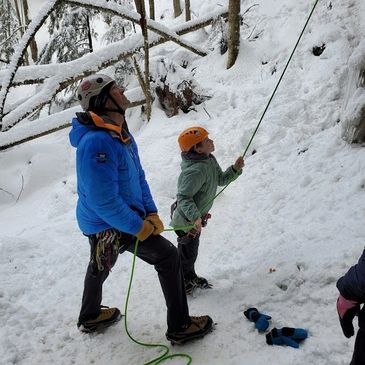
Parents, do you ever feel like your kids are climbing the walls, especially in the cold winter months? It’s common to spend more time cooped up inside once the snow starts to fly, though of course there are plenty of fun ways to get outside, such as skiing, snowshoeing, or building a snowman. A new way you could consider getting the kiddos out and moving is trying the sport of ice climbing—yep, an organized way to “climb the walls”!

The Pictured Rocks Climbing Academy, or PRCA for short, is a Michigan non-profit that provides low-cost rock and ice climbing opportunities to Upper Peninsula youth ages 7-18. They are based in Marquette and rock climb in the Marquette area in summer, and ice climb around Munising in the winter. The PRCA was established in 2016 when world-renowned alpinist Conrad Anker noticed no local kids were ice climbing at Pictured Rocks National Lakeshore. At that year’s annual Michigan Ice Festival, money was fundraised to start the PRCA.

Since then, the PRCA has gone full steam ahead with all things climbing! The PRCA prides itself on providing not only climbing opportunities to those who might not otherwise have them, but also fostering community and stewardship for its members. From guided outdoor rock and ice climbing, volunteer opportunities at local events, weekly indoor group climbs during the school year, yoga, attending climbing festivals in the Midwest, and more, the PRCA provides unique experiences to UP youth. No gear or experience is required to climb with the PRCA, and membership costs are low, with scholarships available to those who need one.

For many, climbing is much more than just a sport—it’s a lifelong pursuit that connects them with wild places, a strong community, and opportunities to constantly learn. Climbing pushes you to trust yourself and those around you, constantly learn and adapt, and widen your comfort zone. Climbing also promotes positive mental and physical health, such as improved strength and balance, and higher feelings of self-sufficiency. The PRCA is run by volunteers with years of climbing experience who teach these values and experiences to UP youth. 

With climbing’s rising popularity, thanks to more gyms opening across the country and the sport being featured for the first time in the Olympics, it’s important to understand the mentorship aspect the sport has compared to other outdoor pursuits. Climbing is inherently dangerous, and historically was taught almost strictly through mentorship. These days people can get started climbing in the gym, through online videos, etc. While it’s great to have these more widely accessible resources available, without mentorship it’s possible to have gaps in knowledge and safety. The PRCA helps serve as a bridge for this mentorship gap.

Safety is the number one concern of the PRCA. All guided rock and ice outings are facilitated by Michigan Ice Fest Guides. These guides have taken and passed one or more guiding courses and assessments run by the internationally recognized and accredited American Mountain Guides Association. The PRCA teaches youth many things—climbing movement, gear use, anchor systems, belaying, and more—all adjusted to the age and experience level of the climbers participating. 

So, parents, if your kids are interested in a new way to recreate outside, face fears of heights, be more active in community stewardship, or just want to try something new, check out the Pictured Rocks Climbing Academy. 

To get involved with the PRCA, reach out through their website’s “Contact Us” page. If you’re over eighteen and would like to volunteer, don’t hesitate to reach out as well! 

Website: picturedrocksclimbingacademy.org
Facebook/Instagram: @picturedrocksclimbingacademy

Laura Slavsky (she/her) grew up in Marquette, MI and began climbing in 2014. She has guided ice climbing clinics at Michigan Ice Fest, is a Community Ambassador for the national climbing non-profit Access Fund, and has volunteered with the Pictured Rocks Climbing Academy since 2019.

Excerpted from the Winter 2021-22 issue of Health & Happiness U.P. Magazine. Copyright 2021, Empowering Lightworks, LLC. All rights reserved.

An Alarming Trend in Kids—What Great Lakes Recovery Centers & We Can Do About It

Many call the U.P. “God’s Country,” and see it as a great place to raise kids. Good reasons for this abound, however, our kids have become increasingly endangered by a threat many of us may not easily see—suicide.

The most recent U.P. Community Needs Assessment reports that suicide related calls to Dial Help in the U.P. tripled between 2010 and 2017. The U.P’s suicide rate for 10 to 24 year olds was 14.2 per 100,000 residents, while the average for Michigan was 7.9. And stressors have only increased since then.

As Great Lakes Recovery Centers (GLRC) Foundation Coordinator Amy Poirier explains, “If someone’s having suicidal thoughts, it’s not one thing, one incident behind it. Multiple factors can be involved.”

“I see what’s happening with our kids,” Poirier continues. “They don’t know what life will be like from day to day. It’s hard for kids right now. Every day, kids are seeing their friends being quarantined or needing to be tested. What goes on in the minds of all those kids—is my name, my friend’s name, my teacher’s name going to be on that list? The stress that they’re going through right now is unbelievable. And that’s just COVID, that’s not even counting the everyday life stressors of a teenager.”

Poirier facilitates the West End Suicide Prevention coalition.

She is also very active in the Marquette County Suicide Prevention Alliance, is one of the Marquette County Suicide Prevention Walk coordinators, teaches suicide prevention courses, and works with social media and community outreach.

“We’re trying to break down the stigma around mental health,” describes Poirier. “Between one in 4 or 5 people are suffering from mental illness, yet there’s so much stigma, and no one wants to talk about it. Our goal is to open up the conversation, normalize it, help people realize ‘It’s not just me. There are also a lot of other people out there that are having this problem. We can get help, help one another, and get professional help too.’”

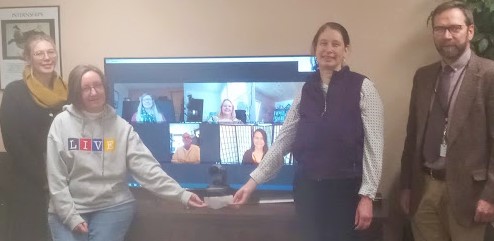
GLRC coordinates several of the U.P.’s Communities That Care evidence-based coalitions that work to reduce kids’ risk factors. Nearly all of these have a suicide prevention work group. The West End Suicide Prevention coalition, a diverse group of people on the west end of Marquette County, developed LIVE, a positive mental health campaign (Love yourself, Include others, Value life, Engage community) which was brought to the entire Upper Peninsula through a grant from the Superior Health Foundation.

GLRC helps coordinate and teach various suicide prevention courses throughout the U.P.

GLRC also works with many U.P. schools to help reduce the stigma around mental health issues, and on any suicide prevention activities the school might want to do. The LIVE Art & Word contest for high schoolers to support suicide awareness and prevention efforts was just completed on Nov. 15th. Seven cash prizes will be awarded, including a $500 grand prize. You can vote for your favorite visual art, word, and song entries at West End Suicide Prevention’s Facebook page.

GLRC also opened Child & Adolescent Psychiatric Services in Ispheming a couple of years ago to help address the unmet psychiatric needs of kids with mild to moderate mental health issues who don’t necessarily qualify for community mental health services. This includes Trauma Development Assessment to look at where a child’s development is at due to trauma they may have experienced, psychiatric evaluation, medication management, parent education, different types of therapies, and psychiatric consultations.

However, with an issue as pressing as children’s suicide prevention, support is needed across the community. Whether you’re a parent, grandparent, work with children, or not, below are some ways you can help.

Take part in a suicide prevention gatekeeper training course, such as:

Mental Health First Aid – An evidence-based, free eight-hour course for adults only. Instructors from GLRC and other agencies teach you a five-step process to help someone who’s having a crisis, whether it involves suicide, anxiety, depression, psychosis, eating disorders, or substance abuse. You can sign-up at GLRC.org/mhfa. Once enough people register, a course is organized.

QPR (Question Persuade Refer) – A one-hour course that can also be presented to adolescents (as young as 12) and adults. This course is often taught in schools. Parents can ask if their school has this program.

ASIST Training – Applied Suicide Intervention Skills Training for anyone in the community. No prior training is required. DIAL HELP, a U.P. center that provides crisis support 24/7 by phone, text or chat, will hold the next one Nov. 18th and 19th in Hancock. Contact Krissy Martens at kmartens@dialhelp.org to register.

Promote the LIVE campaign – Put up a decal in the window of your home or business, keep informational cards on hand for someone who might need the national suicide hotline number. If they are local, the call goes straight to DIAL HELP. To receive these items, call the GLRC Foundation office at (906) 523-9688 or talk to any member of West End Suicide Prevention.
Support and be present at locally held events such as suicide prevention walks and Walk a Mile in Our Shoes.

Get involved in a community coalition. Almost every U.P. county has a suicide prevention-related group. Contact Amy Poirier at (906) 523-9688, apoirier@greatlakesrecovery.org for info on a coalition near you, or go to glrc.org/wesp to learn more about West End Suicide Prevention.

If you’re concerned your child or a child you know may be having suicidal thoughts or feelings, talk to the child. Get them the help they need, and help the child as well as their parent understand that they’re not alone.

Before you get to that point, if you have a kid or know anybody (child or adult), take one of the free suicide prevention courses.

You can also join a free and confidential parent support group–the Parents Support Network of the Upper Peninsula of Michigan. It meets for an hour and a half each month, currently virtually, and is peer-led by facilitators that have had experience with their own kids’ mental health concerns.

Note from the editor: We are very pleased to announce that Health & Happiness U.P. Magazine’s 2021 annual donation is going to Great Lakes Recovery Centers’ children’s suicide prevention and awareness efforts. For a list of businesses that have helped support this donation, click here.

Excerpted from the Winter 2021-22 issue of Health & Happiness U.P. Magazine. Copyright 2021, Empowering Lightworks, LLC. All rights reserved.

Creative Inspiration: Urgent Gifts, Marty Achatz

creative inspiration, urgent gifts, U.P. holistic business, U.P. wellness publication, Upper Peninsula of MI holistic publication

U. S. Poet Laureate Joy Harjo says, “If you do not answer the noise and urgency of your gifts, they will turn on you. Or drag you down with their immense sadness at being abandoned.”

Gifts are strange things. They come to us out of nowhere. Surprise and fill us with pleasure. There is power in unwrapping a gift. Beneath the bows and paper, in the darkness of the unopened box, anything could exist. A box of chocolates. Music box. Book. Tickets to Walt Disney World. Words.

Yes, words. Because I’m a poet, I have always believed words are gifts. Think of the word “cleave.” It can mean to “divide or split as if by a cutting blow.” But it can also mean to “adhere firmly and closely . . . unwaveringly.” In one word, there is both separation and connection, loss and love. That’s a remarkable gift.

Back in January of this year, I received an email about a grant program sponsored by the National Endowment for the Arts called the Big Read.

The NEA Big Read involves organizations creating programming centered around the themes and ideas of one book. Part of that programming involves giving away copies of the chosen book to community members. A gift of words.

One of the options for the 2021-2022 NEA Big Read cycle was U. S. Poet Laureate Joy Harjo’s poetry collection “An American Sunrise.” Filled with cleaving (the removal history of Harjo’s people from their homelands) and cleaving (love poems for Harjo’s mother and husband and children), the book spoke to my artistic gifts.

So, I set about writing an NEA Big Read grant. I pulled together partnering organizations, contacted artists and writers, planned events—keynote addresses, poetry workshops, art exhibits, and a chapbook contest. I dreamed big. It was like writing a detailed, twenty-page letter to Santa Claus and dropping it in the mailbox.

The dream was simple in concept: to build bridges. I wanted to highlight the history, culture, and contributions of indigenous peoples. Through Joy Harjo’s words, I hoped to create a dialogue across the Upper Peninsula and bring people together. Using poetry as a vehicle, my NEA Big Read dream would hopefully be a catalyst for cultural understanding and change.

This dream was a gift to me.

A noisy, urgent gift, as Joy Harjo says. And I followed Harjo’s advice: I didn’t ignore that gift.

Several months after sending off my “letter to Santa,” I received an email one morning from Arts Midwest, the organization that administers the Big Read program for the National Endowment for the Arts. That email had one word in its subject line: “Congratulations.” I sat in my office for a few moments, feeling a lot like a kid on Christmas morning, knowing that my dream had become reality.

As I sit writing this article, I’m approaching the final weeks of programming for the NEA Big Read at Peter White Public Library. Over the past month, I’ve heard the Teal Lake Singers Drum Circle perform. Listened to poets and scholars and teachers of Anishinaabemowin. Soon, I will have the opportunity to speak personally with Joy Harjo, listen to her read her poetry, ask her questions.

However, the path to my NEA Big Read dream hasn’t been without its share of struggles, personal and professional. Sickness occurred. Scheduled speakers became unavailable. Loved ones passed. Events needed to be rescheduled or completely reinvented at the last minute. Big dreams are like that. They rearrange themselves like waves rearrange a shoreline.

But dreaming big is important.

Paying attention to your gifts (no matter what they are) isn’t just important. It’s necessary and life-sustaining. Sharing those gifts and dreams with others can be a powerful force for good in the world at large.

One of the events of the NEA Big Read was a three-day poetry chapbook writing competition. Participants were given a list of eighty writing prompts to spark their creativity. One of the writing prompts was this:
Make a list of things you want to do today. Let your imagination run wild with the list, accomplishing impossible things.

Try it right now. Make that list. Dream big. Dream impossible. Use your gifts. Make the world a better place.

Martin Achatz is a husband/father/teacher/poet/dreamer who lives in Ishpeming.  He is a two-time U.P. Poet Laureate and teaches in NMU’s English Department.  He also serves as the Adult Programming Coordinator for Peter White Public Library, where he recently organized and ran the NEA Big Read. 

Excerpted from the Winter 2021-22 issue of Health & Happiness U.P. Magazine. Copyright 2021, Empowering Lightworks, LLC. All rights reserved.

Healthy Cooking: Millet Sweet Potato Savory Biscuits, Val Wilson

Healthy Cooking, Millet Sweet Potato Savory Biscuits, gluten-free holiday treat, UP holistic business, U.P. wellness publication, Upper Peninsula of MI holistic wellness publication

During the cold winter months, warm baked goods are always satisfying. And since you may not always be in the mood for baked goods that are sweet, here is a savory, more dense, hearty biscuit recipe. These biscuits are great to serve with your dinner, plus make a great between-meals snack when you get a little hungry.

Millet is one of the oldest whole grains, and has been eaten since at least 2800 B.C. Very high in protein, iron, calcium, and B vitamins, millet is gluten-free and the easiest whole grain to digest. Known for helping to strengthen your spleen, pancreas, and stomach, it is great for anyone with digestive issues. Millet has a creamy texture, making it perfect to create baked goods such as these biscuits. 

Sweet potatoes are native to South America and were domesticated at least five-thousand years ago. The crop must have been an important one for our ancient ancestors because ancient pottery has been found to feature sweet potato images. Sweet potatoes have vitamin D for healthy bones, vitamin C, B 2, B 5, and manganese. They’re also exceptionally high in iron, calcium, and potassium, making sweet potato an excellent food for your heart. Plus, they help boost your immune system, contain antioxidants, and help strengthen your kidneys. In this recipe, the sweet potato creates a mildly sweet flavor that is sure to satisfy your taste buds. 

Millet Sweet Potato Savory Biscuits 

1/2 cup millet 
1 cup water 
3/4 cup rice beverage (non dairy beverage) 
2 cups sweet potato (peeled and cut in cubes) 
1/4 cup olive oil 
1/4 cup rice beverage (non dairy beverage) 
1 tsp. sage 
1/2 tsp. rosemary 
1/4 tsp. sea salt 
2 cups oat flour 
1/2 cup medium corn meal 
2 tsp baking powder

Put the millet and one cup of water in a pot and bring to a boil for a minute. Reduce heat to lowest possible temperature, cover and simmer for 20 minutes until all water has been absorbed and millet is soft. Remove from heat and let sit 5 minutes. Add the 3/4 cup rice beverage to the cooked millet and let it sit covered while you prepare the rest of the recipe. Steam the cubes of sweet potato until soft. Put the olive oil, 1/4 cup rice beverage, sage, rosemary, sea salt, and steamed sweet potato in a food processor and puree until smooth. Put the oat flour, corn meal, and baking powder in a mixing bowl, add the pureed mixture, and mix all together until you get a firm, thick, muffin dough texture. Using an oiled muffin pan, spoon the dough onto the pan into 12 muffin-size biscuits. Bake at 350 degrees for 30 minutes until golden brown on the bottom. Eat them warm out of the oven or at room temperature after they have cooled down. 

Chef Valerie Wilson has been teaching cooking classes since 1997. Visit http://www.macroval.com for schedule, cookbook purchases, phone consultations, or radio show, and follow her on Facebook at Macro Val Food.

Excerpted from the Winter 2021-22 issue of Health & Happiness U.P. Magazine. Copyright 2021, Empowering Lightworks, LLC. All rights reserved.