Spotlight On…. Stephanie DeMerse, MSc. INHC

Tell us what your practice is all about.
As a health coach, my intention is to help people see their lives differently. I play the role of supportive guide so they may navigate more clearly through a transformation process they’re in, or aspects of their life they’re working to change for the better. The goal is to improve lifestyle. Daily habits, thought, patterns—they’re all related to good health. I do my best to help people with that.

What led you to start it?
I’ve always been very interested in health, wellness, lifestyle. Even as a kid, I would try to eat healthily at times. I was very aware of what I was eating, what I was doing, and also aware of what others weren’t doing.

Quite a few experiences in my life encouraged more in-depth study. At a very early age, I saw family members make some poor choices with very unhealthy habits, very destructive ways of thinking. For a long time, I had this drive to change them, to make them better. And I always wanted to be healthy and vibrant too. Eventually, I realized you really can’t change anyone but yourself, and developed faith that we can all change if we want to.

I began to learn how we can evolve or improve ourselves, and how to raise awareness of that amongst more people so they can learn these things in an easier way than I did.

I have a passion for learning and for helping others learn how they can see their lives differently, think about things differently, which I believe is the gateway to making changes.

It’s been a gradual evolution.

I feel like in becoming a mother, I was able to integrate a lot of things I learned. Over the last seven years, I’ve been integrating my experiences, getting my health coaching certifications,and learning to be comfortable enough to share this with others. So I’m just getting started in a professional way, but have been learning and sharing with others informally for a long time.

I enjoy listening and supporting, and giving practical information to others. My experience as a help line counselor for five or six years at a non-profit in England gave me a lot of insight and training in being present and engaged with people one-to-one. And I’ve worked with coaches in the past and see what a difference that’s made in my own life.

In 2011, I was sick. I really couldn’t do anything and wasn’t getting the help I needed. I started working with a coach. This gave me a safe space to be in, and helped my nervous system calm down. I became able to realize which things weren’t working for me and which things were. That was a massive help! Once I started working with her, I became more confident I would get better, whereas before I just didn’t know. She was a very grounding presence.

A lot of coaching is that grounding presence, having that listening, supportive guide. I draw from a range of different tools and insights to meet the needs of the client, whether they need to learn how to cook or how to do meditation. I’m learning astrology and how to read natal charts as it can be a really great tool to help people learn about themselves.

What do people appreciate most about working with you?
I get a lot of good feedback about how I compassionately challenge the way people see things, so they can view them in a way they may not have thought about before.

As an Integrative Nutrition Health Coach, I support and guide people through lifestyle change for better health. It can be through a myriad of different ways, depending on what the person is looking to change or improve in their life. It can be as simple as learning how to cook certain foods if they’re on a specific diet, or organizing their kitchen, as well as being a listening, supportive guide. Perhaps they’re going through a job or career change, or relationship issues. It’s all connected.

I take a very holistic approach, incorporating all those areas of life. It’s not just eating healthily and getting enough exercise. It’s looking at the whole picture.

Future plans for your practice?
I’d like to learn how to do Indian head massage and develop more psycho-spiritual insights into a good life. I love learning new things and bringing more tools and perspectives into my practice so I can help with a wider range of client needs.

Anything else you’d like readers to know?
Health coaching is not going to replace a doctor, or nutritionist, or therapist, or other medical professionals. It offers that supportive guide for someone who’s already motivated to make changes and might need some help or assistance to see things differently. We all need that. I know I’m not always able to see things clearly myself.

I never recommend any particular diet, protocol, or regime. Those are very helpful, which is why those other professionals can be super-helpful. My goal is to help people become more aware of themselves through the choices available to them.

If we get to the root of who we are, we can know what works for us and what doesn’t, which in turn can dictate our choices in life. And that is the steppingstone for ultimate wellbeing.

Excerpted from the Winter’23-’24 issue of Health & Happiness U.P. Magazine, copyright 2023, Empowering Lightworks, LLC. All rights reserved.

Bodies in Motion: 78-Year-Old Bikes Coast-to-Coast Trans America Trail

Told by Guinness World Record Applicant Bruce Closser to H&H

record-breaking bike trip, UP holistic wellness publication, senior viewpoint

It had been in the back of my mind to do this ride for some years. I had a nephew who’d done it some years ago, and I knew others who did things like that. It seemed like an interesting thing to do.

When you have a job, you can’t just take off for three or four months. After I retired, I spoke with my wife about it, but she wasn’t thrilled about being by herself the whole summer. After she died last year from Parkinson’s disease, I thought, “Maybe this is a good time to do it.“

I made the decision in February while skiing in Colorado with my son and daughter-in-law. That didn’t leave a whole lot of time since you usually start out in May. I wanted to begin as early as I could to get through the midsection of the country so I’d be in the mountains before super-hot weather came.

Then I read an article about a guy from Colorado who had just set Guinness World record as the oldest man to bike across the U.S. He was seventy-five. I thought “Huh! I’m seventy-eight and I’m going to do this. The record is there for the taking.” You have to apply, get approved, and submit a whole bunch of evidence before it’s adjudicated. If I hadn’t seen that article, it probably never even would have crossed my mind.

The Trans America Bicycle Trail goes from Yorktown, Virginia to Astoria, Oregon—4,205 miles total.

It was laid out in 1976 for the U.S. Bicentennial and is the first long U.S. bike trail mapped and designated. It’s become a popular cross-country route and is available on paper maps, phone maps, GPS. The Adventure Cycling Association has since made bike routes all throughout the country. You can go almost anywhere now.

I had less than two months to get ready. I’d never done anything like this before, never even did a bicycle tour before. I ski during winter, and I lifted weights to prepare, mostly working on my lower body. But I didn’t have the right kind of bike. There are bikes especially for this purpose but there aren’t many of them around. I researched and found the bike I wanted. The nearest dealer was Love & Bicycles in Negaunee.

The distributor didn’t have the complete bike available so the guys at Love & Bicycles and I got the frame and the fork, researched ordering all the components, and the shop built the bike for me. It was geared exactly the way I wanted (to the extent that we could find the equipment) and was a better bike than what I would have originally gotten.

By the time we got the bike, fenders, panniers (bags you attach to the frame), and racks for them all together, I had just one 1.5 mile ride on it before shipping it out. I was supposed to fly to my daughter’s in Baltimore May 1, but couldn’t get out until May 3 because of a snowstorm.

I started the trail May 5 and completed it August 22—109 days total, with 91 actual riding days, as some days I rested, visited friends, or had to wait out thunderstorm forecasts to avoid possible hail. My bike had to go in a shop to get adjustments made. One component needed to be replaced a couple of weeks from the end.

Chasing down prescriptions was a constant battle.

If I’d known how complicated that was going to be, I’d have planned for it. When skiing in Colorado, I could pick up my prescriptions at the local Walgreens, but the bike trail goes through little towns, a lot of which don’t have a Walgreens.

I have Parkinson’s Disease, so I have to pay really close attention to my meds. It’s a movement disorder where you have a lack of dopamine. Dopamine is a neuro transmitter that allows your brain to communicate with your muscles, so with Parkinson’s the signal gets there late, or garbled, or not at all. It can make you slow or uncoordinated, lose your balance.

We know pedaling is particularly good for Parkinson’s. There are pedaling programs all over the country for it. The Y in Marquette has one. But there aren’t many seventy-eight-year-olds with Parkinson riding their bikes across the country, so I had to figure out for myself how to adjust my medications.

You’re the expert on your body. I figure out what works and my doctor prescribes it for me. I take the normal Parkinson’s meds plus one that’s not so common, so it would be out of stock sometimes, even though the online info would say my prescription was ready to be picked up. If I were to do it again, I would make sure I had every prescription I needed completely stocked beforehand. That probably would have cut five days or so off my trip.

The Trans America Trail isn’t a straight line.

It seems laid out to keep off heavily trafficked routes wherever possible, go through beautiful places, and over every mountain range we can possibly find—Blue Ridge, Appalachians, Ozarks, Bitterroots, Cascades, and the Coastal Range. I did the equivalent of 175,000 feet of climbing, which is 34 miles.

I’m a pretty avid cyclist—I do regular road biking and mountain bike ride with a group once a week. There are five bicycles in my garage. Many times I’ve ridden 40 to 60 miles in a day. What I didn’t know was “Could I do it back-to-back, day after day after day?”

I just had to do it and find out. Turned out I could. Once I knew that (and I was sure of that two weeks into it), then I knew I could complete the trail, barring some catastrophe. Fifty percent of solo riders will finish the Trans America. Of those who get through the first ten days, 90% will finish.

That’s because five days in, you head up the Appalachians. They’re the hardest in the whole thing because they’re so steep and go on for a long, long time, 200 miles or more. They have older roads, not engineered to modern standards of 6 or 7, maybe 8% grades. The road by Marquette Mountain has a 7% grade at its steepest. In the Appalachians, you can get 12, 14 even 17% grades. While riding them, I had my epiphany about a hard day.

I was complaining to myself about how hard it was, wondering “Do I really want to be here doing this?” I told myself “Well, you have two choices here–you can climb this hill or you can sleep in the bushes.”

I decided “Okay, I signed up for this. I knew it was going to be hard, but it’s a hard day, not a bad day.”

I think that distinction is important. We all have to do hard things in our lives, but they’re not necessarily bad. You can think “This is a hard day, not a bad day.” And you just do it. My technique of getting up and riding as long as I could, which might be only a minute or two up that mountain, then wait ’til my breathing settled down, might be another two or three minutes, and go up through a series of stops and eventually get there. Then you get to go down and that’s a lot of fun!

The headwinds are the hardest thing, not only because they can practically bring you to a stop. When you get to the top of a hill, you think “I did it. I’ve won.” Not with the wind. It just keeps blowing. This implacable, uncaring wind just keeps wearing you down. The last twenty miles one day, I hit a howling headwind. I screamed at the wind that day, “You will not stop me! I will do this!”

In the many conversations I had with people along the way, they always asked why I was doing this. It took ’til I got to Colorado to have the answer.

What I observed as I went along and met others biking the whole trail is that people do this when they’re at a transition point in their lives. When you have a job, kids at home, you can’t just take off and do this. People do this when they retire, graduate, quit their job and are trying to figure out what to do in their lives. I met one fellow at a restaurant who told me that when he was seventeen, his brother came back from Vietnam and said ,“Why don’t we ride our bikes to Alaska?” And they did.

The death of my wife Sally was a huge change in my life, definitely a transition point. It’s the first time I ever lived alone—I went from family to college to military to marriage. So I think that’s the reason.

record-breaking bike trip, UP holistic wellness publication, senior viewpoint

Biking the Trans America has given me a huge feeling of satisfaction by doing something that’s hard and being successful at it. I found it wasn’t as hard as I thought it would be and as people think it is. Once you can do fifty miles of daily riding, you just repeat that same thing over and over again. If you can do it five times, you can do it fifty times.

I realized I can step on my bicycle and go anywhere. I was constantly amazed at how far I had come. While I was doing this, I wrote about it on Facebook—Notes from America, with a detailed record of almost every day. It got really popular. I was really surprised. And I discovered I had some capacities at seventy-eight that I didn’t really know I had. It was a big confidence-builder.

I also learned that given an opportunity, people want to be kind.

I was the recipient of innumerable acts of kindness all the way across the country. I never had a negative encounter with another human being the whole trip, and I had situations where I needed someone’s help and it just came spontaneously, sometimes even before I asked.

I got off route for a prescription and had to chart my own course through rural Kentucky. There weren’t a lot of places to stay. I ended up in a little state-run campground that had no food or water there or en route. It was a hot day. I was virtually out of water, already thirsty, and facing a full night plus packing up and biking fifteen to twenty miles in the morning. When two fellas there found out, they took all my water bottles and drove half an hour away to fill them for me.

In Oregon, I got stranded with two flat tires due to very sharp, pervasive, tiny, strong, hard-to-locate goathead thorns. A woman living nearby provided water so I could locate and fix the holes, but every time there was another leak. She offered to drive me to a bike shop in town. They knew immediately what the trouble was and put a strip inside the tire that would be impenetrable for the thorns.

I also learned that this is an incredibly beautiful country.

Viewing it from the vantage point of a bicycle may be the best possible way—you’re going slow enough that you can see all the nuance and details, yet you’re going fast enough that you can cover some ground. I love driving, but you see things completely differently on a bike. And you can stop anywhere on a bike, unlike a car.

People would ask, “What was your favorite part of the trip?” I’d say “Right now; being here.” I didn’t have to be any place at any time. If somebody wanted to talk for twenty minutes, I could do that. I had time, and I had wonderful interactions with people.

I tried to enjoy every day and realize I didn’t come out to do this ride to get to Astoria, Oregon. I came out to do this every day and enjoy and appreciate every bit of it, and not look toward the end as being a destination. I think that worked well.

Excerpted from the Winter’23-’24 issue of Health & Happiness U.P. Magazine, copyright 2023, Empowering Lightworks, LLC. All rights reserved.

About the Cover Photo, Keith Glendon

UP holistic wellness publication, UP horse play, Health & Happiness cover photo

Brandi Rolling is pictured enjoying a sunset swim in Lake Superior with her equine friend Roxy. Brandi is the owner/operator of Versatile Horsemanship, LLC and Rolling Ranch, which is located in Negaunee, Michigan. Surrounded by horses from the time she was an infant, she’s turned her life-long passion into mentoring riders of all ages and abilities.

Photograph by Keith Glendon–a grown-up kid blessed to be married to a horse gal and thus gifted the opportunity to swim with, frolic with, and take photos of horses and their talented horsewomen riders on a magical Superior summer’s eve.

Excerpt from the Summer 2023 issue of Health & Happiness U.P. Magazine, copyright 2023, Empowering Lightworks, LLC. All rights reserved.
Healthy Cooking: Super Spring Greens Medley, Val Wilson

healthy cooking, spring greens medley, UP holistic wellness publication, UP holistic business

Spring is in the air, the perfect time for colorful flavorful dishes featuring leafy green vegetables. After months of the colder, heavier energy of winter, spring’s uplifting energy is reflected in the food we eat. Sour is the signature flavor for spring, and lemon juice lends that sour taste to any dish. Foods with this sour flavor feed and nurture our liver, gallbladder, and nervous system as do leafy green vegetables.

Often the vegetables we buy have greens attached that we end up tossing out because we don’t know what to do with them. The nutrient-dense greens that grow upwards from root vegetables have upward, expansive energy and naturally bitter flavor. Their upward energy opens us up physically and emotionally to get ourselves moving in the warmer weather.

The greens featured in my recipe below are full of health benefits.

Turnip greens are very high in potassium, an excellent source of vitamins A, C, and E, and excellent for gut health and digestion. They’re also high in dietary nitrates, which help with cardiovascular functioning and reduce the risk of strokes, hypertension, and coronary heart disease.

Dandelion greens are great for detoxing the liver, purifying the blood, eye health, and healthy skin. They also contain over 500% of your daily requirement of vitamin K, which is important for healthy brain function, a strong metabolism, blood clotting, and improved bone health, reducing your bone fracture risk.

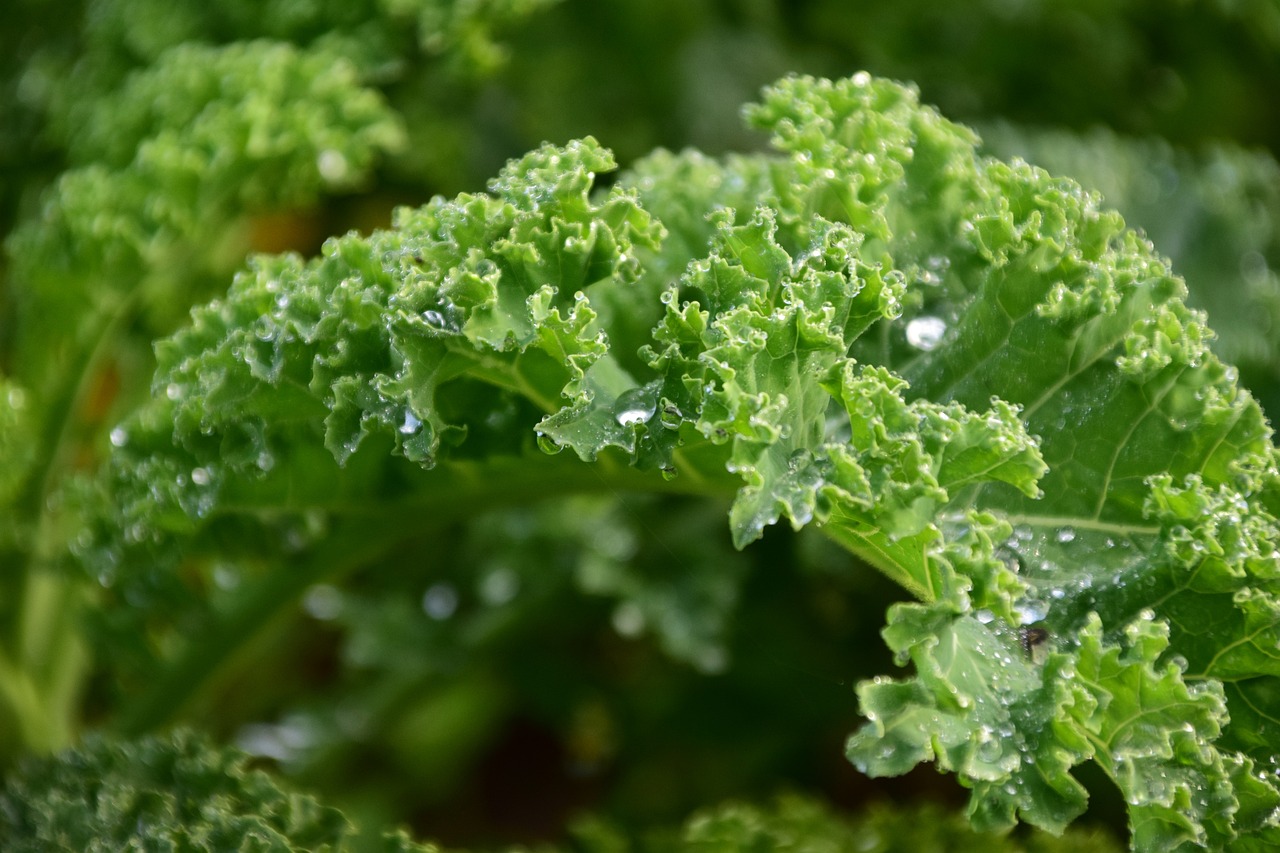
Kale is in the cabbage family and has anti-cancer properties. It’s very high in calcium, iron, vitamins C and K, and anti-inflammatory properties, and is great for your heart.

Fennel is one of the signature vegetables of spring. This licorice-tasting vegetable is great for your digestion. It contains a compound called anethole which is found to inhibit smooth muscle spasms in the intestinal tract, helping to eliminate gas or treat stomach cramps, which may help soothe indigestion, colic, stomach ulcers, and irritable bowel syndrome.

Spring Greens Medley with Turnips and Sweet Potato Miso Sauce

4 cups water
2 cups cooked brown rice
1 purple onion (thin half-moons)
1/2 fennel bulb (sliced thin)
4 cups kale (cut up)
2 cups turnip greens (cut up)
1 cup dandelion greens (cut up)
10 cloves black garlic (cut up or or reg. minced)
4 oz. mushrooms (cut up) Use your fave variety
2/3 cup vegetable water from recipe
2 T. brown rice vinegar
1 turnip (cut in matchsticks)
1/2 tsp. sea salt

Sauce

1 sweet potato (approx. 3 1/2 cups, peeled & cut up)
3/4 cup vegetable water from recipe
2 T. lemon juice
1 T. mellow white miso or chickpea miso
1/4 tsp. sea salt

Bring 4 cups of water to a boil. Boil turnips for approximately five minutes until soft. Remove turnips and boil the sweet potato for approximately 10 minutes until soft, then remove from water. SAVE THE WATER TO USE IN THE RECIPE AS VEGETABLE WATER.

Sautée the onions in a little olive oil and sea salt on medium heat until soft and translucent. Remove onions and add fennel to the middle of pan. Sautée with a pinch more of sea salt until soft.

Put mushrooms, garlic, kale, turnip greens and dandelion greens on top of the fennel and onions. Add 2/3 cup vegetable water, 2 T. brown rice vinegar, and 1/2 tsp. sea salt. Cover and simmer for approximately ten minutes until greens are soft.

Turn off heat, add turnip to the pan, and mix all together. Put the sauce ingredients in a food processor and puree until smooth. I recommend serving the sautéed vegetables over brown rice. Drizzle sauce over the top and enjoy!

Chef Valerie Wilson has been teaching cooking classes since 1997. She offers weekly, virtual cooking classes that all can attend. Visit http://www.macroval.com for schedule, cookbook purchases, phone consultations, or her radio show, and follow her on Facebook at Macro Val Food.

Excerpted from the Spring 2023 issue of Health & Happiness U.P. Magazine. Copyright 2023, Empowering Lightworks, LLC. All rights reserved.

Healthy Cooking: Hot Soup for Cold Days, Val Wilson

healthy cooking, healthy winter soup recipe, UP holistic wellness, UP holistic wellness publication, UP holistic business

Nothing will warm you up on a cold winter day better than a nice hot bowl of soup. Soup is such a versatile dish. It can be served as an appetizer before a meal, be the main course, or even just a snack.

When you make a soup with red lentils, you have the added bonus of a thick creamy texture because red lentils break down when they are cooked. Red lentils are an excellent source of protein, high in fiber, iron, calcium, zinc, selenium, phosphorus, manganese, and B vitamins.

Whenever you cook beans or lentils, add a small piece of kombu. This incredible nutrient-dense sea vegetable helps strengthen your intestinal tract and aids in digesting the lentils, helping to eliminate the gas some experience when eating beans and lentils.

Burdock root is an excellent strengthening root vegetable native to Michigan.

You may have come across it while hiking in the woods. It is the plant with the huge leaves and round burs that get stuck on your pant legs. You can dig up the plant and eat the root, but most prefer to just buy it from the store.

Burdock is great for your skin, can cleanse the blood, is good for your digestion, and can help eliminate toxins from the body. It’s best known for helping people with diabetes as it contains inulin, the nutraceutical that helps stabilize blood sugar levels.

Burdock root has a unique bitter, earthy taste. It is always best paired with a sweet vegetable such as the sweet potato in the soup recipe below. The seasonings paprika, curry, and cumin give a little spice to the soup without making it too spicy. They spices are warming spices, helping to keep you warm during the cold winter months.

Red Lentil Burdock Root Soup

10 cups water
1 (2 inch) piece of kombu
2 cups red lentils
1 onion (diced)
4 cups sweet potato (peeled and cut in cubes)
2 cups burdock root (cut in thin rounds)
3 celery stalks (diced)
1/4 cup minced kale
1 T. olive oil
3 tsp. sea salt
2 tsp. thyme
1 tsp. paprika
1/2 tsp. curry
1/2 tsp. cumin

Directions

Put the water and kombu in a soup pot and bring to a boil. Remove the kombu once it’s soft. Cut in small pieces and put back into pot. Add the red lentils and let water come back up to a boil. Add the vegetables, one at a time, letting the water come back up to a boil in-between adding each vegetable. Once all vegetables are in the soup pot, reduce to low, and simmer for twenty minutes. Turn off heat and add the seasonings. Stir everything together and serve hot.

Chef Valerie Wilson has been teaching cooking classes since 1997. She offers weekly, virtual cooking classes that all can attend. Visit http://www.macroval.com for schedule, cookbook purchases, phone consultations, or her radio show, and follow her on Facebook at Macro Val Food.

Excerpted from the Winter ’22 – ’23 issue of Health & Happiness U.P. Magazine. Copyright 2022, Empowering Lightworks, LLC. All rights reserved.

Bodies in Motion: Fitness Tips for the Holidays & Beyond from Local Fitness Trainers

fitness tips from Upper Peninsula of MI fitness trainers, holiday fitness tips,  UP holistic business, UP holistic wellness publication,

Matthew Wheat, founder of Superior Performance Training, Doctoral Student of Physical Therapy & Certified Strength & Fitness Specialist

The World Health Organization’s (WHO’s) current physical activity guidelines are 150-300 minutes of light to moderate exercise or 75 minutes of vigorous activity weekly, as well as participating in strength training twice/week, including exercises that stress all major muscle groups. Adherence to these guidelines can improve and preserve quality of life, reduce healthcare costs, and reduce the risk of all-cause mortality.

Learning a new sport or activity can be an exciting way to get exercise this winter. Examples include snowshoeing, cross-country skiing, or even getting together with friends to join a group exercise class.

When exercise does not feel like a chore, it makes adherence to a lifetime of physical activity much easier. Celebrate the holidays this year by implementing or maintaining the WHO’s physical activity guidelines. It can increase the number of holidays you get to spend with your loved ones.

Melodie Alexander, Owner of TM Fitness, Certified Personal Trainer & Certified Wellness Coach

Winters can be tough on our mind, body, and soul. But after many years of utilizing fitness and nutrition to fuel my health, I now feel the best I have overall in the winter months!

In addition to starting my day by setting myself up for success, noting what I’m thankful for (i.e. “a house full of kids and laughter”), what I will remember for tomorrow (i.e. “I am in control of my success and health”), and one word of the day (i.e. “FORWARD”), I also plan when I’ll do my workout and set out key points for my nutrition.

Moving and sweating takes care of a lot of those stress hormones naturally. Making good food choices continues to aid both my positive mindset and physical health.

Through the holidays, I always suggest if you enjoy certain sweets and meals, have a portion and be done with it so you don’t overindulge.

One of my core mantras is “If it doesn’t challenge you, it doesn’t change you.” Working with someone to keep you accountable and having long and short-term goals also helps set you up for success.

Kari Getschow, Licensed Athletic Trainer & Certified Personal Trainer at Synergy Fitness

With the holidays approaching, our routines can become cluttered with family commitments, holiday parties, and school performances. Though we may have good intentions to exercise, it can be difficult to make time. A proactive strategy is to write down your normal daily schedule. Be specific. For example, in the morning you get out of bed, brush your teeth, make your coffee, walk the dog, and check your email. The list continues until you go to bed. Circle or underline the healthy habits you can continue throughout the holiday season. Add new habits or specificity before the schedules get busy. For example, in the morning, after you brush your teeth and drink a cup of coffee, you go for a 30-minute walk/exercise, and then make breakfast.

Everyone’s schedule is different. Maintain an exercise habit that fits in your schedule. You can honor commitments to yourself by inviting family and friends to walk with you, or block exercise into your schedule as you would a standing appointment. Make a small and attainable fitness habit to maintain your health through the holiday season. Most people miss a day of exercise but focus on the next day to quickly return to their routine.

Connor Ryan, founder of Unity Human Performance and Unity Yoga Co-op & Certified Physical Preparation Specialist

It’s time to set the tone for winter. A simple daily discipline to help you open to the calmness of being in the present moment (in addition to incorporating moments of silence and gratitude first thing in the morning and before going to sleep), is breaking up the middle of your day both mentally and physically with movement.

With changing weather conditions, determination is required to persist in the variable elements. No matter your method, indoors or outdoors, consider and commit to moving your body daily for at least twenty to thirty minutes.

Some exercises I recommend to help keep fit are the squat, hinge, lunge, step up, horizontal push, horizontal pull, vertical push, vertical pull, and plank variation. If you don’t know these movements, it’s best to learn them from a professional. If you do know them, you can incorporate them into a daily routine that takes anywhere from twenty minutes to two hours.

Newton’s First Law: An object at rest will stay at rest, and an object in motion will stay in motion. Find a way. Keep moving forward to stay moving forward.

Excerpted from the Winter ’22 – ’23 issue of Health & Happiness U.P. Magazine. Copyright 2022, Empowering Lightworks, LLC. All rights reserved.

Bodies in Motion: Adaptive Athlete Overcoming Hurdles for Self & Others, Julia Seitz

How do you keep your body in motion? Do you body-build in the gym, take a light jog around the block, or use a track wheelchair for racing 400m dashes? Maria Velat, an eighteen-year-old quadriplegic athlete, has a drive for sports and nothing will stop her.

Ever since childhood, sports were part of Velat’s identity. She played soccer, ran cross country, skied, and sailed. “All of my family does sports, so it’s kind of always been a part of my life. Once I started school, I started joining teams,” Velat said.

Velat ran for the Houghton High School Gremlins in varsity as captain of her team. She consistently held places in the top of results for cross country races. In the 2018 season, she made a personal record of 20:27.3 for the Women’s 5,000 Meters Varsity.

It wasn’t until later in her sports career that Velat needed to change her approach. On October 2, 2019, Velat was transported to an Ann Arbor, Michigan hospital and diagnosed with transverse myelitis. The National Institute of Neurological Disorders and Stroke (NINDS) explains transverse myelitis is spinal cord inflammation. The spinal cord is responsible for sending messages from the brain to our nerves and sensory information back to the brain. It tells our body how and where to move, for example when you need to move your fingers to grab a plate. Our skin can feel when a pan is hot because our nerves tell the brain about that sensation. Transverse myelitis interrupts this connection between the brain and nerves, and now that they can’t communicate, it will be hard for a person to move or feel.

The next step after hospitalization and recovery for Velat was returning to the field.

“I had to figure out a way to do sports kind of differently than I was used to. So, I found the world of adaptive sports,” said Velat. From running to hand-cycling, she found different ways to get back on the track through equipment such as track wheelchairs and sit-skis. She said adaptive sports are a different way to do sports but still in the same spirit.

“There are a lot of ups and downs with being disabled and fighting a system that isn’t really built for you, but once you have any small successes, it really helps bring you back up, and then you see that you can have more successes in the future.”

The change from running to wheels wasn’t the only hurdle Velat faced during her comeback. Michigan’s sports system itself presented quite a challenge. Velat learned she could participate in events but couldn’t score any points for her team.

A petition intended to change this Michigan High School Athletic Association (MHSAA) rule says, “Almost every state has some model in place to allow adaptive athletes the same opportunities for placing and advancement, but Michigan and thirteen other states do not.” Participating in a sport means being part of a team, and if you can’t contribute, you feel left out–a problem experienced by many para-athletes. 

Velat and other supporters pushed for a proposal to include adaptive athletes in races and to be able to score points for their teams.

The MHSAA responded to their efforts. On January 26, 2022, a MHSAA committee hearing concluded an adaptive category needs to be set up before adaptive athletes can earn points for teams. There was no consensus on allowing team scoring in this category, however, future discussion on this is being considered. In the meanwhile, MHSAA decided wheelchair athletes can compete in regionals and finals in a few events, but cannot score points. 

“I’m still pushing to have [races] be more inclusive and have an ambulatory category so that people with amputations or cerebral palsy can also be in finals, and also get that point system in place so it’s really being part of the team and not just running alongside it,” said Velat.

The Keweenaw Community SparkPlug Awards recognized Velat’s efforts to improve adaptive sports in her community, and she was nominated as the Youth Contributor of the Year. She urges others to become involved in their communities as well.

“There are lots of local programs. If there aren’t any local programs, it’s not that hard to just find adaptive equipment and get other people to start it,” Velat said. For example, the Great Lakes Adaptive Sports Association (GLASA) supports aspiring athletes with disabilities by lending aid and sports equipment. Velat’s community held a sled hockey clinic in which over a hundred people participated.

“If you see someone who you think might like adaptive sports, just let them know about it because they might not even know that it exists.”

Velat will take her ambitions to the University of Michigan and pursue medicine, specifically neurology. Inspired by her own experience, she wants to help people and learn more about how the brain and body work. She will also be part of the new adaptive track and field team, noting that very few colleges have an adaptive sports program.

“[The University of Michigan] has taken initiative in the local schools to get adaptive sports into the gym programs. I’m really hoping to get kids into it so they can start earlier,” said Velat. During college, she plans to continue working on the proposal to improve the MHSAA rules.

During hardships, Velat says it’s important to set a goal for yourself and work towards it. Training her body to do sports differently was a huge shift, and having family, friends, and the community support encouraged her to keep moving forward.

“Just consider other people’s situations, and if you find something you’re passionate about, just work towards that goal, especially if it’s something that can help you with your own health or helps other people.”

Julia Seitz is a Northern Michigan University student pursing a Bachelor of Arts. You’ll find her either writing creative fiction or researching a new fixation. She enjoys reading scary stories, but is too scared to watch horror movies.

Sources:
https://www.youtube.com/watch?v=3mBZww1p8EE&ab_channel=IAmAnAthleteToo
https://www.change.org/p/i-am-an-athlete-too-integrate-disabled-children-into-school-sports
https://www.keweenaw.org/sparkplug-awards/
https://www.ninds.nih.gov/transverse-myelitis-fact-sheet
https://my.mhsaa.com/portals/0/documents/BTR/commin22.pdf
https://www.glasa.org/

Excerpted from the Fall 2022 issue of Health & Happiness U.P. Magazine. Copyright 2022, Empowering Lightworks, LLC. All rights reserved.

Healthy Cooking: Antioxidant-Rich Wild Rice, Val Wilson

wild rice pilaf, health benefits of wild rice, healthy cooking, UP holistic wellness publication, UP holistic business

Wild rice is known for its rich, black color and mild, earthy flavor, but did you know that it is a fantastically healthy food that can help slow the signs of aging?

Its high antioxidant levels, thirty times higher than other rices, can help do this and offer many other health benefits. Antioxidants neutralize free radicals, the dangerous by-product of cellular metabolism that may cause healthy cells to mutate or turn cancerous. Our bodies may form free radicals from eating refined processed food, smoking, drinking, environmental pollutants, eating sugar, and taking pharmaceutical drugs.

When you eat wild rice, the high antioxidant content may help neutralize the free radicals that accumulate under the skin, which can cause wrinkles and other blemishes. It is important to note that white rice has no antioxidant capabilities. 
     
Wild rice offers other wonderful health benefits too. It has high fiber content, which can help improve digestion, is good for the heart, and may help reduce the risk of colon cancer. Wild rice’s high phosphorus, vitamin K, and zinc levels are good for strong bones, bone mineral density, and healthy joints. Wild rice also contains vitamins A, C, E, B6, niacin, calcium, iron, magnesium, selenium, and omega-3 fatty acids. Wild rice is best cooked with other brown rices to create a nice chewy texture, sweet, earthy flavor, and colorful combination. 

Wild Rice Mushroom Pilaf

1/4 cup wild rice 
1/4 cup short grain brown rice 
1/4 cup long grain brown rice 
1 1/2 cups water
1/2 onion (diced) 
2 garlic cloves (minced) 
2 cups chopped assorted mushrooms (shiitake, maitake, cremini, or your favorite) 
1 carrot (diced) 
2 celery sticks (diced) 
1/2 cup walnuts (chopped) 
2 T. minced parsley 
2 T. raisins (optional) 
toasted sesame oil 
tamari 
1/2 tsp. thyme 
1/4 tsp. rosemary 
1/4 tsp. sage 
1/4 tsp. sea salt

Directions

Put the rices and water in a pot and bring to a boil. Reduce to the lowest possible temperature, cover, and simmer for one hour until all the water has been absorbed. Sauté the onion in a little toasted sesame oil and tamari until soft and translucent. Put the sautéed onions in a large mixing bowl. Using the same pan, sauté the carrots in a little toasted sesame oil and tamari for a couple of minutes until they are browned and add to the bowl. Sauté the mushroom and celery the same way, then add to the bowl.

Chef Valerie Wilson has been teaching cooking classes since 1997. She offers weekly, virtual cooking classes that all can attend. Visit http://www.macroval.com for schedule, cookbook purchases, phone consultations, or radio show, and follow her on Facebook at Macro Val Food.

Excerpted from the Fall 2022 issue of Health & Happiness U.P. Magazine. Copyright 2022, Empowering Lightworks, LLC. All rights reserved.
Creative Inspiration: Limit-Busting Community Artist Mary Wright, Christine Saari

community artist Mary Wright, UP holistic wellness publication, UP holistic business
Mary Wright

L’Anse-raised Mary Wright was a homesteader, a teacher of health education, English, history, and art, a cancer survivor, and a feminist. Most people remember her, however, as a community art organizer.

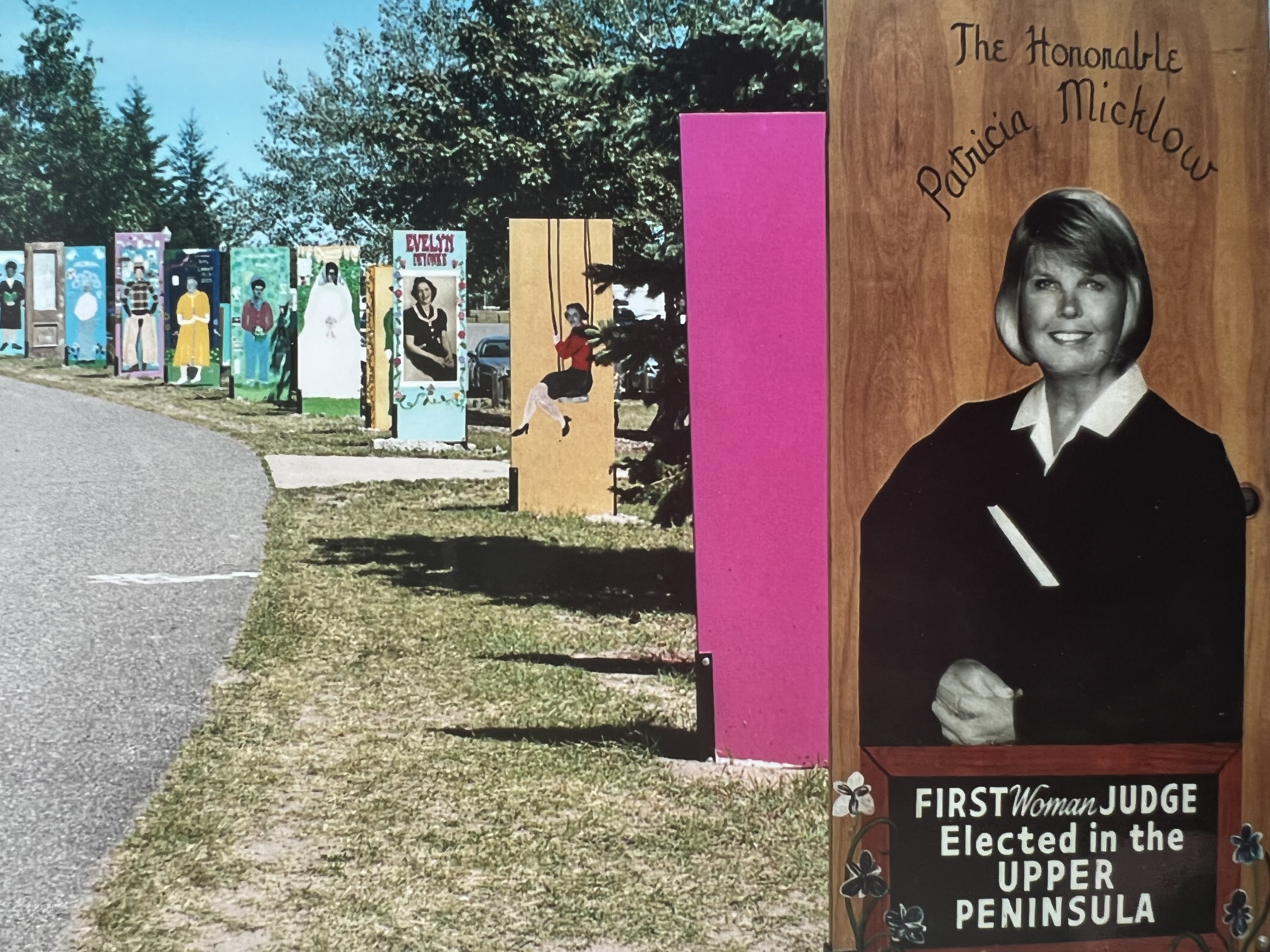
Well over three-thousand blue and white hand-painted chairs brightened NMU’s campus during FinnFestUSA 1996 and 2005. 50 colorful fish shanties appeared at the Lower Harbor parking lot during the World Winter Cities Conference held in Marquette in 1997. Residents painted 400 book covers to represent their city block and raise money for their library. The history of pioneer settlers and families of today were recreated on one of the 500 Heritage Family Poles, set up to celebrate the Marquette Sesquicentennial in 1999. In 2007, 200 doors told the stories of grandmothers, past and current. Over the years, many thousands of people participated in these and other projects, and uncountable locals and tourists viewed them.

When Mary Wright dreamed up these community efforts, the sky was the limit.

No idea was too big or impossible to carry out. Her criteria for any of these undertakings were straightforward: The project had to involve fun, collaboration, and community spirit. Mary believed that every person has the capacity to be creative if provided the opportunity, and that working on joint art projects, reflecting the spirit of old-time barn-raising events, could create miracles.

This community aspect was essential. All participants, from elementary school child to grandmother to prisoner, were welcomed. The wilder the inspiration, the better! If you wanted to cover the wall of your fish shanty with left-over socks gathered at laundromats, or hang shoes of your relatives from your family tree, why not?

Mary Wright Doors Project, community arts, community artist, UP holistic publication, UP holistic business
Mary Wright’s Doors Project

To make these complicated events happen required multiple skills. Mary had a knack for roping people in, persuading them to help paint a mural, create a prototype, drive logs from Munising to Marquette, give money, or procure materials. She networked with local and state art organizations, city government departments, labor unions, and corporations, found donors and sponsors, and worked with the news media. She made countless presentations in schools, clubs, and to any group. And she did it all without a computer or the Internet! Her persuasive powers and persistence were legendary. Mary Wright did not take “no” for an answer.

Mary Wright had a special gift for finding the perfect expression of a particular event:

Blue and White Chairs, Finland’s national colors, were the perfect symbol for FinnFestUSA, an annual international festival held each year in a different city. They gave people of Finnish heritage a chance to honor their families and to define what being Finnish meant to them. They were an expression of hospitality, an invitation to sit down to strike up a conversation, to recycle old furniture, to create an heirloom. All fifteen UP counties participated. Chairs were set up by their painters’ regions, so visitors could find the chairs, benches, stools, and rockers they had decorated. A calendar was later created to provide a lasting souvenir of the event.

Mary felt Fish Shanties symbolized the spunk, spirit, and sisu of UP winter culture. Some grandparents used them to create playhouses for their grandkids. Book Covers were a natural for a library fundraiser. The project was organized around city blocks. This created special pride for residents and helped distribute the covers widely. Family Poles were perfect to portray the 150-year history of Marquette. The many different stories of individual families and organizations told through these poles formed a kaleidoscope of the community’s past and present.

Mary Wright learned how to draw the attention of the news media. Her flamboyant way of dressing in bright exotic costumes, colorful hats, and artful jewelry made her stand out. She managed to get herself on the Today Show in New York, at which she presented a bench decorated with portraits of the show’s luminaries. In the days before drones, she had an aerial photo taken from a helicopter to help advertise her book project. Family poles rode in the Fourth of July Parade. Outdoor working sessions gave visibility to a given project. There were interviews, photographs, and editorials in the newspaper.

community artist Mary Wright, UP holistic wellness publication, UP holistic business

Mary’s unique style is featured in Yoopera, a film documenting the production of the Rockland opera and the creation of Mary’s Storyline project in which thousands of white panels strung on wires fluttered in the wind like layered prayer flags from their spots around the Rosza Center and more Michigan Tech campus areas. Primarily made by schoolchildren, each panel had a photo transfer of someone’s image and the story of that person’s life told in the first person.

Mary Wright’s activities were not restricted to Marquette and Houghton.

She organized over thirty-five community projects, including in places like Alpena, Ypsilanti, and Port Huron, and also worked internationally in Toronto and Finland. Her themes were often based on ordinary objects such as shovels, stepladders, pillow cases, spring flowers, or winter mittens. In 1999, she received Michigan’s Governor’s Award for Arts and Culture.

Participating in one of these community projects has had a lasting impact on many. Often it was the first time someone had created an art object. Mary Wright supporter Doug Hagley said about Family Poles, “Some families were reunited after years of separation. Dialogues were fostered… Children honored their parents and grandparents…. The community and its visitors experienced the healing and community-building power of art.” School children became interested in their family history and realized that you could be an artist at any age. Poet Sandy Bonsall’s experience painting blue and white chairs with her students prompted her to write My Mother’s Story Is My Story. I myself was inspired to create a family pole to explore the Finnish background of my husband, and Grandma Doors led me to research the life of my Bavarian grandmother whom I had never met.

We lost Mary in November 2021. To honor her and her work, the Beaumier Heritage Center at Northern Michigan University will feature her in an exhibit in the spring of 2023. If you are willing to loan Mary Wright project object for the exhibit, please contact Dan Truckey at (906) 227-3212 or email heritage@nmu.edu.

Austrian writer and visual artist Christine Saari has lived in Marquette since 1971. She has published memoir Love and War at Stag Farm (2011) and poetry book Blossoms in the Dark of Winter (2018). Find her visual work at The Gallery and Wintergreen Hills Gallery.

Excerpted from the Fall 2022 issue of Health & Happiness U.P. Magazine. Copyright 2022, Empowering Lightworks, LLC. All rights reserved.

Senior Viewpoint: Evolving from Trauma to Wellness, Beth Jukuri

evolving from trauma to wellness, overcoming sexual abuse, UP holistic wellness publication, UP holistic business

If you were asked to write about health and happiness, what parts of your life would you think about? What parts of yourself would you focus on? 

How would you rate your own health and happiness?

The most sacred part of my wellness is my mind and how much I am able to challenge it. 

 I was indoctrinated into a cult-like religion from birth. I didn’t have access or control of my mind and its beliefs. The religion chose my life for me–where I went, who my friends could be, what I could or couldn’t do with my body.

At forty-six, when a young niece shared with Family Protective Services that “Grandpa touched me,” I became aware that I had been sexually abused as a child by my father.

I also became aware that my body and its emotions and feelings always lived in the truth. My body shook and my steadfastness to stand by my niece and believe her was unshakeable.

My body and its unexpressed emotions, and the way it never lied showed me the fragility of my mind and its false nature.

It became my priority to set my mind right. To bring it back to my body and reality. To use my mind and not let my mind use me.

The wellness of my mind and how it sits with reality is critical in my choice-making and ultimately how I live my life.

Without a mind set in reality, you cannot see life or who you are clearly.

I had lived with so many falsehoods and ill-conceived ideas both of myself and the outside world.

If on your stage of life, you don’t see the backdrop and the other characters in their true form, how will you know how to interact with them?

At forty-six years of age, I woke up in my life and realized I had seen the stage incorrectly and I was playing a part in a play in which I no longer wanted to participate.

The character of who I was fit into the play, but it had no place in reality and with the truth inside of me.

It is ironic to see the darkest parts of your life, to feel the vast emptiness of losing so much and at the same time feel empowered, strong, brave, and deep levels of love.

As I attempted to right my world and to re-adjust the stage, to find the character of me, I brought in new levels of happiness, joy, love, and peace.

I was embracing my history of abuse and acting in the present with new information, and making new choices that honored me.

This did not serve the requirements of my family of origin. It did not serve the silence abuse needed in order to thrive.

I became a new me with a voice and a choice.

The new me brought in new hurdles in many relationships. The open and free relationships welcomed the new me, and we experienced new levels of deep love and connection.

The relationships that were conditional died.

I see this time in my life as one of my greatest achievements—leaving the cycle of abuse.  I changed how I interacted with abuse and that changed the trajectory of my lineage.

My breaking the silence and responding differently than my mother is the most difficult thing I have done, yet became one of the most healthy periods of my life.

I broke out of the family dynamic that supported abuse for generations.

The happiness that has slowly seeped back into my life is pure.

It has no hidden agenda or the false realities such an agenda was based on. Nor is it dependent upon the behaviors of others. My happiness is based on me—how I see myself and my worth, and how I love myself.

The levels of happiness I have found as I walked through decades of denial and recovered my innocence is life-changing.

What I know to be sure is that health and happiness live with truth. They grow and thrive in its presence.

My ability to be myself and to know myself and to love myself all stemmed from my ability to live with dark truths.

As Gloria Steinem once said, “The truth will set you free; but first it will piss you off.”

Even my anger and rage and overwhelming sorrow—after expressed—left me in peace.  I made sense. The world made sense. The truth is so much easier to live with than trying to prop up a false relationship with both myself and others.

I loved me, the broken, twisted me that stumbled out of denial.  I loved her courage and the bravery she showed to admit she didn’t know who she was.

I woke up at forty-six a stranger to myself.

The new me was a stranger in my relationships.

So began the second half of my life living life as Me.

Discovering and choosing what made me happy, what felt like love, where peace lived, and what I felt was true for me became my way of life.

I love this healthier me, one that is filled with so much happiness and knows deep love, even if she is completely estranged from her family. 

I want others to know it is possible to live a good life after abuse.

To be happy.

To know joy.

To feel deep love of self.

What I know to be true is that we love as deeply as we love ourselves.

Abuse isn’t who you are. It is what was done to you. A healthy response is one that honors and respects you.

At sixty-three, I feel very grateful for my mental wellness and the sheer amounts of happiness I experience.  Perhaps it’s because of all the years I lived codependent on others to make me happy that I am now so appreciative of my ability to find happiness alone.

Just being at peace with who I am and the choices I have made, and who that makes me as a person, brings me great happiness.

There are moments in our lives when we have the opportunity to become more ourselves or to find a deeper level of awareness.  These are moments that will define your life either negatively or positively, with more growing or shrinking.

To me, health has always had an evolutionary spin to it—a feeling of growing and changing.  Life is not static.

I feel happiness comes when you are free in the spaces you live and the relationships you have.  The freer you become, the more happiness you gain.

Married thirty-five years, mother of four, grandmother of three, retired mail lady, and fiber artist Beth Jukuri‘s art has become her therapy, her therapy her art. She co-founded WIND (Women in New Directions) to explore oneself and grow more empowered through nature and art.

Excerpted from the Fall 2022 issue of Health & Happiness U.P. Magazine. Copyright 2022, Empowering Lightworks, LLC. All rights reserved.