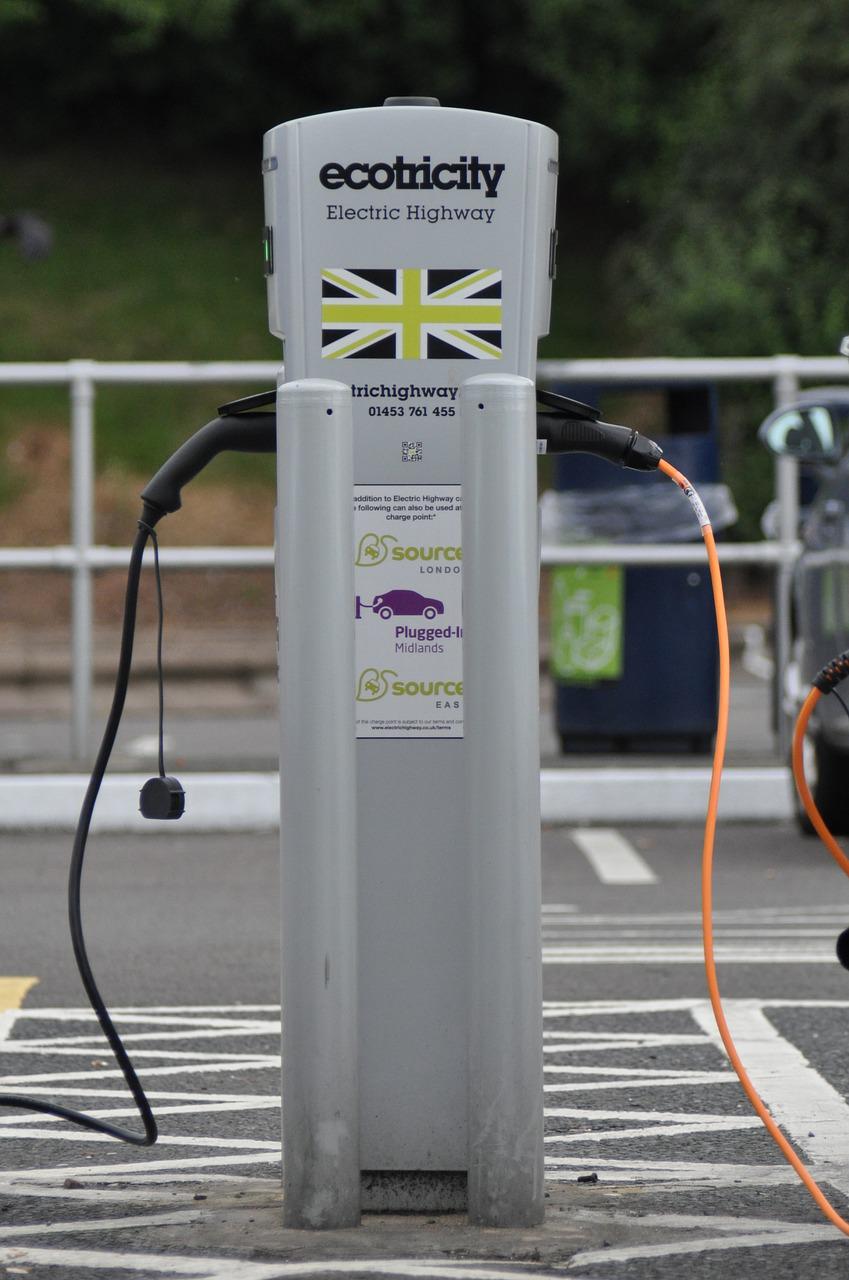
Green Living: Order Your Electric Car NOW! Steve Waller

PEV, plug-in electric vehicle, green living, sustainability, UP holistic wellness publication, UP holistic business

We finally got our all-wheel-drive plug-in electric vehicle (PEV)—no gasoline engine and no more CO2 emissions. We’ve been driving it hard for a couple of months and tallied over 6,000 miles, including a few 400-mile trips from the U.P. to Chicago and to Detroit.

Based on my experience, you should order yours now because it takes 6 months to more than a year for delivery. As you hesitate to order, the prices keep increasing. They can now cost as much as a new crew cab fossil truck, but cheaper models are available.

Fossil gas drivers have “range anxiety” (fear of running out of battery) but PEVs today have plenty of range, some over 300 miles on one charge. We rarely drive more than 100 miles a day and we recharge at home. It’s like having a gas station in your garage. Charge overnight with an ordinary 240V garage outlet and wake each morning to a fully charged vehicle ready for another long day of driving. For apartment dwellers, there are programs for owners to add parking lot chargers or just fill up at your local public charger, then drive home, just like you do with a gas guzzler. Either way, PEVs drive cheaper.

We drive electric for about $.04 per mile.

Our gasoline car averages a respectable 28 MPG but still cost $.16 per mile. Our PEV gets 131 MPGe in the city and 117 MPGe on the highway. It’s 75% cheaper to drive, saving about $300 per month in gasoline expense. Plus, there is almost no maintenance–no oil changes, muffler, catalytic converter, or tune-ups. PEVs have few moving parts, there is much less to fail so there are fewer repairs. We do occasionally add a windshield washer.

People worry that the batteries will die in a couple of years but federal law mandates that batteries be warrantied for a minimum of eight years or 100,000 miles. Old PEV batteries don’t die, they just have about 5%-10% less range. Experts suggest today’s batteries will last 10-20 years–300,000 miles or more.

On our 400-mile trips, after about 250 miles we needed to recharge as expected, but plenty of rechargers are available. We never experienced “range anxiety.” It takes 20-40 minutes, depending on the recharger’s power, to recharge to about 80% capacity, enough to finish the trip. Rechargers are usually in the parking lots of major grocery chains or near snack areas, and more are being added nationwide. Recharging takes just enough time to stretch your legs, tap a kidney, visit the stores, enjoy a snack, or just lay back and relax for a bit. After hours of continuous driving on a long trip, the break is welcome and healthy. We recharge while the car recharges.

The experience of PEV driving is different—tons of power, electric everything. It’s like driving a computer with wheels except that PEVs often do much of the driving for you. With multiple cameras and sensors, PEVs are very good at adjusting your cruising speed to traffic, keeping the car centered in the lane, and avoiding hazards. It sees and senses more than you can and reacts faster, making PEVs some of the safest cars on the road. People express fears of battery fires, but records show that you are ten times more likely to have a gas-guzzler car fire than a battery-car fire.

Michigan charges a $100 electric registration fee and a $40 electric tax to compensate for road maintenance gasoline taxes that PEVs don’t pay. One month’s gas savings easily exceeds Michigan’s fees, so drive safer, save money, and stop emitting CO2. Order your PEV today.

Steve Waller’s family lives in a wind- and solar-powered home. He has been involved with conservation and energy issues since the 1970s and frequently teaches about energy. Steve can be reached at Steve@UPWallers.net.

Excerpted from the Fall 2022 issue of Health & Happiness U.P. Magazine. Copyright 2022, Empowering Lightworks, LLC. All rights reserved.
Co-op Corner: Prescription for Health Program Debuts at 10 Area Farmers Markets

Prescription for Health program, Marquette Food Co-op education & Outreach, UP holistic wellness publication, UP holistic business
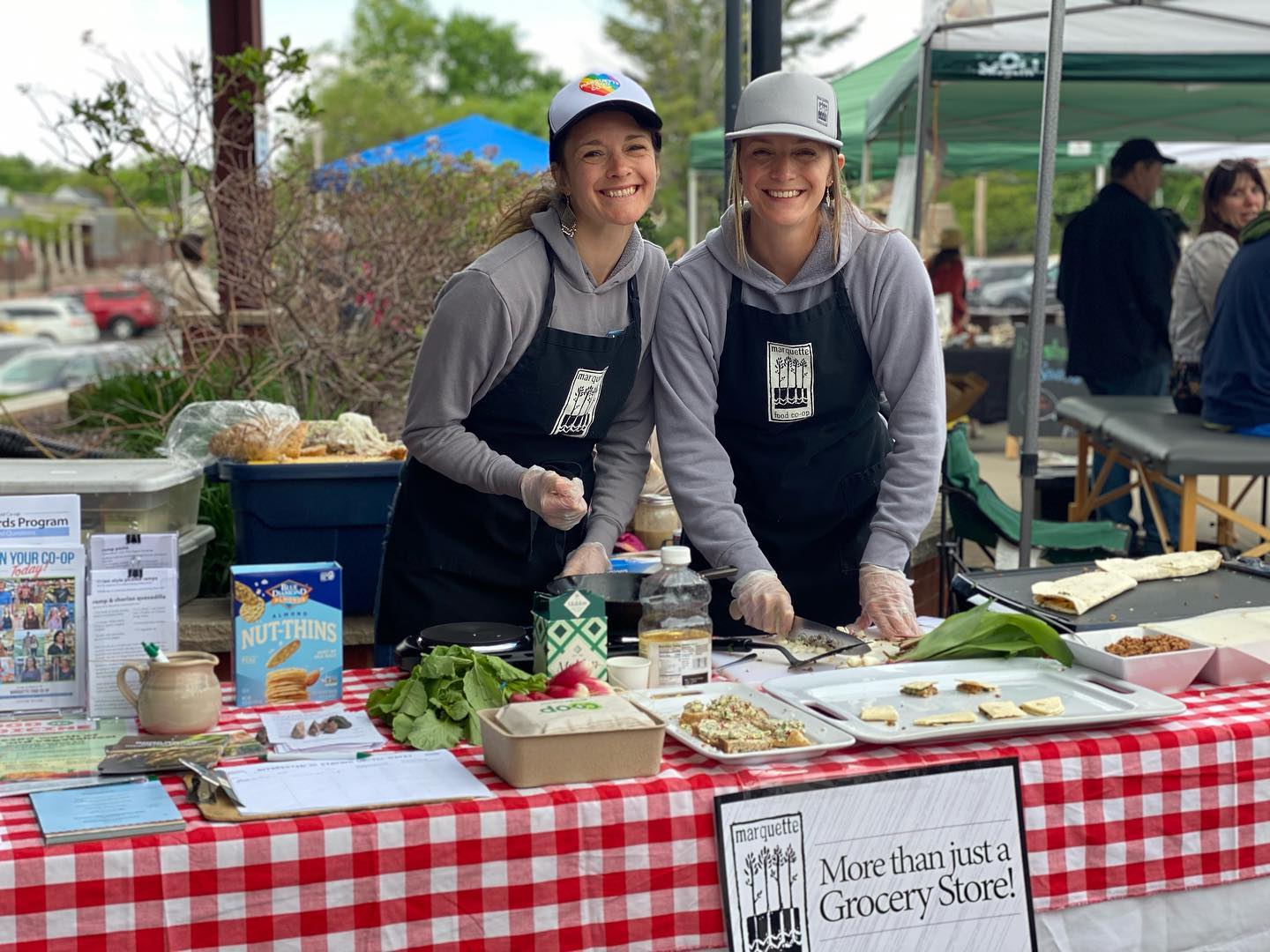
Sarah Monte, MFC Outreach Coordinator & Amanda Latvala, MFC Education Coordinator at the Downtown Marquette Farmers Market

One in 7 people in the U.P. are food insecure. At 14%, the U.P. has a higher food insecurity rate than the national average of 10.5%. Members of the U.P. community whose work is focused on food and health were invited to meet regularly to help direct these efforts. From those meetings, the Food as Medicine Partnership, a collaborative that is bringing Prescription for Health programs to communities across the Upper Peninsula, emerged.

This group, which includes twenty-five organizations, businesses, and individuals, envisions a collaborative food system in the Upper Peninsula that provides nutrition education and equitable access to wholesome, local, and affordable food for all residents. The first project the group took on is a Prescription for Health program, generously funded by the Superior Health Foundation. This Prescription for Health program is unique in that it addresses food access from both the customer and supplier side.

The Prescription for Health program uses a medical referral process for enrollment.

Participants receive a referral from a participating healthcare provider with a prescription for adding fresh fruits and vegetables to their diets. To qualify for the program, individuals must be at risk for or diagnosed with a chronic health condition, face economic barriers to food access, and be 18 years of age or older.

Participants enrolled into the program will receive vouchers to purchase fruits and vegetables from participating local farms. Each participant will receive a total of $15 per week during the 20-week season. The referral process is administered by the Upper Peninsula Commission for Area Progress (UPCAP).

A goal of Food as Medicine and Prescription for Health is to provide these services as widely as possible. The U.P. Food Exchange (UPFE), a collaborative local food network the Co-op helps administer, has members located across the U.P. and active in local food and farmers markets. Members were able to help identify and onboard farmers markets that could participate in the program.

This is more complicated than it sounds, as many markets in the Upper Peninsula are small and lack a market manager. For Prescription for Health to work, the market must have regular produce vendors and a market manager or fiduciary that can be a central contact for the Food as Medicine team to work with.

The current list of farmers markets includes:

Bay Mills/Brimley Farmers Market, Main St. Calumet Farmers Market, Depot Park Farmers & Artisans Market (Ironwood), Houghton Farmers Market, Hancock Tori & Farmers Market, Gladstone Farmers Market, Downtown Marquette Farmers Market, Munising Farmers Market, Newberry Farmers Market, and the Sault Ste. Marie Farmers Market. We hope that more markets can be added as the program continues.

A second focus of the Prescription for Health Program is to ensure that the farms receive support to help them increase the produce available at farmers markets. Farm debt is a huge problem across the country—even small-scale farming requires a high debt burden that is difficult to pay back, especially with an income that varies seasonally. UPFE and the Food as Medicine team want to help alleviate the debt barrier that keeps farms from starting or expanding.

The first ever UPFE mini grant program awarded nine farms $14,000 to increase their cold storage capacity. Funds can be used for the materials and labor to build new or additional facilities, as well as access to technical assistance for construction and HVAC. Grant recipients are also required to work with the U.P. Produce Safety Technician to ensure all the facilities and harvest systems are following best practices.

This funding will support the increase of local food production by ensuring that farms have a place to safely store produce until it can be sold.

Cold storage facilities are also essential for extending the agricultural sales season by providing space for keeping storage crops that can be sold well into the winter, directly supporting the growth of the U.P. farm economy and increasing access to local food for all residents.

This year’s grant recipients include Boersma Family Roots CSA and Farm, North Harvest CSA Farm, and Minnie Farms in the Western U.P.; Snowy Acres, U.P. Gourmet, and Full Plate Farm in the Central U.P., and Jere Farms, Gordon’s Produce, and Dutcher Farm in the Eastern U.P.

This grant program was developed in partnership with UPFE team members that include: The Marquette Food Co-op and the U.P. Food Exchange, Western Upper Peninsula Planning District Region (WUPPDR), Bay Mills College/Waishkey Bay Farm, Fresh Systems LLC, Renegade Sheep, the Marquette County Conservation District/Michigan On-Farm Produce Safety, Portage Health Foundation, and the North Farm/Upper Peninsula Research & Extension Center. Many partners were instrumental in spreading the word about the grant opportunity across the Upper Peninsula. And of course, the Superior Health Foundation funding made this possible.

A collaborative network is essential to make changes in our communities.

To grow our local food system and increase access to healthy food for all residents, we must work together. We offer our thanks to all the UPFE, Food as Medicine, and farm market partners for their work.

To learn more about the Food as Medicine Program, visit upcap.org/program/food-as-medicine or email Sarah at smonte@marquettefood.coop. To become an owner of the Co-op and support future initiatives like Prescription for Health, visit marquettefood.coop/owners/ownership.

*Article provided by the Marquette Food Co-op.

Excerpted from the Fall 2022 issue of Health & Happiness U.P. Magazine. Copyright 2022, Empowering Lightworks, LLC. All rights reserved.

Positive Parenting: How You Can Help Young Women & the World through STEM, Chris Standerford

Positive Parenting, importance of STEM, UP Holistic Wellness Publication, UP holistic business

Did you know you can help young women increase their ability to create a prosperous, satisfying future for themselves and others through STEM?

As defined by Michigan, STEM stands for science, technology, engineering, and mathematics delivered in an integrated fashion using cross-disciplinary learning experiences that can include language arts, performing and fine arts, and career and technical education.

By this definition, STEM is an integrated and authentic range of subjects and skills that work together and help us understand the world and find solutions to the problems we see. Put another way, humans are a part of both the natural and social worlds. Our curiosities and passions rely on skills such as observing, noticing patterns, understanding cause and effect, experimenting, troubleshooting, and so many more. These skills can bring joy and success to the things we love. And these skills are STEM skills.

As parents, we can help our youth recognize the parts of their identity that are deeply connected to STEM.

In fact, our communities need our help to inspire youth, particularly our young female students, to see themselves as capable, passionate, and successful in STEM.

Whether you love gardening, painting, tinkering in the workshop, yoga, paddling, camping, cooking, playing video games, performing, or lounging on the beach, STEM is a part of these experiences, and often adds a depth and a beauty to them. For example, when you garden, through understanding the needs of the plants you’re raising, you’re constantly learning and appreciating your garden ecosystem’s complexity and how amazing those plants truly are, much more so than if you simply picked up the same vegetables from the grocery store. As community members, parents, and teachers we can help our children realize that the things they love to do are in fact how they are making sense of the world.

To get started, let’s break down our actions into three simple things that might help us inspire our youth, particularly our young females, to consider STEM in their futures: Things we need to know, things we need to say, and things we need to do.

Things We Need to Know

As parents, mentors, and role models, we need to believe everyone can find joy, and yes, even a career in STEM so that the many complex issues facing the world today (i.e. social justice, medicine/health, energy, food shortages, climate change, etc.) can be better addressed. We need to first recognize that our own hobbies and interests are deeply connected to STEM in ways we perhaps haven’t fully acknowledged yet.

We also need to recognize and be aware of current trends and opportunities in STEM. Despite gains in the number of women pursuing some STEM careers, according to the National Center for Educational Statistics, women are proportionately half as likely as men to major in math, computer science, science, engineering, and technology. These fields are fast-growing, often more lucrative than those that were considered “women’s fields,” and in need of diverse ways of thinking. From data science to cybersecurity to advanced manufacturing, the need for talent and innovation is unprecedented.

Things We Need to Say

How we communicate is important; our choice of words matter. As parents, mentors, and role models, we must be diligent in how we talk about STEM with our children. First, we can communicate that it’s not about being ‘good at math or science,’ or finding the ‘correct answer.’ Rather, it’s about learning through our experiences and using our senses to notice things in the world, using our curiosity to ask questions about what we see, and leveraging multiple sources of information (i.e. text, conversations, pictures, experiences, models, etc.) to develop our ideas.

Second, it is hugely important to caution ourselves against sharing our own bias with students and unconsciously portraying STEM as difficult, overly technical, being largely for boys, or some of us not being good at it.

Have you ever heard an adult colleague, friend, or perhaps yourself say, “I was never very good at math”? This comment is easily spoken, but can leave a lasting impression on young minds. Much research has been done about the influence of our beliefs as a factor in feeling confident in our abilities in a subject.

We need to do better to foster a strength-based mindset when we talk about STEM with students. Start with what children enjoy and accomplish well, highlighting those skills and building toward new learning and new skills over time.

Things We Need to Do

As parents, mentors, and role models, we need to seek out opportunities for children to have supplemental STEM experiences outside of school. These experiences can be organized camps offered through local libraries, churches, science or nature centers, non-profits, museums, schools and universities, or simple, impromptu nature walks with family.

By encouraging students to make observations, look for patterns, and talk about what they are thinking, we open up their STEM mindset. We don’t need to have all the answers to their questions. We simply need to be willing to ask our youth to say more about their thinking, and to encourage them to develop their ideas and understanding.

If you are looking for more formal experiences, there are many resources in the Upper Peninsula and across the state to explore. The list below offers potential first steps, and connecting with your regional MiSTEM director may also help.

• Northern Michigan University Camps, Student Programs, and STEM degrees
• Michigan Technological University Camps, Student Programs, and STEM degrees
• Michigan Council of Women in Technology (MCWT) – K-12 Initiative
• Michigan Women Forward (MWF) – Empower Girls & HERstory
• STEMinista Project
• Photo Essay: Women in STEM from The Michigan Daily
• Michigan Learning Channel STEM for girls content: Future of Me – Explore STEM (science, technology, engineering, and math) careers; Career Girls – Career guidance videos

Chris Standerford serves as one of sixteen Regional Directors for the Michigan STEM (MiSTEM) Network. He works to connect, convene, and collaborate with stakeholders from business, community, and education. Mr. Standerford also serves as the director of the Seaborg Math & Science Center at NMU.

Excerpted from the Fall 2022 issue of Health & Happiness U.P. Magazine. Copyright 2022, Empowering Lightworks, LLC. All rights reserved.
Green Living: Are You a Biophiliac?Steve Waller

biophilia, love of nature, humans as part of nature, UP holistic wellness publication, UP holistic business

Do you crave a quiet weekend at the cabin with a view of the lake or the ocean?

Are you inspired by a mountainous panorama or a garden bursting with colorful flowers and butterflies?

Does a buck deer running through the woods rivet your attention?

Can a short walk outdoors make you feel a lot better?

Is your dog or cat part of your family?

Are you happy that the house plant you’ve tended for years is doing so well?

Then yes, you are a biophiliac.

Erich Fromm (1900-1980), a German social psychologist, originally said biophilia is the “passionate love of life and of all that is alive…whether in a person, a plant, an idea, or a social group.” E. O. Wilson (1929-1921), Pellegrino University Professor, Emeritus, at Harvard University, claimed that “our natural affinity for life―biophilia―is the very essence of our humanity and binds us to all other living species.”

Biophilia is the recognition that you are part of the natural world.

Your ancestors, for hundreds of generations, lived in and depended on the fields and forests. In exchange, they were imprinted with an appreciation of the hazards, bounty, and beauty in wild, spontaneous nature. Sure, they had to struggle through some of nature’s challenges, but afterwards they were rejuvenated by a warm breeze on a summer’s night, a conversation at the campfire, or a cool dip in the lake.

That imprint, passed down from the ancestors, has not diminished. Sometimes it’s hard to recognize in the bustle of modern times, but given an opportunity, the feelings are still there.

Artists, photographers, musicians, all strive to capture the “essence” of nature because it is so appealing. Architects incorporate living plants and bright skylit rooms to make their urban structures feel warm, spacious, airy, and inviting, more like the outdoors. Subconsciously, they acknowledge that most of us are biophiliacs, even if we don’t realize it. When the right nature button is pushed, we get warm and relaxed.

For many, biophilia is the reason we live in the UP.

We want to be closer to nature than to Detroit or Traverse City. We want to meander along a river that runs clear and cold, home to wily brook trout. We don’t want to see human trash or fences. If we lived down south, we couldn’t talk about how we are so tired of winter but love how the trees look after a snowstorm. Biophilia makes us endure the cold so that we can see those lacy white trees once again.

Birds come in a dazzling array of colors, yet none of the colors ever clash. All birds’ colors go together. Is it because the birds are just snappy fashion-smart feather-dressers? Or is it because our sense of color and what goes with it is based on what humans have experienced in nature for thousands of years? Biophilia likely shapes our sense of color, beauty, and art.

That sense of beauty even extends to our preferences in partners. When we say someone is beautiful or handsome, is it because we are drawn to a certain brand of makeup or shirt, or are we drawn to the person beneath all that dressing? Our ancestors evolved this crazy habit of choosing partners that they found attractive and passed that imprint on to us. Biophilia shapes our preferences.

You might discount this ancient influence and think your modern choices are beyond primal inheritance. You might think it is all just a nostalgic excuse for common and conventional thought. But it’s not. It’s art. It’s beauty. It’s natural. You’re a biophiliac.

Steve Waller’s family lives in a wind- and solar-powered home. He has been involved with conservation and energy issues since the 1970s and frequently teaches about energy. Steve can be reached at Steve@UPWallers.net.

Excerpted from the Summer 2022 issue of Health & Happiness U.P. Magazine. Copyright 2022, Empowering Lightworks, LLC. All rights reserved.

Bodies in Motion: Moving Your Body & Perceptions to a New State of Wellness, Mohey Mowafy

weight bias, movement for health, healthy perspective on weight, physical fitness, UP holistic wellness publication, UP holistic business

We may or may not admit it, but we tend to judge people based on their appearance, particularly their body weight/size. Well, there is nothing in any appearance that should be used singularly to determine one’s health.

Back in 1975, I began developing a short, two-credit class about obesity. It was held on summer weekends at a camp that Northern Michigan University owned at the time. The paradigm I developed and taught turned out to be embarrassingly erroneous. Admittedly, I had fallen into the misperception that “if one is fat, everything is wrong about that one.”

A common bias that exists is to judge the entire personality of another human by their body weight, pretending we are simply worried about their health. Worse is the agonizing psychological pain that the overweight person must endure, believing it is all their fault. Admittedly, this is practiced far more fiercely against females than it is against males.

Fast forward to 1978, when I was attending a conference on the subject of obesity and eating disorders. One day, I wandered inside a room where the presenter’s talk convinced me that I had been wrong for so long. Her presentation stopped me dead in my tracks. I felt like I was perceiving the world through a new pair of soul lenses.

She was introducing a brand-new concept—that of “Health at Every Size,” a term later trademarked by the Association for Size Diversity and Health in 2003. Health at Every Size (HAES) opposes the idea that a person’s body weight and size is an accurate, full-picture representation of their health status. Naturally, I formed the NMU student organization “Good Health for All Sizes.” Yup, got the T-shirt to prove it! The concept rests on an enlightened assumption: A person’s health is much more nuanced than one single calculation.

Because we all have an internalized weight bias (applying negative stereotypes to ourselves and/or others),….

….ask yourself what “kind” of images of people you see in ads, on billboards, and in most of our films and series. Large folks are never portrayed as desirable. Yes, we have been doing better more recently. But how many people do you know who dismiss generous-size folks as far less than “okay”? Most of us believe that those who do not fit the “ideal” image have only themselves to blame because they must be lazy and gluttonous. Well, this might be true of some, but I assure you, not all. No wonder those with large sizes also adopt such a devastating belief! I was an obese child; I know.

Think of someone you know who has struggled with her/his weight all of their life, then ask yourself this question: Why is it that every time they starve themselves on a diet, they gain all the weight back plus a little more? Heaven knows, I tried to convince my sisters not to follow the unenlightened crowds, to no avail.

In my classes, or in any presentation to any group about this subject, I use a moment from the movie Gone with the Wind. When Scarlett went back to Tara, hungry and with no food in the mansion, she had to dig a potato from the ground. She swore “As God is my witness, I shall never be hungry again.” That is what our body tells us when we starve it. My stock answer when anyone asks me about a diet they want to follow to lose weight is this—“if you can live on it the rest of your life, go for it.”

So, if going on a diet is something we always do but it always fails us, or we fail it (96% of those who attempt to lose weight by “going on a diet” regain it, plus a few more pounds), consider a new possibility. The answer will not sound “conventional” to you, I am afraid. Try this to liberate your mind by considering a far more realistic paradigm to be healthy and yes, spunky. I have always asked my students to add to the list of health measurements one that I call “spunk.” Well, academically, it is called “activity.” It simply requires muscle movement, which the muscles were born to love. Seriously, when we are reasonably active, our muscles not only work, they work better, and they just love it! Science has shown that our muscles do not just move us around; they are also potent metabolic regulators on a cellular and sub-cellular level.

Moving our muscles need not be called exercise.

It’s okay if the word doesn’t frighten you. But if it does, just don’t call it anything. Moving need not be a chore and certainly oes not dictate a gym membership. My personal favorite now (or perhaps I should add, at my age), is walking. Yes, just walking. Ask those who walk. They not only feel alive, they have a special relationship with themselves (including their emotional/psychological/spiritual selves).

How about just dancing, even when no one is watching? It is much more fun when we act silly on purpose. And, how about finding some simple movements that you can do at home even while you are sitting if you need to? The idea of “use it or lose it” may apply very well here.

Finally, I would like to clarify that I am not advocating obesity if it is not a person’s normal state. Yes, it can be helpful to calculate Body Mass Index and waist size as a measurement of general health. But how we go about “fixing” it needs to become more enlightened than what has been typical so far.

Mohey Mowafy is a retired Northern Michigan University Professor. He graduated from the University Wisconsin (Graduate work at the Muscle Biology Institute and the Biochemistry Departments). He is married to Kristen Mowafy, and is the father of Adam Mowafy.

Excerpted from the Summer 2022 issue of Health & Happiness U.P. Magazine. Copyright 2022, Empowering Lightworks, LLC. All rights reserved.