A tree is all the trees around it. An entire forest is one living breathing thing.
Yet trees touch sky, a scraper, a whisk to clouds of the blue dome above.
The canopy of trees keeps a space between each tree’s branches, a respectful distance an unspoken blind boundary.
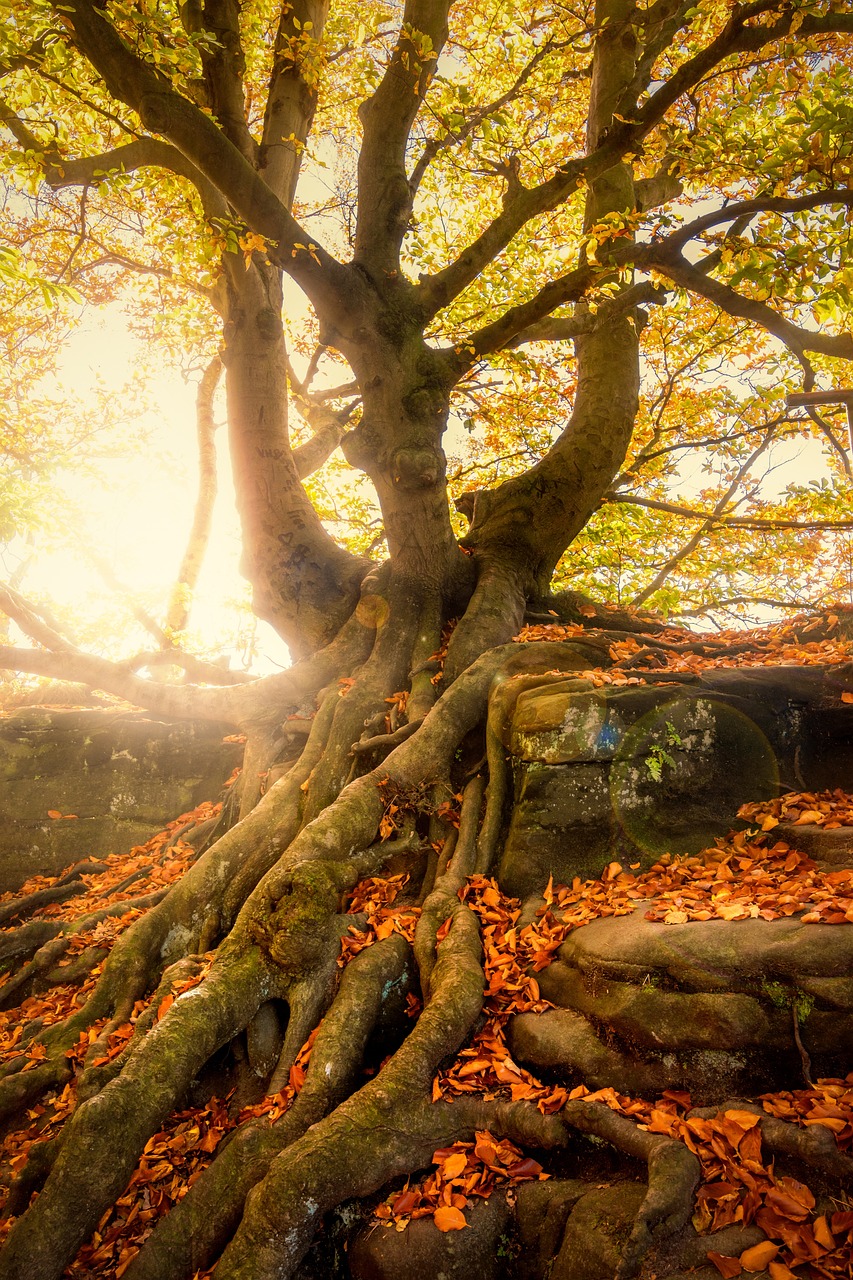
Underneath they are holding hands. Roots send messages, I am in trouble protect yourself, grievances they do not hold among themselves.
Minerals mined with roots shared. Trees leave inheritance, treasure to the family rooted around them. An Aspen to an Oak a Spruce, to a Sycamore, a Hemlock to a Cedar, a Birch or Maple.
I love you take what I have, be well. Live and pass it on when your time comes. If only we were like trees.
Touch sky, not to crowd or compete, only to share, mingle roots, hold hands with the earth.
Poet Lisa Fosmo lives in Escanaba. She is the author of a full length collection of poetry. Her book “MERCY IS A BRIGHT DARKNESS,” newly released through Golden Dragonfly Press, is available on Amazon and Barnes and Noble.
Excerpt from the Fall 2023 issue of Health & Happiness U.P. Magazine, copyright 2023, Empowering Lightworks, LLC. All rights reserved.
What is Lakeshore Depot all about? Lakeshore Depot started as a way to help strengthen our food system by operating under a farm stop model, the idea being to combine elements of a farmers market, grocery store, and coffee shop into one place. All of the products are locally or regionally sourced. It’s an outlet for local food producers and farmers to sell their goods, and for customers to find local products.
We curate diverse product offerings to be as close to a full-service grocery store as possible, working in the confines of what’s available in our region. We have groceries, dairy, eggs, local produce and meats, and also some deli items and beverages that we produce in-house.
What led you to open Lakeshore Depot? About ten years ago, I attempted to operate a micro-farm which grew a variety of vegetables and raised dairy goods. I experienced firsthand both how fulfilling and how difficult it is to make a career as a farmer, and had the opportunity to work alongside our local food producers. When I exited farming, I wanted to find a way to help support those other people because I could really see and relate to the challenges they faced.
When the COVID shutdown happened, all the local farmers met to discuss how to respond to that situation, and whether there would be a farmers market that year, and it sparked this idea. I opened Lakeshore Depot in July, 2020. It was my response to the trauma and uncertainty of the world–our shelves are emptying; how are we going to get food up here if the trucks stop coming?
What do customers like best about it? The relaxed, friendly atmosphere, and knowing that all the products there are supporting our local food region. Lots of people really appreciate having a neighborhood grocery store they can walk to for staple foods like milk and eggs. Our multi-farm CSA box has gotten great feedback and allows us to provide local food to community members in need at a fraction of tis retail price.
We’re located in the Lakeshore Park building which is across from McCarty’s Cove off Lakeshore Blvd., back around the corner from Fred’s Rubber Stamp shop. So lots of tourists and neighborhood customers come in–people out going to the beach or for a walk around town, depending upon the weather.
What do you enjoy most about running it? I love fostering an environment of community interaction and engagement, being able to use food and agriculture to create a space to build community, to gather people together and share experiences and knowledge, to gather vendors and employees together that really understand and resonate with the mission and want to engage with it on more than a basic level.
It’s led to new friendships and connections within the community. I’ve been able to connect different people who are into harvesting wild plants or want to brew something. I love facilitating those types of connections.
What’s surprised you most about running it? How dynamic it is–the balance of customer flow and employees, product availability and cash flow. I’ve become more aware of some of the food industry’s challenges in general, besides those specific to farming.
Future plans for Lakeshore Depot? We did $86,000 in sales our first year and had similar sales in July 2023 alone, with more transactions in that one month than we did in our whole first six months of business. Our retail space has gone from 400 square feet to 1500, so we have a larger space, better displays, wider product selection.
So our biggest focus is stabilizing the growth and expansion we’ve undertaken and refining the systems we need to operate at the size we’re at, making sure they’re aligned with our mission–purchasing local items as opposed to others that might be easier for us to purchase.
We’re looking at how we might better articulate our mission, better connect farmer-growing aspects, educate consumers on that, educate people on why we exist, who we exist to suport,and how they can start their own businesses too.
We’re here to serve the needs of the community and looking at how we can better do that. If there are needs for strengthening our local food system that we’re not serving, how can we do that? We want to figure out how to give other people a seat at the table and a platform for their voices to shape the future of the organization. How do I take this thing I started from “I can go fastest alone” to “How can we now go further together?”
Excerpt from the Fall 2023 issue of Health & Happiness U.P. Magazine, copyright 2023, Empowering Lightworks, LLC. All rights reserved.
Pumpkin is one of the first food crops that humans consumed in North America. It is believed to have originated in Central America about 7,500 years ago; however it looked nothing like the orange pumpkins we see today. It was much smaller, had a hard outer skin, and a bitter taste. Food can change a lot in over 7,000 years, and I am grateful that today’s pumpkins are softer and much sweeter to the taste.
Pumpkins contain a sufficient amount of beta carotene which the body converts to vitamin A, known for improving eye sight and helping you see better in low light. And just like so many of the foods I use in my cooking, pumpkin is very high in vitamin C, helping to boost your immune system. It’s also a great source of potassium, fiber, iron, folate, and antioxidant vitamin E. Plus, pumpkin is one of the best foods for your lungs due to its carotenoids—lutein and zeaxanthin.
Brown rice is a whole grain and a complex carbohydrate. It’s important to consume complex carbs for their high fiber content and to give our body energy. Tofu is an excellent source of protein and high in both calcium and iron. Putting the two together in the following dish creates a well-balanced meal with different textures and wonderful flavors with the addition of creamy, sweet pumpkin sauce.
Pumpkin Sauce over Brown Rice, Tofu & Vegetables
4 cups cooked brown rice 2 cups carrots (diced) 2 cups broccoli (cut up) 1 lb. fresh, firm tofu (cut in cubes) 1 T. olive oil 1 T. tamari 1/4 tsp. sea salt
Pumpkin Sauce 1 cup cooked pumpkin 1/4 cup rice non-dairy beverage (or your favorite non-dairy beverage) 2 T. tahini 1 tsp. sea salt 1/2 tsp. onion powder
Steam the carrots until soft, about 5 minutes, and put in bowl. Steam the broccoli until soft, about 7 minutes, then add to bowl. Put cubed tofu on cookie sheet, add the olive oil and tamari, and mix all together to cover all the cubes with the seasoning. Then lay the cubes in a single layer and bake at 350° for 20 minutes until tofu is browned. Add tofu, cooked brown rice, and the 1/4 tsp. sea salt to bowl and mix all together.
Put pumpkin sauce ingredients in a food processor and puree until smooth. Pour the sauce over all ingredients in bowl and mix all together. Serve right away while warm, or refrigerate and serve cold.
Chef Valerie Wilson has been teaching cooking classes since 1997. She offers weekly, virtual cooking classes that all can attend. Visit http://www.macroval.com for schedule, cookbook purchases, phone consultations, or her radio show, and follow her on Facebook at Macro Val Food.
Excerpt from the Fall 2023 issue of Health & Happiness U.P. Magazine, copyright 2023, Empowering Lightworks, LLC. All rights reserved.
Each year since 2013, Health & Happiness UP Magazine, with additional support from some of our advertisers, has donated to a local children’s organization as part of its mission to help our community members live healthier, happier lives.
This year, we invite you to help us decide which of these worthy past recipients should receive our tenth annual donation. Below you’ll find a info from these worthy organizations that were able to respond before press time about what they do and why, as well as how you can vote for your choice online!
We look forward to sharing the results with you plus more about the winning organization in our Winter ’23-’24 issue!
Camp New Day UP “I love Camp New Day because people here have the same issues as me!”
Camp New Day UP is exclusively for children whose lives are impacted by parental incarceration. These kids often feel traumatized, ashamed, isolated, and their families have often undergone abrupt changes, such as going from two-parent to single-parent homes, or even into foster care.
Our mission is to provide children of the incarcerated with a caring, safe, environment that nurtures their self-worth, thereby help to break the generational cycle of incarceration. We also help them learn to trust, work together, try new things, be proud of themselves, and take time to just “be kids.”
Camp is for kids ages 9 to 14 from across the Upper Peninsula. We fundraise to cover everything campers need—transportation to/from camp, healthy food, access to medical care, swimming, fishing, arts and crafts, camp games, bonfires, and trained, supportive counselors. Visit campnewdayup.com.
JJPACKS Did you know that approximately 30% of children in Marquette schools fall under the poverty line? JJPACKS is a 100% volunteer-based program that delivers healthy, supplemental nutrition to children to take home for the weekend. It was begun in 2014 by Habby Vigfusdotir and Kevin Carr, inspired in part by an act of kindness done by Habby’s son, Jakob Johannsson, hence the name JJPACKS.
Donations from groups, individuals, grocery stores, etc. help to cover costs, which are about $5/student each week. During the school year, over 225 bags are packed and delivered weekly, covering 7 schools, approximately 120 households, and over 225 children.
Volunteers pick up the food, gather each Friday morning to sort it, pack bags, and deliver them to the schools. Student and their families at all Marquette elementary and middle school, high school, and the alternative high school are eligible. Facebook—JJ PACKS, Website – jjpacks.org
Big Brothers Big Sisters The mission of Big Brothers Big Sisters of the Central Upper Peninsula (BBBSCUP) is to build and support one-to-one relationships to ignite the biggest possible futures for youth. BBBSCUP has provided traditional and innovative one-to-one matches for over 50 years and site and school based mentoring for over twenty years. The goal of BBBSCUP is to provide a caring mentor to every child who could use a positive role model, effectively strengthening the entire community.
BBBSCUP offers strong programmatic expertise, providing diverse and specialized programming for local children with evidence-based outcomes.
In June of 2023 at the Big Brothers Big Sisters of America National Conference in Anaheim, California, Big Brothers Big Sisters received the prestigious Quality Award. Out of 225 agencies nationwide, BBBSCUP is one of only 32 agencies to receive this award. For more information about BBBSCUP, please go to http://www.bbbsmqt.org.
Partridge Creek Farm Partridge Creek Farm helps reduce local food insecurity by supporting food-based economic development and providing learning opportunities on sustainable food systems through hands-on education.
In a community where 18% of the population is food insecure and 42% of members are one paycheck from homelessness and hunger (based on ALICE* statistics), Partridge Creek Farm supports long-term community health and vibrancy to better combat these statistics.
Partridge Creek Farm is continuing the third year of their Healthy Cooking Program at Ishpeming Middle School, and will begin a CTE Agriculture program in the High School this school year, as well as provide community workshops.
PCF also offers CSA Salad Box Subscriptions and encourages Snap/EBT users to sign up for them to receive freshly grown and harvested produce weekly from Partridge Creek Farm’s gardens.
100% of donations go to PCF’s youth programming and community food access. You can learn more at our website, partridgecreekfarm.org.
U.P. KIDS–Caring for Children. Building Brighter Futures Our foster and adoptive programs provide loving homes where children are protected and nurtured. The primary goal of foster care is reunification with the child’s biological family. When reunification isn’t possible, our goal becomes finding the child an adoptive home.
Adoptive families are offered supportive services through the Post-Adoptive Resource Center (PARC). Specialists partner with adoptive families to connect them to resources, and offer training, support and advocacy.
Families UPWARD is an innovative new program. Its goal is preventative—strengthening families before they become involved in the child welfare system.
The Big Brothers Big Sisters Program seeks to change the lives of children facing adversity -for the better, forever. Through one-on-one friendships, mentors help children become confident, capable and caring individuals.
If you are interested in becoming a foster or adoptive family, please contact Dolores Kilpela at dolores@upkids.com.
If you’re interested in the Big Brother Big Sister program, please contact Maggie Munch at bbbs@upkids.com.
The Women’s Center The mission of the Women’s Center (WC) is to provide supportive services to primary and secondary survivors of domestic and sexual violence in Marquette and Alger Counties through programs that Protect, Educate, Advocate, Counsel, and Empower (P.E.A.C.E).
The services the WC provides work toward preventing violence and enhancing survivors’ ability to be fully functioning members of society, free from violence and harm. The WC staffs a 24/7 support line and provides emergency response for domestic violence and sexual assault. The WC also supports survivors through temporary emergency shelter, supportive advocacy and services, legal advocacy, transportation assistance, therapeutic services, services for youth who have been exposed to violence, community education and outreach, and a transitional supportive housing program. As a community-based organization, the WC’s services are 100% free and confidential.
This year the Women’s Center is celebrating 50 years of operation. Go to www.wcmqt.org to learn more about the Women›s Center.
West End Suicide Prevention West End Suicide Prevention (WESP) is a dedicated group of individuals working to end suicide. Along with promoting evidence-based suicide prevention training and distributing suicide prevention materials, WESP engages the community.
In 2019, WESP developed LIVE, encouraging individuals to LOVE (yourself), INCLUDE (others), VALUE (life) and ENGAGE (community). In 2020, WESP introduced the 1st Annual LIVE Art & Word contest for high school students across the UP. Students can enter any type of Visual Art, Written Word or Song/Dance/Theater project with a mental health theme. After being judged by WESP and an expert panel of judges, the entries are shared on social media in order to showcase the student’s talent and open conversation around mental health and suicide prevention.
In 2022, WESP was asked to expand to NMU; LIVE@NMU now brings specific programming to campus. The group also introduced a LIVE Art & Word Contest for UP adults.
Visit www.greatlakesrecovery.org/live.
Which organization should receive H&H’s 2023 donation?
Caring for the earth requires not only our participation, but that of the generations after us. And the sooner that begins the better! So below are seventeen tips to help raise eco-conscious kids.
1.Lead by Example: Children learn more from what you do than what you say. If you trash edible leftovers, choose plastic-wrapped produce over loose, or drive to destinations a block or two away, this may become their norm. One of the best ways to help your kids become ecologically conscious and caring now and as adults is to live this way yourself.
2. Spend Time Together Outdoors: “The single most important thing you can do to make your child aware of the environment is to spend time in it with them,” says TV presenter and author Nick Baker.(1)
“Try to replicate the experiences you had as a child…. Treat it as family time, and let them be led by their curiosity. If they have a question about something that you can’t answer, look it up together.”(2)
3. Teach Respect for Nature: Our presence in nature can affect the health of the plants and animals around us. Teach your kids why staying on trails protects ecosystems, or why a closure due to migrating salamanders or nesting birds is important to respect. View natural online webcams that show the lives of different species.
4. Shop Wisely Together: Discuss how our buying choices affect the environment. Encourage your children to choose foods with less or no packaging. Consider where foods come from and the impact of shipping distances. Compare how sustainably different products are produced.
5. Put them on Your Recycling Team: Have your kids help wash, sort, and recycle household rubbish. Describe where it goes and why that’s better than the landfill.
6. Tap Their Imagination: Engage your kids’ creativity and work together to repurpose items that would otherwise be discarded. For example, might a cereal carton become a small doll house? Old work boots be reused as planters? Metal cans as pen and pencil jars?
7. Take Indoor Time for Eco Messages: Read books and watch documentaries, TV shows, and movies with ecological messages together. Ask what they think about these stories and facts, and discuss anything they become inspired to do to help protect nature.
8. Watch Your Home Energy Usage: Talk with your kids about how to save energy and resources at home. Teach them to turn lights off when leaving a room, to unplug devices when not in use, and moderate the length of showering and toothbrushing time.
9. Enlist Their Care for Plants & Animals: Whether it’s a pet, vegetable patch, or flowerpot, teaching children to help take care of a living thing builds both eco-consciousness and a sense of responsibility. You can even set up a rain barrel to collect water with which they can nourish the plants.
10. Pick Up That Trash: Make a habit of collecting and disposing of rubbish you see on outings together, or do regular litter pickup in your area with your children and their friends, using strong gloves, bins, and litter-picking sticks. You can even tally types of trash and look at how your community might reduce this.
11. Suggest Joining a Campaign: Kids’ involvement can bring more attention to environmental issues, and their views may be taken more seriously than those of adults. Kids fo Saving Earth, founded by eleven-year-old Clinton Hill, offers many ways kids can help improve Earth’s health. Many environmental organizations also have ways to involve children.
12. Go Clubbing: Your child’s school, local garden center, or environmental organization may have a gardening or environment club, or run special holiday activities where kids learn more about taking care of our planet.
13. Reduce Car Use: You may need to drive your kids to school, or have them take the bus, but if and when walking, cycling, or scooting is possible, do it as much as you can, even if ti’sjust once or twice a week. If you must drive, consider parking five minutes away so you can walk that last part together. You’ll reduce pollution, promote your child’s eco-consciousness and health, and even get to chat on the way.
14. Aim for Zero-Waste Lunching: Choose reusable bottles inste4ad of disposable juice cartons, and PBA-free plastic containers or beeswax wrapping for sandwiches and snacks. If trash remains in your child’s lunchbox, ask them to bring it home to recycle if there’s no recycling option at school.
15. Talk Trash: Often little ones are fascinated with garbage trucks, but know nothing about where it goes. Describe what happens to trash afte4ward and where, and how this impacts our planet. Teach them about recycling and the value of composting. An occasional trip to the dump can also drive home your child’s understanding of the scale of our waste challenges.
16. Seek Local Ambassadorship: Local community groups often welcome children to join in to keep the area clean, so check out opportunities to participate.
17. Create a Family Plan: Come together and discuss how your family can live more eco-consciously. Listen to your kids’ ideas and think about how you might work together on them.
There is nothing as sweet as wild blueberries picked fresh in the UP! The challenging part is not eating all of them as you pick so you still have enough to make a pie. The beautiful flakey crust and rich blue color can make that pie look like a work of art!
There are many health benefits in these little sweet berries. Blueberries are full of antioxidants, which are important for getting rid of free radicals in our bodies that can cause disease. What gives those beautiful blueberries their blue color is the antioxidant anthocyanins which studies have shown can help prevent neuronal diseases, cardiovascular illness, cancers, diabetes, and other inflammatory diseases.
Containing vitamin K, iron, calcium, and zinc, blueberries are good for your bones. They also contain vitamins C, A, E, magnesium, folate, manganese, and beta carotene, and are high in fiber and protein. Plus research has shown consuming blueberries can help increase the rate of muscle strength recovery and muscle repair if you suffer from exercise induced muscle damage (EMID). And the wild berries are reported to have more of the healthy antioxidants and, in my opinion, more sweetness.
In the following recipe I use whole grain flour. I prefer spelt or kamut flour. If you want to create a gluten-free crust, I would suggest using oat flour. Any flour will work to create the crust for this recipe.
Blueberry Pie*
Crust 3 cups whole grain flour 1/2 cup olive oil 1/2 cup water Pinch of sea salt
Filling 5 cups blueberries 1/2 cup brown rice syrup 2 T. lemon juice 5 T. arrowroot 1 tsp. cinnamon
To make the crust, mix together all the ingredients until you get a firm dough that will hold together. Divide into two equal parts, form into round discs, and cover in plastic wrap. Put in the refrigerator for a couple of hours, then roll out the crust between two pieces of plastic wrap and put in an oiled pie pan.
For the filling, put all of the ingredients in a sauce pan, then cover and heat on low. Once the filling starts to heat up, the blueberries will release their natural juices. Once this occurs, mix everything together. As it heats, the arrowroot will thicken the filling.
Pour filling into bottom crust. Roll out the top crust in the same way as the bottom crust. Place the top crust over the pie and pinch the edges to create a decorative edge. Bake at 350 degrees or one hour. Let cool before cutting.
*Recipe from Chef Val’s new cookbook Simply Healthy Scrumptious Desserts
Chef Valerie Wilson has been teaching cooking classes since 1997. She offers weekly, virtual cooking classes that all can attend. Visit http://www.macroval.com for schedule, cookbook purchases, phone consultations, or radio show, and follow her on Facebook at Macro Val Food.
Excerpted from the Summer 2022 issue of Health & Happiness U.P. Magazine. Copyright 2022, Empowering Lightworks, LLC. All rights reserved.




 Health & Happiness U.P. Magazine