It’s dedicated to helping people clear clutter in their home, office, business, to create living spaces that are really life-enhancing. I walk alongside people in the de-cluttering process. They decide what to put in the “keep” and “donate” piles and we find a place for what will remain.
I use the Marie Kondo method, organizing by categories—first clothing, then books, papers, and each room, going through everything. For example, we take all of your clothing out so you can decide with each piece whether you really love it, wear it, and want to keep it.
We look at what books really bring you joy and enhance your life, and release things that trigger guilt. We ask with each of your papers, “Do I still need this?” What a relief it is to know where everything is—car title, check, gift certificate, things that had been misplaced, and to have things organized so you know where everything is.
Little things can make a huge difference in how people feel and how they can work, especially in the kitchen. In the bedroom, we take out everything that doesn’t belong and make it look comfortable. Memorabilia collected through the whole process is saved for last. Piles can be made to pass things on to different people.
Every single one of my clients says they have more energy after de-cluttering.
Some hire me because they don’t want their kids to have to clean up after they’ve moved into a nursing home or passed. Young families with small children want their homes more organized so they can have more time together, and want to teach their kids “This is where this goes.”
Most kids have too many toys. Studies show they play better and in more depth when they have less toys. A connection’s also been shown between clutter and ADHD, especially in children. Plus, it’s hard to clean with lots of clutter.
Clients say their mental health is so much better afterward. I feel very honored that people trust me to help them with this intimate process. Some don’t want people they know to help them because they’re embarrassed, but there’s nothing to be embarrassed about.
What led you to start Shepherd Organizing?
I’ve been helping people for over ten years—family, friends, some paid jobs. I’m pure Finnish. We did a lot of cleaning and didn’t have much clutter. And I had twins, so I had to be very organized. I realized it makes such a difference in people’s lives…. If I were a millionaire and didn’t have to work, I would still do this. It’s just so rewarding!
What other experiences have helped you to run it? I studied a lot—Marie Kondo and other organizers. I continue to learn almost daily about the psychology of hoarding and different things that seem to create clutter. It’s an ongoing education. Having worked with many people now has taught me. Every session I have, I’m learning.
What do your clients enjoy most about your services?
One woman said “I’ve lived in this house for twenty years and never felt at home before.” People say they have breakthroughs—now there’s space and they’re not thinking about the clutter. One said she started writing again. Now they have time—for relationships and to start businesses. A father said, “I can’t wait ’til we’re done. We’ll have so much more fun!”
Future plans for Shepherd Organizing?
I’m connecting with more realtors for home staging. It’s crucial to de-clutter before you put your home on the market. Clutter takes away equity.
I am available for presentations at events and gatherings, and will do one at the Mind Body Spirit Fair in April. I recently launched my website, shepherdorganizing.com. There’s info on clutter-free gifts, where you can donate things, and more pages are in the works.
Excerpted from the Spring 2023 issue of Health & Happiness U.P. Magazine. Copyright 2023, Empowering Lightworks, LLC. All rights reserved.
A fundraiser participant shows off an assortment of local products featured in the Farm to School Fundraising program.
The Marquette Food Co-op (MFC) is well known in the community as an ardent supporter of local agriculture and continues to be a local food systems innovator. In addition to being one of the largest retailers of food produced in the U.P., the MFC is an active participant in programming and community development around food systems. Over the years, the MFC has collaborated with partners to develop the NMU Hoop House, a farm tool lending program, area farmers market programs, and food safety programs for farmers. Read on to learn more about a few of our current projects–some of which you can participate in!
Farm to School Fundraising
First begun in 2015, Farm to School Fundraising is a program that sources products made right here in the Upper Peninsula. Schools raise money by selling high quality items from small, local producers. Product selection may change according to the season, but often include honey, handmade soaps, jams, maple syrup, seasonal or root crop vegetable mixes, even plant starts. All products are grown, harvested, or created right here in the U.P.
Farm to School Fundraising keeps money in the local economy, can be connected to school garden work and food education, and is a meaningful fundraiser with interesting products for students to sell. In 2022, the program raised $15,103.77 for schools throughout the central U.P.
UPFE Cold Storage Grant Program
The MFC is the fiduciary for the U.P. Food Exchange (UPFE), a collaborative local food workgroup. In partnership with Upper Peninsula Food as Medicine Team, UPFE has put together a Cold Storage Grant Program which awards up to $14,000 to local farms to expand their cold storage facilities. The grant includes technical assistance and consultation with the Upper Peninsula Produce Safety Technician. Last year nine farms were awarded grants, and three more farms will be awarded funding in late March of 2023.
Generously funded by the Superior Health Foundation, the goal of the grant is to address food insecurity in the Upper Peninsula of Michigan. Farm debt is a huge problem nationally, with farming income insufficient to pay back loans necessary for land and up-to-date equipment. Easing this debt load with an infrastructure grant helps farmers to expand their production and thus provide more products to their community. UPFE and MFC have led the Cold Storage Grant program and hope to offer more opportunities in the future.
U.P. Food Exchange Food Summit
UPFE’s mission is to broaden collaboration among communities for a mutually supportive food system in the Upper Peninsula. Essential to collaboration is networking and sharing opportunities for community members. After a hiatus due to the pandemic, UPFE is excited to announce the return of the U.P. Food Summit. The Summit is an opportunity to come together around food systems work. Attendees will learn about exciting local food projects and how these could be enhanced or replicated in other locations, provide feedback on projects and what their community needs and, of course, celebrate and honor the efforts of everyone who contributes to a vibrant local food system.
The Summit is a great way to learn more about local food projects from the MFC and many other community organizations. All are welcome to the event, which will be held at the Northern Center at Northern Michigan University on Monday, March 27 from 10 a.m.-4.p.m. Learn more about the summit at upfoodexchange.com.
Article sponsored by the Marquette Food Co-op.
Excerpted from the Spring 2023 issue of Health & Happiness U.P. Magazine. Copyright 2023, Empowering Lightworks, LLC. All rights reserved.
You’ve likely heard about the benefits of exercise repeatedly by now—“Use it or lose it.” “The best medicine is exercise.” “The key to quality longevity is…. (you guessed it! ) exercise.” And who wouldn’t want to live longer or better? Yet according to the National Center for Health Statistics’ most recent study, only 15.3% of men over 65 met 2018 physical activity guidelines, and just 10.8% of women.
But the “fun factor” is key to your success. If you’re dragging yourself to do something you don’t enjoy, you’re unlikely to stick with it or feel encouraged to do more. So, we asked UP seniors to share what type of exercise they enjoy most and why.
Marquette resident Elizabeth Bates says her favorite is cross-country skiing “because it’s outdoors, rhythmic, and pain-free. I love being out in the beautiful winter landscape.”
Retired nurse Kay Mitchell also enjoys the outdoors and is part of the Wednesday Wanderers hiking group.
She explains, “We hike all over the place every Wednesday year-round. It’s a wonderful group of people. It’s just great to be outside in the woods, exploring new or old trails. We get to catch up with each other’s lives, and take turns leading the hike.”
Kay also likes going to the Marquette Senior Center’s Hi-Low Fitness group. “My favorite teacher, Lynn Johnson, does a great cardio workout. It just makes you feel so good…. you get to see all your friends…. They use music and do routines. It’s just fun.”
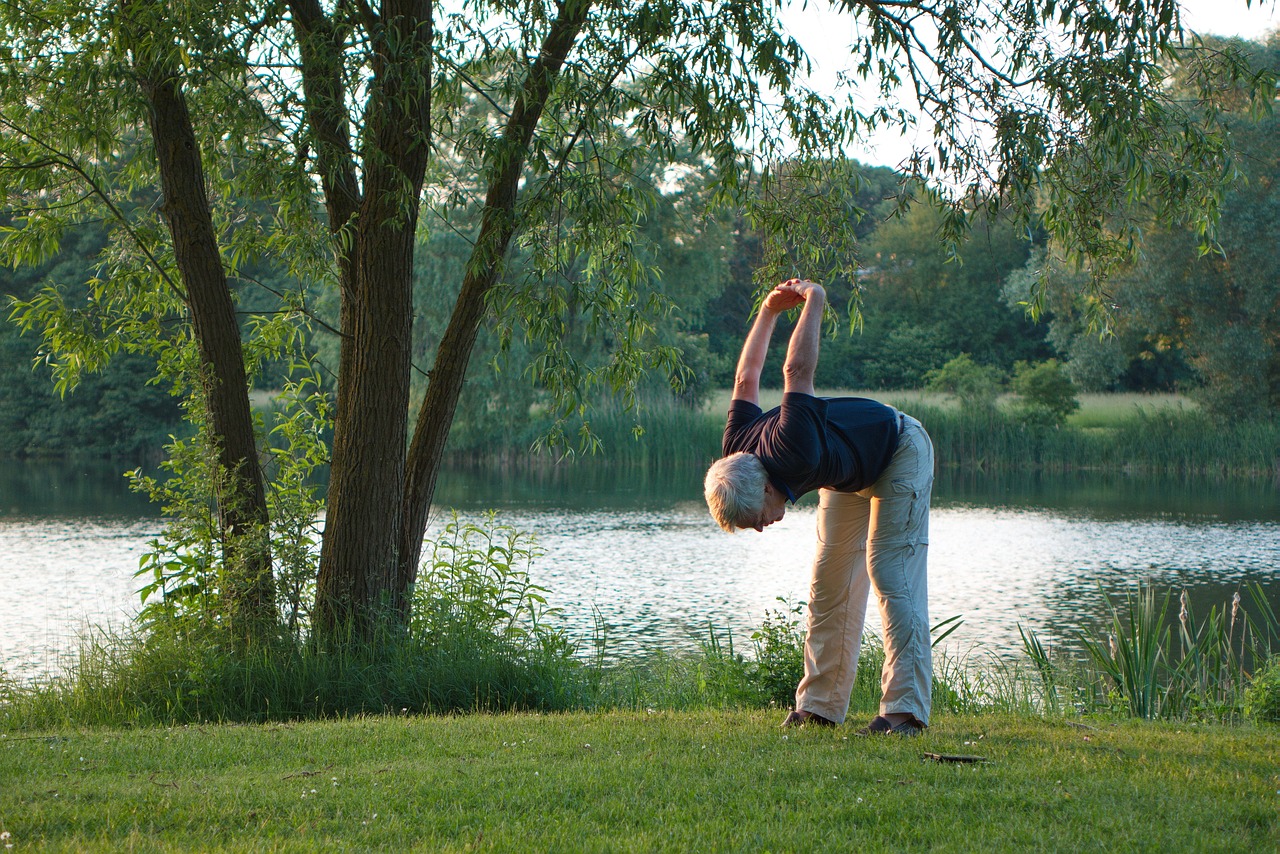
“I love to do anything that gets me moving,” says Karen Blake of Marquette. “If I can do a flight of stairs in an office building, or tai chi, or just do some stretches at home. I’d like to get back to horseback riding but I haven’t found the right situation yet.”
Retired doctor Peter Zenti also spoke of tai chi.
“When you’re doing some of the tai chi poses and balancing on one foot, that helps when you go out on icy sidewalks.”
Peter enjoys beginner pickleball at Marquette’s Senior Center too. He says, “The main thing we do is laugh—when you swing and totally miss the ball…. when you can’t remember what the score is, and someone else can’t remember…. It’s awesome!” Peter also notes how very helpful and welcoming the group is to new participants.
Former history professor Jon Saari answers, “I like exercise that is a little bit unpredictable, that doesn’t just follow a fixed routine.” Maria Formolo’s tai chi class at the Marquette Senior Center is a favorite of his because unlike most, it includes free exercise and “it’s slow and is adaptive to where your body is at that day.”
Jon also enjoys a new class at NMU called Asahi. He explains, “It’s simplified these many forms (of tai chi) down to a basic one. It’s been tested and found to exercise the whole range of the body’s muscles.”
Former dance studio owner Dawn Dott’s favorite type of exercise is now water aerobics.
She says, “When my body’s submerged in water it’s more buoyant…. I experience less wear and tear on my joints and muscles…. I can work harder and longer than I can on land.”
She adds, “I find it easier to balance in the water…. I feel less stress and anxiety after a water workout, especially when the class has included music. It improves my mood and ultimately, my outlook. It’s a blessing to be part of a kind and fun-loving (water aerobics) group.”
Avid folk dancer Bob Miller also appreciates the social aspect of group exercise. He explains, “I don’t like just dancing alone. Interacting with others is enjoyable.“ Bob also says, “When the music’s going, I feel like I could dance five miles when I couldn’t run one. Rather than getting tired dancing, I feel like I gain energy from it and the music.”
So join in the fun and find (or continue) your favorite form of exercise!
Excerpted from the Spring 2023 issue of Health & Happiness U.P. Magazine. Copyright 2023, Empowering Lightworks, LLC. All rights reserved.
The late Helen Haskell Remien inspired many in our community and beyond to greater creativity, boldness, and optimism, to claim their talents and live more fully. In 2007, this grew into her opening Joy Center, expanding the depth and reach of her impact.
Helen described Joy Center as “a charming cottage in the woods in Ishpeming that’s a creative sanctuary for people in our area and elsewhere to come and play and dream and expand…. a beautiful place where you can connect with your biggest, highest part, and also connect with the community.”
As Helen explained, “I had a seed of a dream in me thirty years ago. At that time I was wondering if I wanted to be part of the academic world, in an institution, and teach writing, or part of a place in the community where things like writing workshops could be held in which everyone could be included. I wrote in my journals in the early 90s that there should be a place in the community where we can drum and sing, and dance, and have writing workshops, and events like ones I loved when I went to Omega Institute and Kripalu, and that I would love to be a part of something like that.
“About twenty years ago, I began encouraging people to find their own creative paths.
Then in the spring of 2007, I started to feel dissatisfaction…. It was no longer enough to teach writing in my house and yoga in the basement of my husband’s dental office.”
“When I built Joy Center, I kept expanding my mind—‘This will be a place where I will teach yoga, writing, creative workshops. And people can offer other creative things. It will extend our home in some way when our kids come back to visit….’ I realized, ‘Oh, my gosh! There are so many awesome dreams people are having in the community!’ And at that point there weren’t the places available now offering yoga and energy work and so on.”
“For example, Amber Edmondson and Raja Howe knew they were poets, but didn’t know they were book binders yet. They sold a book at Out Loud, our open mike night, then began offering book-making workshops at Joy Center. Now they have their own shop. Kerry Yost had never sung in public until one night at Out Loud, and she just blew everyone away.”
“Early on, Joy Center took on its own life to be a safe place where people could take a seed of a dream, like I did, and allow it to blossom.
Sometimes their offering has stayed at Joy Center, and sometimes it flourishes far beyond. And I get to play with people that way, and be the person who holds the space and is a cheerleader for people’s dreams.” “ “I think people feel something when they walk into the physical building because it’s really welcoming and beautiful…. People feel safe to really be brave and find parts of themselves they haven’t felt before, or to love themselves more deeply than they’ve loved themselves before. Joy Center was built with a really positive, high vibration…. It was such fun working with a young man who put his heart and soul into it…. We really co-created together, him doing the actual work, and me doing the dreaming.” (1)
Helen’s dreaming supported some as-yet-unknown dreams of others. Singer/songwriter Kerry Yost explains, “She made you feel like what you were doing was important and worth sharing, and created a space for it to become important and worth sharing through her support and encouragement and also through the community she built at Joy Center. She gathered all these people who wanted to create meaning in their lives, and gave them a space and encouragement to do that.”
“As a bigger-than-life kind of person, she had that level of impact in everything she did—within the writer community, yoga community, artist community.
Even though she had such a far reach, Helen still made me feel like that reach went directly to me specifically. I think she had that effect on many people.”
Her biggest impact on me was with my music through her encouragement and sometimes outright loving pressure to make something of what I was doing. Most of my music is just in my house for me. Helen would say, ‘Kerry, so when are you coming to Out Loud to play music next? Here’s the calendar, pick a day when you’re going to have your show at Joy Center.’ I’d be like, ‘I don’t know, Helen. Nobody needs to hear that.’ Next time I’d see her, she’d say ‘Okay it’s January; what day do you want to do that?’ and I’d turn her down again. This went on for a solid three months.
Helen could have kept what she built for herself, but instead she used her resources and energy to build Joy Center for others to utilize. She was also like, ‘And it’s for me too!’ I love that she was so real about it, unabashedly so! She took her dream and made that same dream accessible to others and encouraged them to do it because she had the privilege to do that for herself.
I remember going to Joy Center and hearing Christine Saari read excerpts of her work and being completely entranced by the stories of her childhood. I got to hear Keith Glendon play ukulele in front of people for the first time. She created space for people both physically and in a very deeply spiritual way.
Helen really did see and want to help people where she could.
She invited me to be the Joy Center gardener, even though I knew nothing about doing that, back when I was a broke part-time social worker, part-time musician. I always felt very cared for by Helen. She’s so special to me, and everyone, for good reason.”
Keith Glendon recalls, “I found Joy Center when there was a lot of chaos in my life. And in finding it, I also found the heartful community that I didn’t have here even though I’d moved back to my hometown—people like Kerry Yost, Matt Maki, Christine Saari, and all these folks that would turn up at Out Loud and nourish a part of me that had been put away for a long time. That really began the rebirth of my creative self, my authentic self, my healing self, my musical self. Joy Center was a great place of friendship, safety, respite, and renewal.
“I’d been about to go back to school for my MBA, but I didn’t really want to. I was just searching for something. I went to a grueling three-hour session of a 12-week GMAT prep course and thought, ‘What am I doing?’ I went to Out Loud that Thursday and discovered Matt Maki was starting an Artist’s Way class. I thought, ‘I could do this thing I don’t bleeping care about, or I could do this class with this weird dude who’s a poet. Why would I condemn myself to a future in what I don’t want to be doing?’”
“My experiences at Joy Center also began to influence my children with both poetry and music. Now I have a teenage daughter who’s very adept at busking and singing and art-making.”
“Helen even inspired a big project of mine.
During one of her monologues at Out Loud, she said, ‘It feels so much gooder when I’m able to step into my bigness.’ I said, ‘Hold on—can I use that?’ And that became the title of Gooder with Bigness, a Shel-Silverstein-meets-Dr.-Seuss kind of book I’m creating with Hancock artist Katie Jo Cudie.”
“Joy Center literally changed the course of my life. It resuscitated an essential me that had not had nearly enough nourishment and exposure and attention.”
Ishpeming resident Cece Korpi’s time with Helen at Joy Center led to a turning point in her life too. She explains, “A friend recommended her yoga class. When I found out it was an hour-and-a-half, I said, ‘I cannot do a class that long, but I’ll give it a try.’ Helen welcomed me with open arms. When the first class was finished, I felt like—“What?! I don’t’ want to go home. I just want to stay here!”’
Helen loved life and people, and shared her joy every day.
At the end of yoga class she would say, ‘All is well,’ and I would think ‘You do not know my life!’ But I took more classes and I learned all is well in this moment.
Helen was so accepting of everybody. By spending time with her and going to a lot of Joy Center offerings, I became more accepting of myself and others. Her joy and compassion were contagious. I came out of my shell and became more confident.”
Like Helen herself, though Joy Center is no longer with us physically, its spirit continues to inspire. Keith Glendon describes a “Joy Center Junior” shed in his backyard where the adults can do art and music. In the spirit of Out Loud, Keith is working with Marquette’s Unitarian Universalist Church leaders to offer Music & Myth Monday, where youth can play music live, or music they like, or read mythology they’ve enjoyed that has spiritual meaning.
UP Poet Laureate Marty Achatz continues the Out Loud tradition each third Thursday on Zoom. All are welcome to join in, whether as listeners or by taking a turn on the Zoom “stage.” You can email him at machatz@nmu.edu for info.
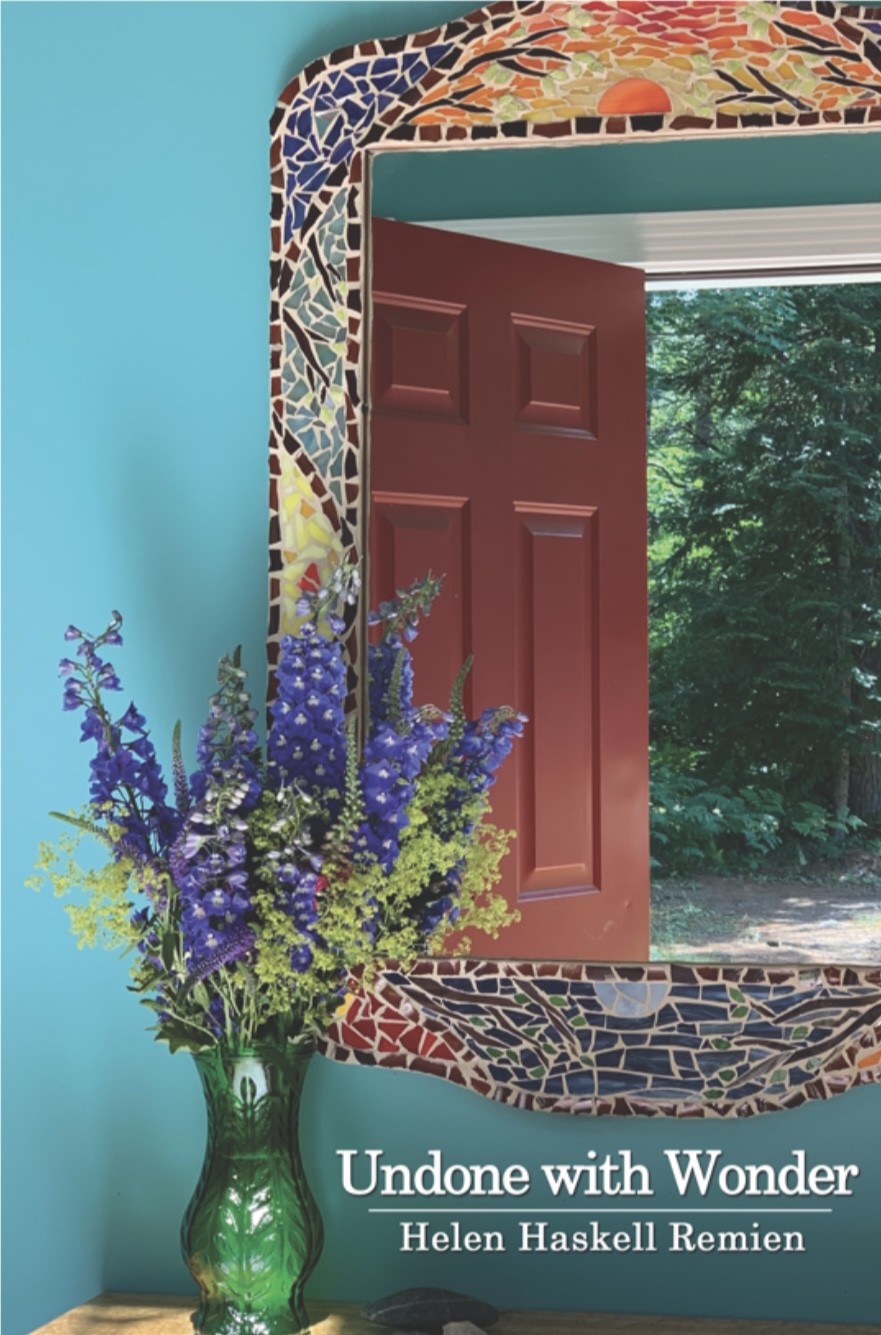
You can also dip into Helen and Joy Center’s creativity and beauty through Undone with Wonder, a poetry collection Helen had been working on now painstakingly published by poet friends Gala Malherbe, Marty Achatz, and Ron Ferguson, with an inviting cover photo of Joy Center’s entryway by wellness consultant and former Joy Center manager Pam Roose, and a warm introduction to Helen by local author B.G. Bradley. Copies are available at the Marquette Regional History Center gift shop and Blackbird Boutique in Marquette. All profits go to the Peter White Public Library.
Ideas are also percolating for a Joy Festival later this year. See the Summer 2023 issue of Health & Happiness UP Magazine for more info.
1 Health & Happiness U.P. Magazine, Spring 2020 issue, copyright 2020.
Excerpted from the Spring 2023 issue of Health & Happiness U.P. Magazine. Copyright 2023, Empowering Lightworks, LLC. All rights reserved.
How is your New Year going so far? Are you keeping the resolutions you set? If not, you are not alone. Every New Year, 87% of adults create new goals and resolutions. There is about a 54% chance you will be unsuccessful and give up by the end of January. Research shows that 95% of New Year’s resolutions are health and fitness related, but after just three months, only 10% of people think their resolution will last.
Why do I share this? Because most of us want to be healthier, happier, more fit, and truly feel our best, but the data shows a New Year’s resolution is not the solution. What I have found to be the best approach is focusing on small habits and creating accountability in your life. It is the healthy habits that will continue to bring success and the accountability that will inch you forward to achieving your goals.
I may be a bit biased, but having a naturopathic doctor in your corner to help set these habits in motion and offer you accountability can make all the difference in working to optimize your health.
Naturopathic medicine has so much to offer.
It provides individualized care and focuses on creating the conditions for health to support the body in healing itself. This is one of the things I love most about this medicine.
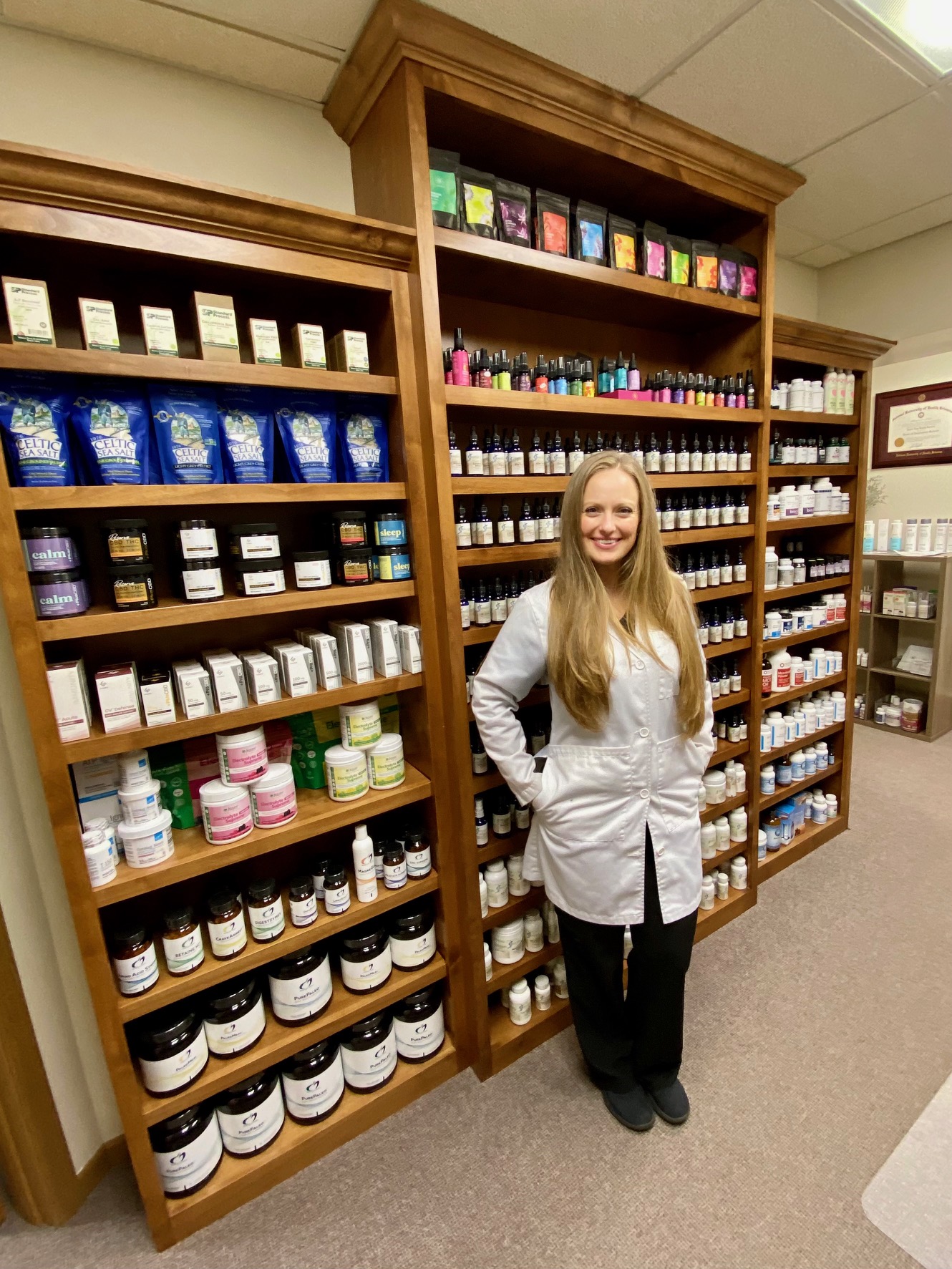
When someone comes to Upper Peninsula Natural Wellness for guidance on their health journey, more often than not they have many challenges taking place. My goal is to implement the most gentle intervention to make the biggest shift in their health. One way I do this is through the SHAPE ReClaimed program.
It’s a health restoration and lifestyle modification program that combines a patented homeopathic supplement with the nutrition protocol for a simple, effective and safe way to achieve optimal health. The goal is to teach you new skills and help you embrace a healthy lifestyle. We work on creating those small HABITS that will be a part of your life well after you complete the program.
I find this program simple and effective. It is organized into three phases: cleanse, stabilize, and live. These three phases are designed to first balance your brain chemistry, strengthen your immune system, and cleanse your body of excess weight and toxins. Then you reincorporate new foods and begin to stabilize your weight and brain health, and lastly, learn to maintain this healthy lifestyle.
This program is customized to your bio-individual needs,
meaning I use your health history, symptoms, and urinalysis results to adjust this protocol specifically for you. This will ensure you feel satiated and achieve optimum results. You receive your own program guidebook, nutrition guide, dietary supplement, and any other recommendations I have found beneficial for your healing journey. A urinalysis is used to measure your improvements, and we meet weekly to answer questions, hold you accountable, establish positive health habits, and learn how to take control of your health.
Individuals have experienced a decrease in inflammation, fewer joint problems, better digestion, normalized blood pressure, lower cholesterol and triglycerides, balanced blood sugar, cognitive improvements, reduced dependence on prescription medications, optimal weight, and better overall health.
I look forward to the opportunity to help you on your health journey and would love to be a part of “Creating Your Best Me in 2023.” I work with individuals locally in my office, and remotely via phone or Zoom. Call, text or email the office to schedule a free twenty-minute consultation to see if you are a good fit and ready to take control of your health.
Dr. Linzi Saigh is a naturopathic doctor (ND) and a certified nutrition specialist (CNS) with a Masters in acupuncture (MSAc). Naturopathic medicine is a system that uses natural remedies and therapies along with lifestyle changes to help the body heal itself.
Excerpted from the Spring 2023 issue of Health & Happiness U.P. Magazine. Copyright 2023, Empowering Lightworks, LLC. All rights reserved.
The Fall 2022 issue of Health & Happiness UP Magazine included my article “Order Your Electric Car NOW” covering the basics of electric vehicles (EVs) after my 6,000 miles of experience, but didn’t answer questions many Yoopers have about winter driving. Now, after 16,000 electric miles, including winter miles and new tax credits, I have answers.
A critical detail is that 80% of EVs are charged while you sleep, at home, overnight, from an ordinary 240-volt clothes dryer-type circuit in a garage or outside fixture. Having a home or apartment/condo complex charger (30% tax credit to install) is a big winter advantage. A plugged-in EV is ready every morning to remote start, warm up, and drive all winter long. With home charging, you spend less time charging than you formerly spent pumping gas! Just plug in at night, unplug in the morning, and go.
Unlike many gas or diesel cars, EVs will start even in the coldest weather and are still very powerful. In all EVs, as the temperature drops, battery chemistry slows somewhat, but the power remains. Many EVs can be started remotely and are toasty-warm whenever you get in. Batteries heat the car interior. EVs with heat pumps warm the interior and passengers efficiently, faster than gas cars.
EV winter capabilities vary by model.
Some are absolutely ready for U.P. winters; others have some limits. Below freezing, the EPA range per charge in miles is reduced by about 25%. A daily 250-mile EPA summer charge range is reduced to 180 winter miles. Very few people regularly drive 180 miles per day so that’s rarely a problem. When road-tripping more than 180 miles from home, recharge at a fast-charger. Go to PlugShare.com to find medium and fast chargers on your route. Many EVs know where the chargers are and will route right to them.
Some people are tempted to think they need 400 – 600 miles of range and massive power. That’s usually a mistake unless you tow heavy loads long distances. If most of your driving is less than 180 miles per day, excessive range beyond 300 miles just means you paid extra for excess battery capacity which rarely gets used, which adds excessive battery weight, which drags down the EV truck’s already lower efficiency (MPGe – miles per gallon equivalent), which means you’ll spend much more time charging more energy into the truck than charging a speedy 250-300 EPA mile passenger EV on the same trip.
EV batteries on long winter road trips fast-charge fastest when warm. Cars best suited to long winter road tripping have a feature called “preconditioning” that automatically heats the battery to an ideal temperature as you drive to a fast charger. EVs without preconditioning usually charge much slower in the cold. Slow charging at home is essentially unaffected.
Most EVs are all-wheel drive. Snow and slush eat energy. Snow tires eat some energy too, but AWD EVs often handle winter road conditions better than gas cars. EVs are among the highest safety-rated vehicles on the road.
EV car shopping is fun.
For town/commuter EVs, add a 240-volt charger in your garage, then get almost any EV. For winter road tripping, consider sleek, beautiful, and sexy EVs with an EPA summer range over 250 miles, all-wheel drive, preconditioning, a CCS or Tesla charger connector, and a max charge rate over 150 kW. Tax credits are available for almost everybody—$7,500 for qualifying EVs, 30% credits for installing chargers. Go to shorturl.at/floWZ
Buying another gas car? You’ll be locked into gasoline for five more years. Yuck! Order or lease your electric car NOW!
Steve Waller’s family lives in a wind- and solar-powered home. He has been involved with conservation and energy issues since the 1970s and frequently teaches about energy. Steve can be reached at Steve@UPWallers.net.
Excerpted from the Spring 2023 issue of Health & Happiness U.P. Magazine. Copyright 2023, Empowering Lightworks, LLC. All rights reserved.
When you think about aging, what you are actually thinking about is being alive.
Oftentimes people tend to allow corporations and their advertising campaigns to define what aging is through all of the anti-aging and look-younger products that are being pushed at us in the media and markets, indirectly telling us that the aging process isn’t desirable. Whether it’s gray hair, wrinkles, or reduced energy levels, capitalistic business tries to take advantage and convince us to spend money to change ourselves.
Of course, you’re entitled to spend your own money how you want, but be sure it’s on your own terms. Looking younger isn’t being younger, but if that’s what works for you, then spend away! Just don’t let the ad campaigns make you feel inferior, because you’ve developed considerable amounts of experience through your life’s adventures that give you greater insight and wisdom to deal with challenges than a younger person, who may be overwhelmed by them.
Having more free time in retirement can enable older adults to do things they’ve only dreamed about.
Whether it’s going on trips to places on your bucket list, starting a new career in something that’s always interested you, spending more quality time with loved ones, or taking a course at a nearby college or online. You could even teach a course in something you’re good at as an enrichment class for others to expand their skill sets, or attend an enrichment class yourself.
Having more time also offers you the ability to volunteer with different organizations that fit your fancy. Many these days are in desperate need, creating a win-win scenario.
In addition to more time, seniors may also have greater disposable income due to Medicare and Social Security guaranteeing basic health insurance and a minimum income. Senior discounts are also a very nice perk to advancing in years, as they can be found nearly everywhere.
Of course, your mental and physical fitness level is a big influence on how much you might tend to enjoy your later years.
Here are some tips from the National Institute on Aging for aging “successfully,” to help you stay healthy and deal with potential cognitive challenges:
Learn a new skill.
Follow a daily routine.
Plan tasks, make to-do lists, and use memory tools such as calendars and notes.
Put your wallet or purse, keys, phone, and glasses in the same place each day.
Stay involved in activities that can help both the mind and body.
Volunteer in your community, at a school, or at your place of worship.
Spend time with friends and family.
Get enough sleep, generally seven to eight hours each night.
Exercise and eat well.
Prevent or control high blood pressure.
Don’t drink a lot of alcohol.
Get help if you feel depressed for weeks at a time.
There’s no point in trying to fight aging—we either advance in years or not, and until that final day arrives for each and every one of us, it would be wise to make the most of the advantages we’ve earned over the years.
Kevin McGrath is schlepping toward retirement and is looking forward to his next adventure on the highway of Life.
Tamarack Builders is a small company primarily doing remodeling and light commercial construction in Marquette since about 1998. We specialize in older buildings, some that might be considered tear-downs. I like that kind of stuff compared to more modern houses and buildings.
Very nice, talented, thoughtful people work with me. When we’re doing projects, we make sure things are done correctly. Sometimes previous work by others has to be corrected. It can be easy to breeze by those things and say they’re fine, but we try to make sure things are done properly.
For example, with remodeling for energy efficiency, we do insulation and venting to prevent ice dams, which can be a huge issue here. Water infiltration issues, proper flashing techniques—all are very important. By doing so, you extend the life of that building, increasing its energy efficiency and decreasing the likelihood that it will get torn down later.
By extending the life of a building, you’re minimizing its carbon footprint because of the embodied carbon in the materials.
For instance, concrete lasts a long time but it’s really carbon-intensive to make. If you can save a building, you’re preserving that embodied carbon. When things get torn down, it all goes in the landfill, plus you use new materials that have their own carbon footprint.
A lot of these old buildings in Marquette were built with old growth lumber. As they get torn down and their components are thrown away, it’s just gone. I try to save building materials. It often doesn’t take that much effort to save stuff. I put old two-by-fours in a pile. When you get enough stuff, you can make something—countertops, sheds—out of the recycled building parts. I’m a little bit of a hoarder of vintage building materials and try to re-use them the best I can. Old studs are beautiful. I try to save those for re-use.
The other day when it was raining, we had enough stuff saved up that we could build a couple of things at the shop out of recycled materials. It’s rewarding and fun to be able to do that. Not always cheaper, but very rewarding. We built a small boat shed entirely out of recycled materials. We installed a couple of recycled doors using recycled materials and re-purposed what we took out. Small stuff but it adds up.
It’s a personal thing.
It feels really good to be able to put something together, like a boat shed, from salvaged materials. It’s good practice for my employees to think it through and make things work. It’s always good for people to practice all these techniques, use them on a small scale. It’s a good way to gain more experience with something like this.
Three good-size commercial projects we did recently were in buildings that were in really bad shape. Little updating had been done to them; one even had some original wallpaper. We spent the time and money to bring them up to code. One building was far from meeting current codes. If there had ever been a fire there, it would have been devastating. We extended the life of these buildings for a very long time.
One of them was the McLean Chiropractic building on Third Street. It had been slated to be torn down for the last twenty years. Now since we’ve done the work on it, it’s up and running, and good for another hundred years.
I’ve worked on a lot of historic buildings—Donckers, Downtown Eye Care, Evergreen Market, what’s now Queen City Running Company on Baraga, the previous flower shop there, and many vintage residential buildings. I really enjoy that. It’s a lot of fun.
How did you get into this line of work?
I’d worked as a carpenter on Mackinac Island in the ’80s and ’90s. I moved to Marquette and building was a way I could make a living with my skill set, and offered a flexible schedule. When I had kids, I could take time off to be with them, go to their events, drive them around, or whatever. was needed. That was a huge draw for me, enhancing my life and hopefully the life of my family too. Having the ability to take care of someone when they’re sick is important. You can’t do that as easily if you run a retail store. Contracting gives a little flexibility. I extend that flexibility to my employees too. It usually doesn’t make a huge difference if we need to take a few hours off. People need that time to have a healthy balance. Work-life balance is number one. I’m not doing this to get rich, and that’s okay because my work-life balance has been very good.
What do you find most challenging about your work? Doing the paperwork–billing and trying to keep track of that end of the business is not something I like to do. I love being on the job, being with my employees, and working on projects.
Anything else you’d like our readers to know? As a builder, I think people should know these old buildings are worth investing in. It’s worth coming up with a systematic, comprehensive approach. These older structures are valuable and contain a lot of embodied carbon. If we have any hope for climate change, we need to take care of them.
It’s astounding to see what’s thrown away—it’s unreal, all the building materials. It’s heartbreaking to see what goes in the landfill. I’m not saying we can recycle everything, but we can do more. We’ve got to make efforts toward sustainability. I’ve encouraged green building, energy efficiency, and presrvation. The luxury of building a new green structure is not achievable for a lot of people, but in every structure, there’s potential for comfort, energy efficiency, and financial savings.
Excerpted from the Winter ’22 – ’23 issue of Health & Happiness U.P. Magazine. Copyright 2022, Empowering Lightworks, LLC. All rights reserved.
The latest Emissions Gap Report from the United Nations Environment Program (https://www.unep.org/resources/emissions-gap-report-2022) states that the world has just emitted a new annual record amount of carbon dioxide (CO2). Given this increase, to limit global warming to 2°C, we must cut CO2 thirty percent by 2030. A stepwise approach is no longer an option. We need system-wide transformation.
Who is at the top of the emissions list? Americans, emitting over twice the world average CO2 per person. Even though we like to think we are protecting our environment, that “other” people are the problem, we are the actual culprits breaking world CO2 records.
New record: U.S. population–333 million people in November 2022, increasing by 1.4 million Americans per year (https://www.census.gov/popclock/). We must build a new Dallas, Texas (population 1.4 million) each year to accommodate our new Americans. New record: world population–8 billion people by November 2022, increasing by 70 million each year.
Those new additional 1.4 million Americans, our youth, our future, need a slice of our American pie–food, water, land, housing, heat, transportation, all from the limited environment already supporting 333 million Americans. Each must share a smaller, cleaner piece of green pie.
But what more can we Americans do?
How can we emit less and still be Americans? Since most of the rest of the modern world seems able to emit less, how can we break their lower emission records?
We need to learn to live without CO2, then teach the next generation. Eliminate old, fossilized thinking and think anew. That’s hard. But if nothing changes… nothing changes!
Imagine a life without fossil fuels. Cars emit twenty pounds of CO2 per gallon of gas. How would we still drive? We must shift to electric cars (rebates available). No excuses. How would we heat or cool our homes? Homes must rely entirely on electricity so we must install heat pumps (for heating and cooling–rebates available).
How can we clean all that electricity? It still depends mostly on fossil fuels. Our only clean, cost-effective, sustainable option is using renewables. We must install solar at our homes (rebates available). Encourage wind and solar farms in our neighborhoods. Learn to love the look of solar and wind.
Some fossil fuel use will be irreplaceable, but if you think better, most can be eliminated.
Yes, there is a price to pay for changes. Fossil fuels were dishonestly cheap, so cheap that we used them for everything, everywhere. Cheap because we didn’t pay then for our CO2 consequences. The honest, responsible bill is now due. We must pay for the fixes, and fortunately, the fixes create jobs.
Existing homes and apartments must convert to all electric with solar and heat pumps. New construction needs to use less wood to keep trees alive and absorbing CO2. Use less concrete and steel. Making a pound of cement emits a pound of CO2. Making a pound of steel emits 2 lbs. of CO2.
Smaller homes are better, cheaper, have lower emissions, and are easier to clean and maintain. McMansions are fossil thinking. It’s time to upgrade to smaller. Upgrades always have a cost but fossil thinking costs more. That’s the honest price of a healthy environment. We cannot afford to wait for the environment to be on sale.
Let’s break good records this holiday season. Upgrade to eliminate CO2. Get rebates for efficiency, energy, and electric cars. Emit the least CO2 in your life, ever. Let’s have the cleanest water and air, ever. Let’s consume less than ever. These are records waiting to be broken. The next generation is counting on us.
Steve Waller’s family lives in a wind- and solar-powered home. He has been involved with conservation and energy issues since the 1970s and frequently teaches about energy. Steve can be reached at Steve@UPWallers.net.
Excerpted from the Winter ’22 – ’23 issue of Health & Happiness U.P. Magazine. Copyright 2022, Empowering Lightworks, LLC. All rights reserved.
Nothing will warm you up on a cold winter day better than a nice hot bowl of soup. Soup is such a versatile dish. It can be served as an appetizer before a meal, be the main course, or even just a snack.
When you make a soup with red lentils, you have the added bonus of a thick creamy texture because red lentils break down when they are cooked. Red lentils are an excellent source of protein, high in fiber, iron, calcium, zinc, selenium, phosphorus, manganese, and B vitamins.
Whenever you cook beans or lentils, add a small piece of kombu. This incredible nutrient-dense sea vegetable helps strengthen your intestinal tract and aids in digesting the lentils, helping to eliminate the gas some experience when eating beans and lentils.
Burdock root is an excellent strengthening root vegetable native to Michigan.
You may have come across it while hiking in the woods. It is the plant with the huge leaves and round burs that get stuck on your pant legs. You can dig up the plant and eat the root, but most prefer to just buy it from the store.
Burdock is great for your skin, can cleanse the blood, is good for your digestion, and can help eliminate toxins from the body. It’s best known for helping people with diabetes as it contains inulin, the nutraceutical that helps stabilize blood sugar levels.
Burdock root has a unique bitter, earthy taste. It is always best paired with a sweet vegetable such as the sweet potato in the soup recipe below. The seasonings paprika, curry, and cumin give a little spice to the soup without making it too spicy. They spices are warming spices, helping to keep you warm during the cold winter months.
Red Lentil Burdock Root Soup
10 cups water 1 (2 inch) piece of kombu 2 cups red lentils 1 onion (diced) 4 cups sweet potato (peeled and cut in cubes) 2 cups burdock root (cut in thin rounds) 3 celery stalks (diced) 1/4 cup minced kale 1 T. olive oil 3 tsp. sea salt 2 tsp. thyme 1 tsp. paprika 1/2 tsp. curry 1/2 tsp. cumin
Directions
Put the water and kombu in a soup pot and bring to a boil. Remove the kombu once it’s soft. Cut in small pieces and put back into pot. Add the red lentils and let water come back up to a boil. Add the vegetables, one at a time, letting the water come back up to a boil in-between adding each vegetable. Once all vegetables are in the soup pot, reduce to low, and simmer for twenty minutes. Turn off heat and add the seasonings. Stir everything together and serve hot.
Chef Valerie Wilson has been teaching cooking classes since 1997. She offers weekly, virtual cooking classes that all can attend. Visit http://www.macroval.com for schedule, cookbook purchases, phone consultations, or her radio show, and follow her on Facebook at Macro Val Food.
Excerpted from the Winter ’22 – ’23 issue of Health & Happiness U.P. Magazine. Copyright 2022, Empowering Lightworks, LLC. All rights reserved.






 Health & Happiness U.P. Magazine