Julie has been a health and life coach since 2020. She has helped clients achieve their personal heart quests including creating work life balance, finding confidence and self-empowerment, managing sugar addiction, and conversion to a whole food plant-based lifestyle. To learn more about her coaching programs, visit: https://heartsquestcoaching.com/coaching-programs.
Excerpted from the Winter’23-’24 issue of Health & Happiness U.P. Magazine, copyright 2023, Empowering Lightworks, LLC. All rights reserved.
Do you want more out of life? According to Abraham, a group of non-physical entities channeled by Esther Hicks, you can be, do, or have anything you want when you understand the Universal Law of Attraction. If channeling entities is too “out there” for you, think of the Law of Attraction as similar to positive thinking.
The Law of Attraction states that like attracts like. When we think of something we want, we tend to attract it. For example, if you think about money, you’ll attract money. If you think about love, you’ll attract love. You may be thinking, “Then why don’t I have money or love?” The hitch is we have to believe we will receive what we want. When we doubt it or feel we don’t deserve it, we send a message to the Universe that we don’t want it. That blocks us from receiving what we want. When we really envision having it and we act and feel like it’s already ours, we create a powerful magnet that attracts it to us.
Before you dismiss this concept, recall a time when you thought of something that surprisingly appeared. For example, I might learn a new word, and then suddenly, I read or hear it multiple times within a few days. You might even attract a parking space in a busy downtown by simply believing you will have a smooth day where everything goes your way.
Yes, I know attracting a parking space seems like a small thing compared to attracting a life partner or a good-paying job, but according to Abraham, it is as easy to create a castle as a button. It doesn’t matter how big or small the item you wish to attract because when you use the Law of Attraction, you will attract it. Even the Bible supports this universal law as evidenced by the biblical title of Abraham’s first book, Ask and It Is Given.
My late friend Helen Haskell Remien was a devoted student of the Law of Attraction.
I remember her talking about how one of her ancestors had been a builder of community. Helen wanted to do the same. She was full of positive energy and constantly attracted people to her. In the movie Field of Dreams, Kevin Costner’s character comes to believe “If you build it, they will come.” He builds a baseball field and famous baseball players come to play there. Similarly, Helen built Joy Center in Ishpeming.
About 2006, she complained to me about the setup at a poetry reading she participated in. She decided to take future matters into her own hands by creating her own event and venue. She began by having one-woman shows at various locations. Then she expanded her vision to creating her own building, a creative sanctuary for her and others’ events. And hence, Joy Center was born.
Before Helen built Joy Center, she tweaked her vision by having a dollhouse-size model built of it. With the help of atalented carpenter, she then created a large, house-like location with three floors and plenty of room for events. At Joy Center, Helen held yoga classes, writing workshops, movie nights, open mic nights, and let people rent the space for their own events. How did she do this? By believing it was possible and acting on her belief.
Once Helen opened Joy Center, many flocked there.
As a result of her courage to live out loud and not suppress her dreams, Helen inspired countless people to follow their own dreams. Everyone from aspiring poets and authors to musicians and athletes joined Helen in celebrating life’s possibilities when we allow ourselves to receive what we wish to attract.
Abraham says the Law of Attraction is a universal law. Humans are born with the ability to send out a request to the Universe and have the Universe respond by granting their wishes. The problem is we let self-doubt, fear, and doubt of our worthiness interfere.
I have had the experience numerous times of getting out of my own way and then seeing what I want appear. For example, when I applied for a PhD program, I was accepted but told the university could not offer me an assistantship. I stressed for weeks about how I would support myself while in the program. One day I said, “God, this is out of my hands. If it’s going to happen, it’s up to you” and I let the worry leave my mind. Later that day, I got an email offering me a teaching assistantship that would cover my tuition and pay me a stipend. Whether you want to call it trusting in God, letting go and letting God, or getting out of your own way, the Law of Attraction worked for me that day.
Even if you don’t believe in Universal, mystical laws, I guarantee if you use positive thinking, you will change your mindset and open your mind to finding ways to create what you want. Instead of saying, “I’ll never be rich,” switch to saying, “I have enough money,” or “I am capable of making enough money to support my needs.” Listen for the negative voice in your head and rewrite its sentences to positive ones. As Henry Ford said, “Whether you think you can or you can’t, you’re right.” Ford thought he could, and he was right. Helen did not say, “No one will come to my events.” She told herself she would build a place filled with joy for countless people. People wanted more joy and to share in her joy, and so they went and played and created with her at Joy Center.
What story are you telling yourself about what you want?
How can you tweak that story to attract all the good things you deserve? What is your Joy Center?
Tyler R. Tichelaar is the author of twenty-two books. He thanks Garee Zellmer for introducing him to the Law of Attraction and Helen Haskell Remien for modeling it.
Excerpted from the Spring 2023 issue of Health & Happiness U.P. Magazine. Copyright 2023, Empowering Lightworks, LLC. All rights reserved.
Resilience refers to the strength of our coping skills when faced with difficulties in our lives, how well we manage stress and stressful situations without losing our health and well-being. Another word for resilience is elasticity, how quickly and easily we stretch during and bounce back from physical, emotional, and psychological challenges.
Our resilience is like a rubber band, stretching without breaking when pulled and returning to its original shape when released. Paying attention to what stretches our resilience, lessens our elasticity, and returns us to our original capacity, keeps us healthier and happier.
How we think about the events in our lives has a direct impact on our resilience and elasticity. Take two words we use interchangeably to describe what happens to us–powerless and helpless. We use these words when we find ourselves in situations where we believe and feel like we have no control.
Changing our perception of these words and how we use them shifts our experience, ability to cope, and ability to bounce back. Using the word “powerless” to represent the situation and characteristics of the event, and the word “helpless” to represent our internal and external reaction to an event can be one way of maintaining resilience.
Recognizing, acknowledging, and accepting what is—finding oneself in a powerless situation—reduces the length to which we stretch our resilience. Changing our self-talk from angry, sad, and helpless language to more compassionate and soothing statements allows our resilience to return to its original capacity more quickly.
For instance, getting a flat tire while out running errands can really mess with our day.
It is a powerless event. We cannot change what has happened—the tire is flat. Standing by the side of the road cursing, kicking the tire, and yelling at the sky about “bad luck” or “the world is out to get me” really stretches our rubber band of resilience by keeping us agitated and aggravated.
A more resilience-saving response would be to pause and take deep breaths. We stay calm and keep the stretch minimal. Recognizing we are in a powerless situation, accepting the moment, moves us more quickly out of anger or immobilization to taking effective action. Next, to address feelings of helplessness, we can change our internal self-talk to a more compassionate response.
For instance, instead of “Only bad things happen to me. I have the worst luck! This is going to ruin everything,” we might try, “Wow, this is unfortunate and challenging. Flat tires happen to all of us. There are other people dealing with this same problem. I can deal with this. Although it isn’t desirable, it is manageable.” The second set of phrases keeps us calmer, not stretching the band so tight, and returns us to calm and balance more quickly.
Bullying and insensitive personality traits of bosses and coworkers is another example of powerless situations.
None of us are successful changing someone else’s personalities. Instead, we find ourselves feeling helpless and hopeless. We become aware that we are telling ourselves things like, “What did I do to deserve this? What’s wrong with me that he is picking on me? There’s nothing I can do here so I just have to take it.”
Instead of these stories, tackle our feelings of helplessness with compassionate self-talk such as, “This is really difficult, and it hurts to be the target of unkind behavior. Anyone in my situation would feel the way I do. Many have difficult bosses and need to find a way to cope. I’m capable and able to find a way to take care of myself in this situation.” This self-compassionate shift brings relief, a lessening of self-blame, and healthier action and behavior.
Once we move out of our helpless state, we can be ready with assertive statements such as, “Please don’t raise your voice to me when discussing my work. It makes it very difficult to listen to the content of what you are saying. If you are willing to lower your voice, I am happy to discuss what I need to change to meet your needs.”
Anticipating and preparing for events that have a greater likelihood of happening can cut through our immediate sense of powerlessness and helplessness and lead us to take positive action sooner.
Traveling by air is a perfect example of a powerless event we too often find ourselves facing. Unexpected changes, delays or cancellations of flights leave us in a powerless situation. As individuals we cannot make the airline have more staff, more planes, less mechanical failure, and be invulnerable to weather patterns. Standing at the gate yelling at the customer service representative never results in the power to change those things.
Yet, we do not need to be helpless.
Using our breath to calm down, engaging self-compassionate statements, and being ready with rebooking and hotel apps to act immediately keeps our resilience intact.
Weather is another expected and sometimes unexpected, powerless situation. None of us have learned to turn tornados into soft spring breezes. Preparation works here, too, and is something that many of us use. Everything from carrying a raincoat and umbrella and closing windows before a rainstorm to having a NOAA weather radio, safe location to retreat to, and plan for reconnecting with loved ones after a natural disaster is preparation used to build and maintain resilience and confidence and lessen feelings of helplessness in the face of a powerless situation.
Lastly, making sure we take care of ourselves after powerless events is critical to regaining the elasticity of our resilience. Connecting with others who are going through or have been through similar situations reduces the sense of aloneness and isolation we feel after such events. Reaching out to others and combining resources for recovery efforts after natural disasters builds strength and community. Using self-help groups and psychotherapy to recover keeps us from staying stuck in a powerless situation with helpless feelings.
Taking time to mentally separate powerless situations from helpless feelings and thoughts improves our resilience capacity. Accepting what is right in front of us in the moment cuts through anger and resistance to what is happening and moves us to action more quickly. Tuning into our feelings and thoughts alerts us to the helpless state we find ourselves in, and compassionate self-talk moves us out of that state and into healthier and more effective action. Using these strategies keeps the elastic band of resilience from breaking.
Debra Smith resides in Marquette as a licensed clinical psychologist (PsyD, CMU) and certified mindfulness meditation teacher (UC Berkley Good Science Center). She is currently teaching mindfulness mediation, self-compassion, resilience for health care professionals, and worksite health to many populations, groups, and organizations. dls40@aol.com
Excerpted from the Spring 2022 issue of Health & Happiness U.P. Magazine. Copyright 2022, Empowering Lightworks, LLC. All rights reserved.
Grief comes in many forms and can occur around multiple situations. COVID-19 has certainly illustrated that.
The first grief many experienced connected to COVID-19 was a VICARIOUS GRIEF (an empathic type of grieving; we started grieving because someone else was grieving). As we initially heard about what was happening in Wuhan, China and that nursing home in Kirkland, Washington, “our hearts went out” to the people in those places, grieving along with them in their grief.
We can still experience that VICARIOUS GRIEF as we continue to hear of the many people who have been hit by the pandemic: relatives, friends, neighbors, job losses, financial hardships, severe sicknesses, death. We can also feel VICARIOUS GRIEF in many non-COVID situations: when a friend of ours has had a spouse die; when a child in our neighborhood loses a pet; when a relative goes through a divorce. VICARIOUS GRIEF: we empathically grieve with people because they are grieving.
As COVID-19 spread, the next type of grief many felt was ANTICIPATORY GRIEF (we began to grieve in anticipation of possible future losses that might affect us and our loved ones). As COVID-19 went beyond Wuhan and Kirkland, spreading geographically and impacting more and more people, we began to fear how we and people we knew might be affected. We began to grieve our own or our loved ones’ possible loss of health or loss of jobs or other possible hardships. We had ANTICIPATORY GRIEF. And, even after the pandemic has been around as long as it has, we may still have feelings of ANTICIPATORY GRIEF as new strains of the virus arise. Will I be hit by the Delta variant? Will I be hit by the Omicron variant? Will I be hit by the next variant, whatever it might be labeled?
We can also feel ANTICIPATORY GRIEF in many non-COVID situations:
as people get laid off at our workplace, we might grieve our own possibility of being laid off; as we get a new dog after losing our previous one, we might already start grieving the eventual loss of our current dog; as we get older, we might grieve further loss of health and our eventual death. ANTICIPATORY GRIEF: grieving in anticipation of a possible future loss.
When COVID-19 eventually does strike us directly, in the many ways it can strike us, we experience GENERAL GRIEF (we grieve because we have lost something to which we have been attached). We might lose our social life, and we grieve that loss. We might lose our contact with our faith community, and we grieve that loss. We might lose our health, and we grieve that loss. We might lose our employment, and we grieve that loss. We might lose a loved one or a friend to death, and we grieve that loss. And, as long as the pandemic stays with us, we continue to accumulate those losses: more social restraints, more financial hardships, more deaths.
In non-COVID situations, we can also grieve many different types of losses—not just losses due to death: loss of innocence, loss of self-worth, losses due to substance abuse, losses due to sexual abuse, losses due to discrimination. GENERAL GRIEF: sadness and depression coming from any kind of loss.
We can also experience DISENFRANCHISED GRIEF during COVID. DISENFRANCHISED GRIEF (when I am feeling a deep grief over a loss that others do not take seriously or belittle). This can be experienced during the pandemic when I might take the pandemic earnestly, acknowledging all the great losses that have been occurring as a result of it, but others might say it’s nothing to worry about, it’s not that bad, or it’s just a “hoax” or “fake news.” When people do that, they are disenfranchising our feelings of sadness and depression, telling us that our feelings are somehow not valid or legitimate.
We can experience this DISENFRANCHISED GRIEF in many different non-COVID situations: when people who have never owned pets criticize the intensity of grief we feel when we have lost our pet (“it’s ‘just a pet,’ not a person”); when people minimize the loss of a child in utero (“you need to get over it; you can always have another one”); when people de-emphasize the grief of losing someone who is eighty years old or older (“you shouldn’t be sad: they had a full life”). DISENFRANCHISED GRIEF: having our genuine grief downplayed or belittled.
The final type of grief that many of us have probably felt during COVID is AMBIGUOUS GRIEF.
This is the result of grieving a loss for which there can be no closure or understanding. The classic example of AMBIGUOUS GRIEF during COVID is not being able to physically attend the funeral of a loved one because of restrictions related to the pandemic. But it can also be related to all the other lost opportunities that mark certain rites of passage: not being able to attend a marriage, or baptism or bar mitzvah, or graduation because of travel or gathering restrictions.
That AMBIGUOUS GRIEF can also take the form of an overriding/undefinable loss that defies our ability to put into words: the overarching cloud of loss that is felt throughout our society: reserved children wearing masks at bus stops to muted social gatherings. In non-COVID situations, AMBIGUOUS GRIEF can be seen in grieving someone who has Alzheimer’s who is no longer the person you’ve known throughout your life, or grieving one of your children who has become the victim of drug abuse. AMBIGUOUS GRIEF: grieving a loss for which there can be no closure or understanding, sometimes an overriding/undefinable loss.
COVID has brought to the forefront many forms of grieving, and these various forms of grieving might be with us for a long time, even long after the time in which we can get the physical effects of this pandemic under control. As individuals and as a society, our goals in these trying times must be to learn how to be survivors rather than victims during all of that loss.
The first step in that process has to be in identifying and naming our various forms of grief and loss. Once we identify and name those losses (as I have outlined above), we need to seek appropriate assistance in finding some healing. That healing can begin by simply openly sharing with others our grief. Healing can come through grief literature, healing can come through individual therapists and grief groups. We identify and name the losses. We then share the losses, and healing has begun.
Douglas Smith teaches a Grief Support Services certificate program through Northern Michigan University’s Department of Continuing Studies. He is the author of Caregiving: Hospice-Proven Techniques for Healing Body and Soul as well as seven other books on counseling the dying and the grieving.
Excerpted from the Spring 2022 issue of Health & Happiness U.P. Magazine. Copyright 2022, Empowering Lightworks, LLC. All rights reserved.
Words are the paint to my page. I’m a literary artist who minds my words to communicate the stories that flow through me to connect with readers. I want my stories to live in others, to change their minds and move their hearts. Because writing is my vocation, I know words carry power. Yet, I’ve observed that people often use words out of habit. To live as an antiracist is to mind our words. Habit can hide racism.
First, let’s examine the words, “not racist” and “antiracist.” Author and historian, Ibram X. Kendi clarifies the difference:
“The opposite of racist isn’t ‘not racist.’ It is ‘antiracist.’ What’s the difference? One endorses either the idea of racial hierarchy as a racist, or racial equality as an antiracist. One either believes problems are rooted in groups of people, as a racist, or locates the roots of problems in power and policies, as an antiracist. One either allows racial inequities to persevere, as a racist, or confronts racial inequities, as an antiracist. There is no in-between safe space of ‘not racist.’”
We live in a time when we are working to shift our understanding. We explore words through concepts and explain their meanings. Recently, I read this meme on social media:
“White privilege does not mean your life was not hard. It means your race was not an obstacle.”
Everyone has had hardships. To understand these difficult or discomforting words, we must go beyond our poverty, trauma, and circumstances. We need to heal our wounds and not confuse personal pain with experiences of racial inequities. If indeed you’ve suffered, get help. Inner nutrition means we feed and heal our unseen parts. If you are White and have emotional pain from hardships, it’s near impossible to understand the lived experiences of Black people. Think of it this way—if you had an untended broken arm, you can’t pay attention in class. You’re going to focus on your pain, not the lesson.
To understand “white privilege” you need to set your inner broken arm. If the words “white privilege” trigger a pain response, explore its origin. We all experience suffering. It’s a shared human experience. Suffering is why we may practice breathing, mindfulness, and seek the comfort of shared spirituality, why we may hike, dance, learn yoga, tap, meditate, and participate in different types of therapies. From a centered state of self-awareness, we can examine discomforting words with resiliency and grace.
You can look up “white privilege” in an online dictionary, but Black historian and author, Ibram X. Kendi, explains it well:
“White privileges are the relative advantages racism affords to people identified as white, whether white people recognize them or deny them. To be white is to be afforded one’s individuality. Afforded the presumption of innocence. Afforded the assumption of intelligence. Afforded empathy when crying or raging. Afforded disproportionate amounts of policy-making power. Afforded opportunity from a white network. Afforded wealth-building homes and resource-rich schools. Afforded the ability to vote quickly and easily.”
If you are White, consider observing your social privilege the way you’d track daily gratitude.
When you pay attention, privilege reveals itself. I was surprised at how quickly I added up my white privilege despite being a woman who comes from poverty and survived childhood sexual abuse. None of my hardship erases the truth that I don’t fear for my white son’s life during a traffic stop.
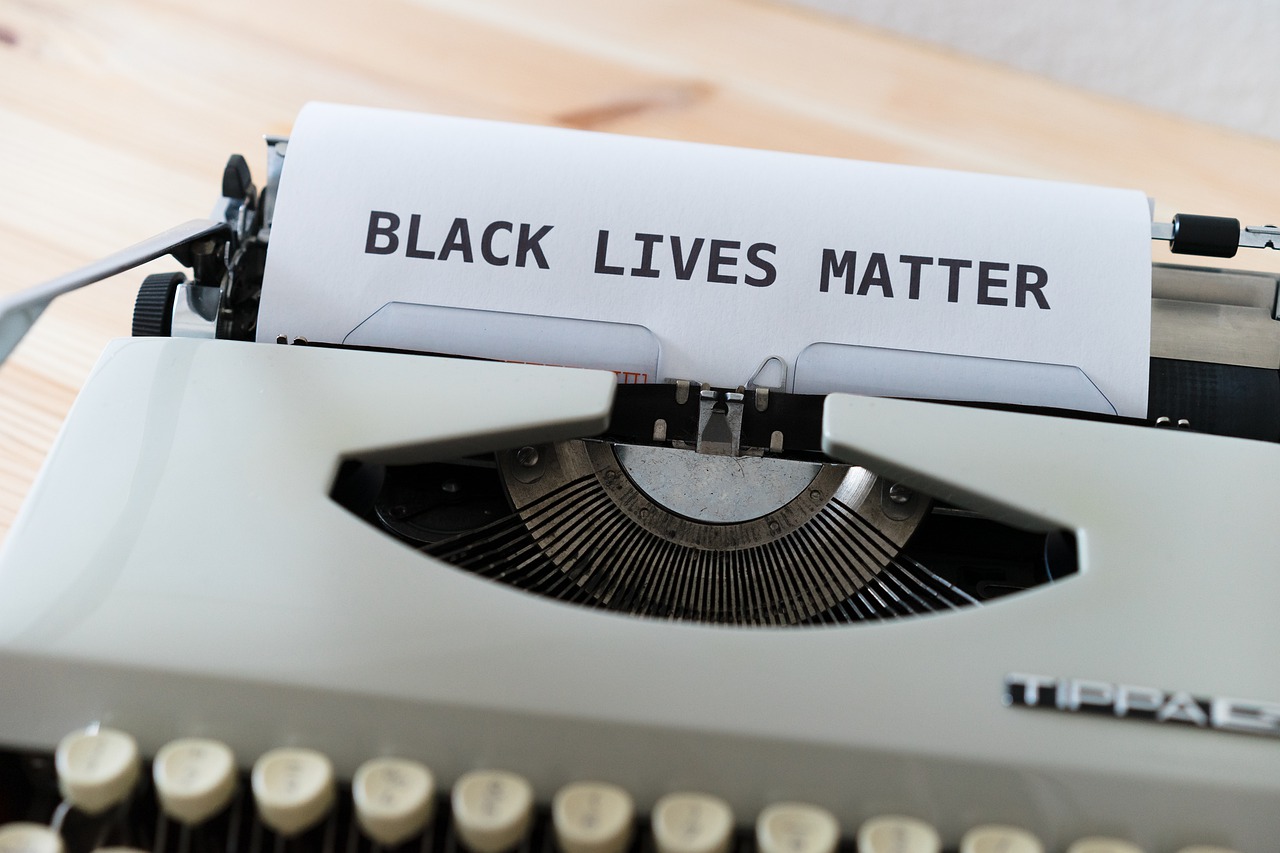
Another set of contentious words built the movement #BlackLivesMatter. It’s action to end the deadly oppression of Black people after the 2013 acquittal of Trayvon Martin’s murderer. According to the official organization, “These three words have been said many times in many ways. And they still need to be said. Today.” Watch the words in action at https://blacklivesmatter.com/these-three-words/ and explore the website to understand their meaning beyond a rallying cry.
If your response to “Black lives matter” is “all lives matter,” pause, and take a clearing breath. Your response reveals a misunderstanding over semantics because “all” is an inclusive word. For clarity, expand the idea to: “All lives will matter when Black lives matter.” “All” is not true until we overcome systemic racism and end deadly oppression. You may have Black friends or family, but if you are White, you have not lived the greater Black experience. By greater, I mean a collective of experiences, an ongoing history of oppression, and social constructs that rely on White people remaining color-blind to systemic racism.
To open our eyes, let’s mind our words.
Be curious and willing to understand the stories of others. Respond from a place of healing to help others on their healing journeys, too.
As I conclude my series, I impart what I’ve learned so far on my journey to be an anti-racist.
Be willing to sit with your discomfort.
Be curious and explore your roots.
Amplify Black authors and artists.
Acknowledge and heal your inner pain.
Empathize with experiences you have not had.
“No one becomes ‘not racist,’ despite a tendency by Americans to identify themselves that way. We can only strive to be ‘antiracist’ on a daily basis, to continually rededicate ourselves to the lifelong task of overcoming our country’s racist heritage.” ~ Ibram X. Kendi
Charli Mills grew up out west where she once won a rodeo trophy for goat-tying. Now she wrangles words from the Keweenaw as a literary artist, writing about the veteran spouse experience and women forgotten to history. She makes literary art accessible at CarrotRanch.com.
Excerpted with permission from the Summer 2021 issue of Health & Happiness U.P. Magazine. Copyright 2021, Empowering Lightworks, LLC. All rights reserved.
In my Hancock, Michigan home, I have a unicorn and rodeo room. Both testify to living an artist’s life. I’m a literary artist, catching stories, mastering craft, and playing with words. To me, it’s the serious business of imagination, the pursuit of unicorns across the wild West.
I painted the unicorn room shell pink, and encircled the walls with purple vinyl script—Read, Write, Dream, Breathe, Play. On the wall facing my meditation pillow, I hung a giant story board for structuring novels, and a massive collage I created to tell the visual story of my work in progress. Watercolor unicorns, a unicorn quilt a friend made, a blackboard with cut-out unicorn poetry, and a German masterpiece of a rainbow unicorn-horned tyrannosaurus rex chasing Jersey cows in a pastoral scene fill the walls.
Art is my expression. It’s part of my being, my chosen profession. Art gives me purpose.
While the unicorn room feeds my inner life, the rodeo room represents its outward illustration. Not only is it space to reclaim my cultural heritage in healthy ways, but it’s also a place to honor the lost voices of women from the frontiers and fringes of life. My professional genre is women’s fiction, and I breathe new life into women who were overlooked, forgotten, or remain invisible. The art I selected for this room can best be described as feminist cowgirls. No cowboys allowed. Except for my husband, who has his desk in this room. (It’s all about balance.)
So, what does art have to do with anti-racism?
Everything! Art manifests on the outside all that we feed on the inside. Sometimes artistic expression draws out the dark to let in the light, and other times it pulls in the light to chase out the dark. It’s a dance with shadows that can exhilarate the artist. No matter what it compels, the point is, art speaks to us and moves us. One piece of art can give voice to millions. Art is powerful.
When we suppress or segregate art in our homes, we mimic the paths of systemic racism. For generations, the women in my family decorated their homes with the art of the West – men on horseback, men in the mountains, men with guns on the frontier. Have you ever thought about why you choose the art you do? If it moves you, good. But ask why, and be willing to feel vulnerable in exploring your answer. Discomfort signals that we’re holding unseen bias that can be systemic and generational. When I declared my writing genre, it floored me that I had surrounded myself with masculine art. Discrimination can feel familiar and iconic.
We can take a step further in the visual clues we choose to decorate our walls, journals, and desks. In my ongoing journey as an anti-racist, I took a Seven Day Bias Cleanse developed for young people through MTV and research partners. While the event is no longer active, MTV has evolved it into a more in-depth discussion called Look Different. During the cleanse, one activity asked participants to print and display a photograph of a Black woman working in a science lab. The lesson explained how we believe unstated biases (such as, there are no Black female scientists) because we can’t imagine the opposite reality. Art can transform what we believe through what we see.
That’s when I realized how fun it could be to use art to visualize anti-racism. It put me on a mission to find a unique piece for my rodeo room – a Black cowgirl. I found one on Etsy. I saved up money over several months to afford the largest print from the artist. She’ll join a diverse group of women, including a brown-skinned cowgirl tattooed with words such as “I’m enough” and an older cowgirl declaring, “Don’t call me ma’am.” The art in the rodeo room becomes an artist’s statement for what I write. These visual pieces bridge my artistic expression and the affirmations I choose to activate as I work and create. The simple act of art can amplify both artists and the reality of anti-racism.
When the 2021 inauguration team announced twenty-two-year-old Black poet Amanda Gorman as inauguration poet, I felt in my bones that the desire for unity could become a reality in America. An artist was asked to empower the message of coming together across vitriolic divides. A nation asked art to initiate healing. The artist used words to move hearts. What we hear, what we see, we can achieve.
Consider the spaces around you.
Art does not need to be big, but you want to have visual cues to influence your work as an anti-racist. Ask local art galleries to support Black, Indigenous, and People of Color (BIPOC) artists, and buy their work even if all you can afford are note cards or bookmarks. Give art as gifts. Cut out images from magazines or digital printouts to decorate your daily journal, a vision board, or altar space.
As an anti-racist, unleash your creativity. Let art show you the way.
Charli Mills grew up out west where she once won a rodeo trophy for goat-tying. Now she wrangles words from the Keweenaw as a literary artist, writing about the veteran spouse experience and women forgotten to history. She makes literary art accessible at CarrotRanch.com.
Excerpted with permission from the Spring 2021 issue of Health & Happiness U.P. Magazine. Copyright 2021, Empowering Lightworks, LLC. All rights reserved.
When I learned that one of the Anishinaabe’s protocol for a Water Walk meant I had to wear a skirt, inwardly I groaned. I grew up out west among ranches, logging camps, and mountains, feeling more comfortable in a flannel shirt than a flowing skirt. However, the walk was not an event; it was a ceremony, and a skirt announced to the earth we walked upon that we People of the Heart were women, the containers of water, the bringers of life.
For this, I would wear a skirt.
Someone gave me a fun thrift-store find, knowing I called my literary community a ranch. It was a Western skirt of many colors with motifs and a narrow lace hem. I planned to wear my walking boots with it and leggings underneath. The night before the walk, I gathered up my clothes for an early morning departure to Copper Harbor from Hancock. To my embarrassment, I realized the motifs were small panels depicting a theme of “Cowboys and Indians.”
No way could I wear this skirt. I called a good friend who was also walking and also white. I told her what I had discovered about my only skirt. She confirmed I couldn’t wear it. Miserable, I ransacked my closet and found a lounger, something like a house dress. Covered with a t-shirt that proclaimed, “The Revolution Has Begun,” our official 2019 Water Walk slogan, and a Women’s March sweatshirt, my PJs passed for a skirt.
I’m writing this column to explore what it is to be white and an anti-racist.
It’s likely the most uncomfortable topic I’ve ever tackled. Can I change the subject? Because discomfort is hard to experience. But here we are, me writing and you reading, all of us willing to sit uncomfortably in the muck of what American cultural identity has become. But as the condensed version of a quote by Vietnamese Buddhist monk, Thich Nhat Hanh, goes, “no mud, no lotus.”
Let’s talk about my cultural identity since I’m tapping the keys from the hot seat. Then you can think about yours. I’m an American, a fifth-generation Californian who grew up on the Nevada border not far from Lake Tahoe. I could ride a horse before I could walk, and somewhere I have photo-evidence. You might laugh, but Charli is short for Annette. It’s a buckaroo culture thing— nicknames are popular, and my dad gave me mine as a baby. He says Charli was his imaginary friend as a child. He didn’t tell me this until I was fifty-three years old.
My full name at birth was Annette Marie Fernandes. Mills is my married name. I’ve been told all my life, “You don’t look like a Fernandes.” Really? I think I have the nose to prove it. I have my great-grandmother’s nose. According to family legend, I was a “Portagee Red.” It meant I was Portuguese with red hair. Okay, so the hair is unlikely Portuguese. It turns out the nose isn’t either. Great-grandma was Basque and Scots. According to my DNA, I’m Basque, Portuguese, Scots, Irish, Spanish, French, and English with a smattering of Swedish, which is kind of weird because my great-grandfather came from Denmark, not Sweden.
I’m western European. I’m western American. I grew up identifying as Portuguese, eating linguisa for breakfast, and marcella at Christmas. My dad’s family was Catholic, and that’s likely the common denominator among my most recent ancestors. My mom’s mother was half Portuguese and half Danish (until I found out it was Swedish). All my Portuguese ancestors came from the Azores or Brazil, first to Hawaii Territory and then to California.
Why does heritage matter?
I can’t insist that it does because my strongest cultural identity growing up was that I rode horses, pushed cattle on trails, and could braid rawhide leather into horse reins. I wore chinks (Vaquero-style chaps), Wranglers, and satin neck-scarves. I was born a buckaroo (a variation of the word Vaquero, a traditional horse culture that worked the land-grant ranchos and ranches of California and Nevada) and have lived in every western state except Oregon, Colorado, and Wyoming. As a writer, I belong to an organization called Women Writing the West. I write women’s fiction, reclaiming forgotten voices from the fringe and frontiers.
What matters to me are the lost voices of my female ancestors. If I don’t heal my own losses, how can I reach out holistically as an anti-racist? This is a fine line to navigate. Too much self-reflection and I lose the chance to bridge cultural reconciliation; too little and I might unwittingly appropriate a culture not my own. Whether or not you feel called to reclaim your own ancestral roots, an anti-racist must accept the humanity of every person.
Although I didn’t realize it at the time, healing my own ancestry is what drew me to my first Water Walk. The Anishinaabe women (kwe) are committed to bringing awareness to water’s importance in our region. Water is life, no matter where any of us come from. The kwe invite all peoples to join them in understanding this sovereignty of water. They call those who accept the invitation, People of the Heart.
Often, the heart needs healing. When we turn to address the history of a nation built on slavery and genocide, it’s enough to diminish any heart. Origins of America as a nation cause the ultimate in discomfort when walking the path of an anti-racist. How can one be proud of cultural identity and reconcile our past? Avoidance is one strategy. That may temporarily protect the heart from pain. Deflection is another. Some people get angry over the subject.
To heal, we must look back to understand our present moment to choose a better future.
Despite the discomfort, it doesn’t last. That moment when I really saw my Western skirt in a different gaze, I felt embarrassed. I sought support. A good friend may help us sit with the uncomfortable emotions and support the right choice. I learned to recognize cultural misuses and found a creative solution that hurt no one. I could still be a buckaroo who helped kwe in a water ceremony that heals us all.
This is not the end of the story. This year, I did not participate in the Water Walk. Part of the reason was COVID-19 and my reluctance to gather. Mostly, it was due to the demands of my thesis at the time. But I still went into solitary sacred space for the weekend, meditating, singing a song to Nibi, and contemplating what it means to be Indigenous. I am not Indigenous to America, but my ancestors were once Indigenous to Western Europe. All my DNA leads back to the tribes of Celts.
Native singer, speaker, and poet Lyla June Johnston’s song “Mamwland” took me home to my earth healers, whose voices I can hear when I hold the earth in my hand. Healing as an anti-racist, I realized, may look a lot like the reclamation of cultural identity—not to create further division, but to understand that we are all humans indigenous to this great round world.
It is important to me to actively seek out where racism yet roots within me. When I sit with the discomfort that can rise from my European cultural identity, I get the chance to give up unnecessary trappings. And I get to wear something new with broader, inclusive meaning.
Charli Mills grew up out west where she once won a rodeo trophy for goat-tying. Now she wrangles words from the Keweenaw as a literary artist, writing about the veteran spouse experience and women forgotten to history. She makes literary art accessible at CarrotRanch.com.
Excerpted with permission from the Winter 2020-2021 issue of Health & Happiness U.P. Magazine. Copyright 2020, Empowering Lightworks, LLC. All rights reserved.
You might wonder why I’ve paired two disparate terms, such as happiness and racism. As a literary artist who practices ninety-nine-word stories, I find inspiration in the unexplored areas between ideas that don’t readily go together. Cotton candy and cigarette butts. Copper mines and baby’s teeth. The pairing is a word puzzle for the brain. Cotton candy and cigarette butts make me think of the aftermath of the county fair. Copper mines and toddler’s teeth make me wonder if a miner ever carried the first lost tooth of his first child as a good luck talisman. These ideas open my brain to storytelling.
Literary art requires both intuition and observation. I’m a bard who wanders the back trails of my inner life, turning over beach stones, searching for agates to return to my outer expression. I began to explore the intersection of happiness and racism. I thought the story was about a kind woman who smiled at everyone, spoke loving words from her heart, and could melt away racism with a sunny disposition. Kindness matters and writing can heal, but that’s not the full story.
To confront racism, I had to look at my own shadows. Along my creative journey, I didn’t expect to discover I’m a racist, nor that I’d be writing a series of articles to share my ongoing study to become an antiracist. Once I began to see what racism is, and how the long shadow of slavery and genocide touches me, I couldn’t ignore it. I had to do more than practice kindness.
This exploration is a soul journey, a true story of self.
Like many Americans, I was appalled at the graphic death of George Floyd on May 25, 2020. For three years prior, I had tried to get friends and family to watch a documentary that had opened my eyes to the injustice of police brutality and mass incarceration of Black Americans. I’d ask, “Have you watched Ava DuVernay’s The Thirteenth, yet?”
On social media, I thought I was a compassionate bridge-builder capable of helping those with polarized viewpoints find common ground. Not only did I discover that the conversations I wanted to have unsettled others, but also that language was rapidly evolving. As a wordsmith, I felt shaky not knowing the meaning of words I thought I knew, and bombarded by phrases I didn’t yet understand. I realized the call to become an antiracist will upend beliefs I had never before thought to challenge.
What should I read? Who should I ask? Was it possible I was racist? I grappled in the dark, not wanting to make a mistake. I was afraid of my own color, white. I understood the emotional struggle many others were going through, and it felt like the quickest path to happiness was to denounce racism. Many echoed the words, “I’m not a racist.” It was like a flimsy, inflatable toy keeping us afloat when we were in need of a durable life raft. I found mine in the reminder, “Seek first to understand.” You might recognize the adage from Stephen Covey’s 7 Habits of Highly Effective People. In the situation of social unrest and personal overwhelm in the middle of a polarizing pandemic, I heeded it as a call to slow down and pay attention. Habit 5 is actually Step 1 to find happiness on the journey to heal racism in our own hearts and become an antiracist.
Let me give you a disclaimer–the journey requires discomfort.
If you join me, you can find happiness, but you will feel uncomfortable. It’s learning to sit with your own flaws to find self-love. It’s personal growth. Shadow healing. But the benefits are worth it–self-awareness plus awareness of others leads to higher emotional intelligence, and thus, an experience of deeper happiness.
When we can each self-actualize, society as a whole can, too. As the impacts of our current pandemic have reinforced so well, we cannot avoid our interdependence. Hopefully, we now better understand that we all lose out when unnecessary, undeserved suffering is not addressed, and we all gain through each person’s self-actualization and ability to share their gifts.
The quest to end systemic racism is not new, and you will find many places to start. I dove in with Peggy McIntosh’s Ted Talk, How to recognize your white privilege—and use it to fight inequality. Next, I discovered The New York Times podcast 1619 with host Nikole Hannah-Jones, who examines the long shadow cast by slavery. I’m building a Black voices library, and my most recent purchase is Ibram X. Kendi’s latest book, How to Become an Antiracist. You see, racism is not just what we’ve usually thought it is–some ignorant unhappy sot who hurls slurs at others. Racism is not about individuals; it’s about policy. According to Kendi, a racist is “One who is supporting a racist policy through their actions or inaction or expressing a racist idea.”
It was the “inaction” that nailed me.
I did not see myself as participating in racist policy or expressing racist ideas. I thought I was good to go–thoughtful about letting groups of people define their identities, helping to bring diversity to literary art, minding my thoughts, words, and actions. I didn’t know to seek out my own unconscious conditioning by the systems in place in my world. Systemic racism is so insidious because it no longer requires the participation of the dominant group in the inequitable equation of race. According to the National Human Genome Research Institute, race is a social construct, not a biological one. Racism as policy in America is something we built, an inequitable system of power and control. If I do nothing to dismantle these unjust constructs, my inaction is what makes me a racist. How can I change what I don’t know?
In 2020, for my health and happiness, I embarked on a life-long commitment to understand racism in myself, dominant perceptions, and in policy. I am a committed practitioner of antiracism, a healer of generational wounds in my own lineage. I invite you to journey with me to take accountability for your own inner happiness and racism through the series of articles I’ll be sharing in this publication, and the resources therein. May you find liberation in the intersection between these contrasting experiences.
Charli Mills grew up out west where she once won a rodeo trophy for goat-tying. Now she wrangles words from the Keweenaw as a literary artist, writing about the veteran spouse experience and women forgotten to history. She makes literary art accessible at CarrotRanch.com.
Reprinted with permission from Health & Happiness U.P. Magazine, Fall 2020 issue, copyright 2020. All rights reserved.
I believe this is a very powerful time. As we each deal in some way or another with the challenges presented to us by the current pandemic and world situation, I think there is a mighty potential for greater clarity, commitment, and action aligned with our deepest values for improving our world.
In keeping with this publication’s mission of supporting your health and happiness, the following questions were put together in hopes of helping to bring your needs, values, strengths, supports, and strongest heart’s desires to the surface, or sharpen the clarity you already have about them, in an actionable way. I invite you to journal on them, perhaps even on just three or four at a time, and also to respond to any additional questions that may come to your mind.
For Essential Workers
– How do you feel about going to work?
– How do you prepare yourself mentally and emotionally for your work time?
– How would you describe the atmosphere where you work?
– How are you contributing, or how could you contribute, to its positive qualities?
– What do you value about the work you do?
– How does your work benefit others directly and indirectly? (Consider at least “three degrees” of others—direct recipients, those they directly impact, and society overall.)
– What has been most challenging for you during COVID restrictions?
– What have you learned about yourself during this time?
– What would you most like the world to learn during this time?
– What desires for yourself and/or society have become clear to you or been reinforced?
– What next baby step might you take to move one of these desires forward?
– What traits, skills, and/or experiences do you have that will help you take this next baby step?
– What, if anything, do you think might hold you back from taking this baby step?
– What are three or more things you could call upon, internally and/or externally, to help you handle these potential obstacles?
– What would the value of achieving the desire you’ve pinpointed be, and how would you feel about that?
– Is it worth it to you to commit to continue taking steps toward this goal? Why or why not?
For Others
– What changes in your day-to-day life have been most significant for you?
– What, if anything, have you found most challenging about these changes?
– What has helped you to handle these challenges?
– What, if anything, have you found most positive about these changes?
– In what ways might you reinforce or expand upon these positives?
– How would you describe the atmosphere in your home?
– How are you contributing, or how could you contribute, to its positive qualities?
– What have you learned about yourself during this time?
– What would you most like the world to learn at this time?
– What, if any, mental, emotional and/or physical changes would you like to bring forward as your “regular” day-to-day life resumes?
– What baby step toward one of these changes could you begin or prepare for now?
– What traits, skills, and/or experiences do you have that will help you take this next baby step?
– What, if anything, do you think might hold you back from taking this action?
– What are three or more things you could call upon, internally and/or externally, to help you handle these potential obstacles?
– What would the value of achieving the desire you’ve pinpointed be, and how would you feel about that?
– Is it worth it to you to commit to continue taking steps toward this goal? Why or why not?
I hope you find your reflection time useful. Please feel free to contact hhupmag@charter.net, or Health & Happiness’s Facebook page to share your experiences.
Excerpted with permission from the Summer 2020 issue of Health & Happiness U.P. Magazine. Copyright 2020, Empowering Lightworks, LLC.
Know this. When the ego weeps for what it has lost, the soul rejoices in freedom for what it has found.
The use of the Medicine Wheel and its four compass points in the spiritual and healing practice of the indigenous peoples of the western hemisphere of Earth stretches back a least 5,000 years, likely much longer. Each direction is associated with one of the four energetic bodies that make up the human energy field: the particle or physical world (the body), the realm of emotions and thoughts (the mind), the realm of myth (the soul), and the world of Spirit (energy). For many thousands of years, the shamans of the Americas have used each direction of the Medicine Wheel as an interdependent doorway to unique perceptual levels, or “ways of being,” in order to recover an individual’s true essence, personal power, energy, and inner wisdom for healing. Each direction of your Medicine Wheel mandala offers a unique perspective on any aspect of your life that you feel you are ready to change in order to affect personal healing—South, things with which you strongly identify, West, things from which you are mentally differentiating yourself, North, things you newly integrate into your life, and East, transcendence and full incorporation into your luminous energy field.
Movement around the directions and perspectives of your Medicine Wheels over time also possesses great power for spiritual growth. Eventually, as you spiral around and around the four directions in a series of private ceremonies, you will discover your true authentic self within the eye or center of the Medicine Wheel. Here the gifts, teachings, and power of the four archetypes converge in harmony and balance with a fifth unifying, fundamental property of the universe. This is an expansive, infinite, frequency resonance that is alive and felt through the heart, a consciousness, somewhat like unconditional love, that links everything everywhere and simultaneously stokes your own life force.
To have the most power, Medicine Wheels should be done by you privately,
electronic gadget-free,in a special natural setting, and accepting the Earth’s wild card role in the process. It is most important that your ceremony be within a sacred space.
You can create sacred space as a healing bubble around your chosen Medicine Wheel site by “calling” to the four direction master archetypes (S-Serpent, W–Jaguar, N–Hummingbird, E–Eagle, as well as down-Mother Earth, and up-Father Sky). With humility and gratitude, ask for their power and assistance in your personal healing work. Use a compass if you’re not certain of directions. The creative and intimate process of constructing your Medicine Wheel in a natural setting, using natural items that come to you at your chosen site, quiets the mind and creates a highly meditative state. In sacred space there is no time, and you can trust your instincts and synchronicity.
The realm of the soul is associated with the North direction.
Among many indigenous people of the Americas, Hummingbird is recognized as the archetype of the North. In North America, the Lakota Sioux word for the North is Waziyata, and is associated with night, winter, and old age. White is the Lakota color for the North. The language of the North is art and myth.
When we connect with the energy of Hummingbird, we experience the pure sweet essence of our soul, the place where the divine resides within us and where we also gain the awareness that we are eternal beings. The perceptual state here is that things are what they truly are. Hummingbirds possess a beautiful resilience and great endurance for long migrations between North and South America each year, yet can hover and change directions quickly. This archetype feeds on the flowers and the sweetness of life, and ignores that which is not supportive of life. Hummingbird represents the courage, determination and guidance required to embark, endure, and succeed in the voyage of our divine essence through sacred space and time. This archetype teaches us how to be in right relationship with the sweetness of ourselves, the natural world, evolution, and community as we co-create with the Great Spirit on this grand journey.
The four teachings of the North provide a portal to the way of the seer “who enters the stillness of the soul and dreams the world into being.”
They are: Beginner’s Mind, Living Consequently, Transparency, and Integrity. Become more childlike. Refuse to allow the baggage of your stories and preconceived notions to weigh you down and cloud your assessment of fresh ideas and opportunities that present themselves to you. Recognize the impact of each thought, intention, and action, and be sure they are in a supportive and healing relationship with all of life. Refuse to hide parts of yourself from others. Be who you are and say who you are. Be true to your word, and recognize its power to create reality.
For so many of us, the momentum of our life is on cruise control, leading us to a fate as opposed to our higher purpose, or our destiny. In order to change this momentum, we must get rid of some of the mass of our life (physical stuff, roles) that no longer serve us, as well as decouple ourselves from the time sickness of our culture. The tools we have to make big positive changes in our lives, to slow or halt our momentum toward fate, are de-cluttering our physical space and letting go of roles that drain our energy, and a regular meditation practice that facilitates an escape from the time sickness.
Healing work with the Medicine Wheel honoring the North and the Hummingbird archetype begins with the creation of a mandala in the sand, snow, grass, or forest floor. Find a stone to become your essence stone. Hold this stone with eyes closed and begin the 4/7/8 breath—4-count inhale, 7-count hold, 8-count exhale. Do this for at least 7 cycles as you let go of your mind and thoughts. Now continue the breathing pattern with the silent mantra on the inhale “I Am.” Hold at the top of the inhale and let yourself slip between the moments into timelessness. What do you see or feel here? Then exhale with the silent mantra “Only the Breath.” Repeat this until you begin to see and feel your authentic self and perhaps even a different higher destiny for this self, or your soul. Now blow any of these images or feelings into your essence stone and place it into the North quadrant of your Medicine Wheel. If you saw or felt nothing, blow that into your stone and place it.
Reflect on your last Medicine Wheel honoring the West.
How successful have you been at letting go of either the mental or emotional attachment of roles that remained in the West quadrant of your mandala? Are you ready to work on the distortion they may be causing to your authentic self? If so, find a stick representing the role, powerfully blow your new intention into it, and place it into the North quadrant. How ’bout those roles you placed into the North quadrant that you determined were distorting and masking your soul’s true essence that you threw into the fire last time? Are you ready to permanently free your soul from this distortion, remove this energetic imprint from your luminous energy field, and change your fate? If so, find a stick representing this role and powerfully blow your new intention into it. Place it into the East quadrant of your mandala. If no movement is possible, leave the role sticks where they were last time.
What about the teachings from the South or the West that you may be working on at the level of mental acceptance? Are you ready to begin experimenting with these in your daily life? If so, move these objects you have retained from last time into the North quadrant. Are you ready for any teachings you moved into the North last time to transcend from the level of just feeling and experiencing the way they are working into a new you that actually becomes these teachings? If so, move these teaching objects into the East part of your Medicine Wheel. Lastly, are there any of the teachings of the North that you are ready to work on and accept at the mental level? If so, find a new object representing each new teaching and place it into the West quadrant. If not, leave these for future work. Go, and return the next day.
Pick up and hold your essence stone and repeat the breath work exercise. Again, blow any images or feelings into the stone. Place it into the center of your Medicine Wheel. Gaze at your Medicine Wheel and appreciate its timeless pattern of sticks and objects without thinking about them. Appreciate how it is a reflection of your current self and how it may feel different from your authentic self. With gratitude, turn your gaze out and appreciate the natural setting you are “finding yourself” within. Savor in timelessness the experience of moving from thinking into feeling into being. Leave, and return the next day.
Destroy your Medicine Wheel and close sacred space. Take your essence stone as a sacred object to retain as a gateway to your authentic self. Collect your role sticks for the fire ceremony, and teaching objects as previously described, for your next Medicine Wheel ceremony honoring the East direction.
Jude Catallo and Scott Emerson, MD of timelesshealing.org are both graduates of The Four Winds Society: Shamanic Energy Medicine Intensive Apprenticeship 2017 – ongoing; members of the Oklaweva Native American Church 2016 – ongoing; & Andean Cosmic Vision Apprenticeship, Don Theo Paredes 2003 – ongoing.
Reprinted with permission from the Winter 2019-2020 issue of Health & Happiness U.P. Magazine. All rights reserved.






 Health & Happiness U.P. Magazine