Inner Nutrition: What Camp Means to Me, by Christine Saari

Photograph by Christine Saari


It all began with a clearing in the woods cluttered with ramshackle buildings from a former homestead: the remains of a cabin, a leaning barn, a decaying pig sty and chicken coop. I was horrified to learn this was to be the site for our camp. Why would we want a camp to begin with when we lived amidst a beautiful landscape waiting to be explored? “I’ll never come here,” I said to my husband. If he wanted a camp, so be it. I did not!

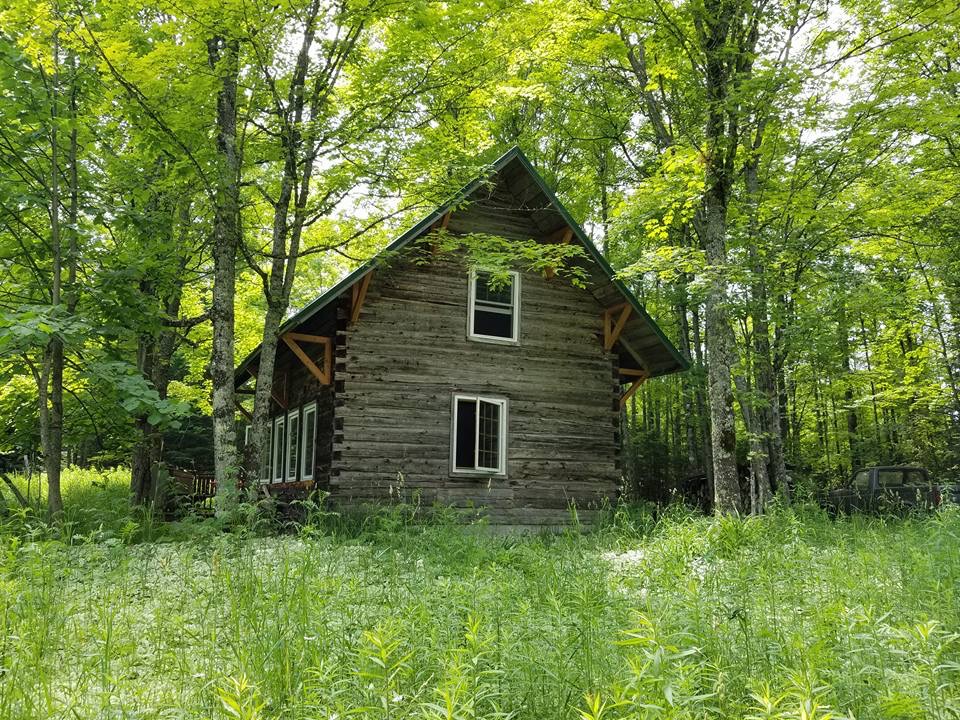
Jon proceeded without me. One day he took me to the transformed site – the buildings were gone, the clearing pristine. Then he purchased a 100-year old log cabin which had brambles growing inside and no windows and doors. Again I was aghast. But Jon was undeterred. The building was taken apart, transferred and rebuilt. Trees were felled for replacement logs, windows cut, doors made, layers of wallpaper stripped off the cedar logs. Endless work, but I participated, helped lay the floor, chinked, found furniture, worked to make the place cozy.

The two-story cabin has been proudly standing in our clearing since 1994, over time joined by a two-seater outhouse bought from an aunt, a shed and sauna rescued from a pasture for cows who rubbed the dovetailed corners round. Finnish relatives equipped the smoke sauna with a hearth and benches, and a deck was added to the house.

Although I said I’d never come, I have grown to love our camp above the West Branch of the Whitefish River. Why? What does camp mean for me?

With a thirty-mile trip, it is close enough from home to come for just an evening in the summer or for an overnight stay. Of course, if we can we stay longer, but whatever the length of our visit, we return to town refreshed.

Thanks to the “primitive” nature of the place – no electricity, a spring in the woods, a wood stove, life there slows down immediately. We forget about the news, e-mail or phone connection. Instead we make sure the kerosene lamps are filled for the evening and that there is enough wood to stay warm. This is a place just to be. We cook simple meals, talk, write letters, read and play scrabble. We take time to take a nap, we go to bed early. In summer we take canoe rides on the river, in winter we ski. We watch the natural world around us: a wild turkey has lost a beautiful feather, irises are blooming on the shore, a heron flies overhead.

Although we are close to a road, we seem far away from civilization. I can sunbathe unobserved. There are berries and mushrooms and flowers to pick. The stars shine brightly at night, the moon lights up the clearing, fireflies glow in the dark. Because the area is small, we have gotten to know it intimately. Every time we come we see changes. The river swells from melting snow, spring leaves unfold, white trilliums cover the dark forest floor. Here we are aware of the annual cycle of growth and decay and of our place in this universe.

Aside from all that, at camp we are surrounded by our ancestors: the flour bin reminds us of Jon’s grandmother’s farm. Jon’s father brought the cuckoo clock from the war in Europe, and camp brings me back to my childhood, to the Austrian mountain farm without electricity and running water where I grew up. Here I am connected to the past and to nature. Here I feel whole.

Christine Saari, an Austrian immigrant,  is a writer and visual artist. She has published a book, Love and War at Stag Farm, The Story of Hirschengut, an Austrian Mountain Farm 1938-48. It tells the story of her family in Austria during WWII and its aftermath.

Reprinted with permission from the Summer 2012 issue of Health & Happiness U.P. Magazine, copyright 2012. All rights reserved.

*Join us for Myth-Busting & Self-Help Tips: YOUR Health & Happiness Forum, Saturday, Sept. 30th 2017, 1 pm – 4 pm in the Community Room on the lower level of the Peter White Public Library, Marquette, MI, and help us celebrate our 10th Anniversary.  Click here for more info!

**FOLLOW us here and/or on Facebook to be entered to WIN in our 10th Anniversary drawing! 

Natural Medicine: 6 Suggestions for Breathing Into Letting Go This Fall, by Alicia Smith

As the colors start to change on the trees and days start to get shorter, we humans may start to feel something in our bodies. This “feeling” could make us crave warmer liquids or commercialized pumpkin spice latte.

Looking around, we can notice other hints of fall such as animals beginning to harvest away food for cooler times.

Emotions of Fall

Being in the UP, some of us may have mixed feelings about fall. Perhaps we have thoughts such as “I used to like the fall but now it gives me anxiety about the cold winter to come.” Or students associating fall with sadness about going back to school, missing the beach.

Believe it or not, feeling a hint of sadness in the fall is healthy. As humans we go through the cycles within nature. Fall is associated with the Metal element which relates to sadness/grief in Chinese Medicine. Fall is about letting go. In nature, fall trees physically let go of their leaves.

Metal Imbalance

A metal imbalance emotionally could mean difficulty with letting go of things, situations, events, relationships, sadness, and a longing for the past. Physically, a metal imbalance could mean skin issues, asthma flare-ups, upper respiratory illness, nasal congestion, constipation, too much or too little mucus, and frequent illnesses/compromised immune system.

Self-Care for the Fall

1.) Food: Let us start with the concept of food being our medicine. Foods that help our lungs breathe are pungent foods. Pungent foods cleanse and protect the delicate lung organ by moving and dispersing phlegm or mucus. Think onion, garlic, cinnamon, clove, nutmeg, saffron, pepper, ginger, leek, mustard leaf, and parsnip. Dairy foods contribute to mucus build up. As Chinese Medicine Dietary Theory states, to reduce excess mucus in the lungs, eat less dairy.

2.) Sun Watching: When nature starts the shift to shorter days it is beneficial to sun watch. Being in synch with the sun’s rhythm is balancing. Any night shift worker can most likely relate to feeling confusion when going to sleep while the sun is rising.

Even for just for the fun of it, get up and watch the sun rise. Then watch the sunset that same day. Kudos to those who already have a close relationship with the sun!

3.) Pick Up Some Smells: Walking outdoors, smelling the leaves and new smells of fall help the body transition. Some essential oils that can be beneficial are silver fir, grand fir, and rosemary.

4.) Let Go of Something: People say we forgive for ourselves vs. others. Forgiving someone allows us to move forward with our life. Or maybe we need to forgive ourselves for something that happened years ago.

5.) Learn Something New: In the spirit of the back-to-school season, regardless of your age, learn something. Join a book club, volunteer in your community, pick up a new hobby, or, go back to school!

6.) Get Routine Care With An Acupuncturist: Most acupuncturists will take into consideration the change of seasons and help your body get a “tune up” by picking lung points as a part of your acupuncture session.  If you have difficulty with fall, potentially your metal element needs balancing. Furthermore, health issues with the lung and colon suggest unresolved grief and sadness in Chinese Medicine.

Autumn’s Gift 

The true beauty of letting go is feeling lighter. At first, letting go may seem difficult. Remember all of nature around you is supporting the letting-go cycle. With practice, the mind, body, and spirit can flow with the seasons, and to a deeper level of flow with the dance of life.

Alicia Smith practices acupuncture in Marquette, MI and Escanaba, MI for women, men & children. She runs a general family care practice. She has a special interest in dermatology, depression/anxiety, fertility, women’s health, pediatrics & pain management. Alicia owns and operates The Light Institute, a wellness cooperative. The Light Institute has healing houses in Marquette, MI and Escanaba, MI.

Reprinted with permission from the Fall 2014 issue of Health & Happiness U.P. Magazine, copyright 2014. All rights reserved.


Positive Parenting: Brattiness or Brain Development? Important Facts About Your Little One, by Kathy Harsch

Challenging behavior  – why does it seem to be right in front of us, perhaps more often than we would like?!   I would like to empower those who have daily interaction with young children. With the power of knowledge, you will be better prepared to respond to and deal with conflict.   Knowledge of child development will help keep your young relationship in good standing.

Did you know that before the age of six, information is processed twelve times slower than in adults?   Children six to twelve process information six times slower than adults!   What does that mean?   When we walk into a room and quickly announce we need to leave; Mommy has a meeting and I need you to turn off the TV, get your shoes and backpack, and a jacket just in case it cools down;  we need to leave in just a few minutes, so be quick!”   Rarely does this common scenario take place without Mom or Dad getting flustered.  Try this – while turning off the TV, give the command, “get your shoes and backpack.”   Truly adults need to s. l. o. w. the pace down!

How many times a day have you said the word “don’t”?   Young children cannot conjugate the word “don’t” and therefore when you say “don’t throw the sand”, they hear “throw the sand” and you march over to the sandbox with the “challenging me again” thought!   We need to tell children what to do!   “Use the bulldozer to move the sand!”   It takes work to tell children what we want them to do. “Don’t” really doesn’t give them any information and “no” certainly doesn’t provide more information either.  Instead, tell children what to do.   Teach them what YOU want them TO DO!

Children under seven lack mature “inner speech.”    In adults, inner speech is like a rehearsal for what we may want to say when arriving at a new acquaintance’s place or how we might want to prepare a meal.   We can even quickly think “oh, what I would like to say” but use our filter and think before we act!   Young children see in pictures.   Adults need to paint a picture with their words. Remember, don’t” and “no” provide no information. For example, “You seem anxious, you pushed your friend when you walked into the room.  You may not push, you may come to me and stand by me if you feel anxious.” Using descriptive language helps defuse those unwanted verbal power struggles and is also a stepping stone for language and literacy, so utilize it as often and fully as possible.

If you’re in the teaching field or just simply read to children, it’s helpful to know that binocular vision, the ability of both eyes to focus on the same subject, doesn’t fully mature until around age six.   Until then, it is like covering one eye, spinning around and trying to walk down steps!   Reading a story to children and moving the book in front of their eyes is continuous motion.   In a group you’ll get the child in front saying, “I didn’t see the picture!”   They follow the book and the children in back begin to say, “I didn’t see the picture!”   Suddenly everyone is scooting, on their knees, and saying, “I didn’t see the picture!”   Instead, hold the book still, move it, then hold it still again.   We should pay attention to children’s behavior. Though it appears to us that they’ve seen the picture, they haven’t and they are not making it up!

There is so much we can do to help children plug into the rational part of the brain.   We can do the same!   Be a S.T.A.R. – Smile, Take a deep breath, And Relax!   I know you can do it! Teach your child or children the same.

Kathy Harsch has followed Dr. Becky Bailey’s teachings since attending her 2000 Marquette Early Childhood Conference presentation. She’s since attended many of Dr. Bailey’s conferences and continues to teach and learn from Conscious Discipline, School Family, and Brain Smart ways, incorporating them in her day care.

*Conscious Discipline™, School Family T, and Brain Smart™, are trademarks of Loving Guidance, Inc.  1-800-842-2846   www.ConsciousDiscipline.com.

Reprinted with permission from the Fall 2012 issue of Health & Happiness U.P. Magazine, copyright 2014. All rights reserved

September Celebration + How to Get More from Your Fitness Routine

In celebration of our 10th Anniversary, Health & Happiness is posting some of its best articles from its first 10 years throughout the month of September.

If you like what you read here, please LIKE and SHARE this post, FOLLOW our site, and JOIN us on our Facebook page.

And if you’re in the Marquette area on Sept. 30th, please join us in celebrating our anniversary at YOUR Health & Happiness Forum from 1 pm – 4 pm in the Community Room of the Peter White Public Library.

Stay posted for more details! And please enjoy Part I of our September Retrospective!

Bodies in Motion: How to Get More from Your Fitness Routine

by Allison Cherrette

We’ve all been there. Motived by a wedding, an upcoming vacation, or general quality of life, we amp up our wellness program. We work out, we eat right, and yet something seems to be missing – the results! If your fitness program has become stagnant, consider these tips to help you stay on track, remain confident, and appreciate the improvements.

Be Realistic
Believe me, I would LOVE to have long, skinny legs like Gisele. It would be awesome. I could wear all of those mini-skirts that look so cute in the catalogues and I wouldn’t have to avoid short-shorts like the plague. Unfortunately, it’s just not anatomically possible for my body type.

We all have different bodies with different limitations, and we need to be okay with that. As a Pilates teacher, if there were one gift I could give all of my clients to help their fitness plan, it would be self-acceptance. Once we have that, we can set realistic goals, and celebrate even the smallest improvements.

Self-Care
If you want a fitness program that works, you have to look beyond the walls of the gym. Check in with your habits, and be honest with yourself. How much water are you consuming? Does your breath tend to be deep, or shallow? Does your dinner plate have more starches than protein? And are you sleeping?

When it comes to creating a sound wellness program, there are four aspects that are non-negotiable – a balanced diet, water, sleep, and breath. If one or all of those components are out of whack, it’s going to hinder your body from producing the best results.

Get in a Groove
If your daily workout is starting to seem like a chore, it’s time to reconsider your fitness plan. Running and weightlifting aren’t for everyone, but luckily there is oh so much out there. Think outside of the gym. If you’re not sure what’s going to inspire you, recruit a friend and go on a fitness tour. Check out the new yoga studio, try Pilates, or get outside and explore the beautiful U.P.

Once you find your fitness groove, it will come naturally. The pressure will be lifted. You’ll move more often. You’ll enjoy yourself. And you’ll achieve better results.

Focus on Quality
When you’re working to create an effective fitness program, focus less on the numbers and more on how your body feels. Joseph Pilates always said that we should never work out to the point of exhaustion. If you think about it, he has a good point. As our muscles tire, we tend to move more quickly through reps, just to get them over with. We quite literally start dragging ourselves on the treadmill just to check off that 30-minutes of cardio. Proper form? Psssh. That goes out the window.

If you ask me, the risk of injury is just not worth it. While you may have to start small, focusing on quality movements is going to give you better long-term results. And if you stick with it, you’ll be surprised by just how quickly your strength and stamina build.

Keep It Up
The number one way to achieve fitness results is to keep it up! You’ve got this. Track your progress to keep yourself motivated, and if you hit a roadblock, switch up your routine. Remember, you’re human and there are bound to be days when you’re just not feeling it. First of all, forgive yourself. Even when Zumba seems out of the question, try to get out for a slow stroll through the woods, or do some stretches in the living room.

When it comes to fitness, at the end of the day, if you’re moving, you’re headed in the right direction! For improved results remember to think holistically, be honest with yourself, and celebrate the little things.

Allison Cherrette is a PMA Certified Pilates Instructor and graduate of the 950-hour Advanced Program through The Pilates Center of Boulder. She offers group and private Pilates lessons at Bird On A Perch in Marquette. Feel free to contact her at info@birdonaperch.com with any questions.

Reprinted with permission from the Fall 2016 issue of Health & Happiness U.P. Magazine, copyright 2016. All rights reserved.


Herbs for Your Allergies

The long anticipated spring is on its way and many of us are eager to get outside and admire budding trees and blooming flowers. If you are one of the 20% of Americans who suffer from seasonal allergies, however, you may feel apprehensive to venture outside for fear of the inevitable itching, sneezing, and runny nose [3]. Most sufferers receive marginal relief from pharmaceutical drugs but also may experience unwanted side effects [1]. Thankfully, some natural remedies are proven to be as effective for relieving allergy symptoms without the prevailing side effects [1, 2, 4, 5].

Currently, the most common treatment for seasonal allergies is antihistamines [6]. A wide range of other anti-inflammatory drugs such as corticosteroids, decongestants, and nasal mast cell stabilizers are also available and are used alone or in combination [3]. However, despite such advances in modern drug therapy, only 26% of allergy sufferers are satisfied with the results. User dissatisfaction may be because each drug targets a specific symptom or set of symptoms, resulting in only partial relief. Additionally, side effects ranging from impaired driving to cardiac arrhythmias are often considered an unsatisfactory trade-off [1].

Allergy symptoms are more than just uncomfortable, they can be quite debilitating. Affected individuals have impaired verbal learning, decision-making speed, psychomotor skills, concentration, and sleep resulting in increased work and school absences and decreased productivity. The growing prevalence of allergies is also a huge detriment to the health care system [1].

Fortunately, there are medically proven natural remedies for seasonal allergy relief without the side effects of pharmaceutical drugs. In fact, allergies have become one of the leading conditions for which patients seek alternative medicine [1].

The leaves of stinging nettle, or Urtica dioica, contain histamine, which is the primary anti-inflammatory marker for seasonal allergies. In fact, the herb acts similarly to antihistamine drugs but without the side effects [5]. Cultures around the world have used nettle for centuries to treat nasal and respiratory problems such as coughs, runny nose, chest congestion, asthma, and whooping cough. Taking 300-600 mg of freeze-dried nettle in capsule form daily is the recommended dosage; however, the effect only lasts a few hours. If symptoms persist, it can be taken twice daily [7]. Nettle also grows wild in much of the United States. It makes a wonderfully mild tea. Sautéed green, it can be added to nearly any dish. Please handle with care as the stinging hairs are quite painful until deactivated by a flash sauté. In rare cases, allergic reactions may occur [7].

Raw honey containing the pollen that is triggering an immune response has also been proven effective at treating seasonal allergies. In fact, one study found that the honey containing pollen was more effective than conventional medications at relieving patients of their symptoms [4]. So go ahead and add a spoonful of honey to your regimen; it certainly couldn’t hurt! Just be sure not to give it to infants under 12 months of age [7].

Butterbur, or Petasites hybridus, has been extensively studied and also proven effective at treating allergy symptoms. One study found butterbur as effective as the drug cetirizine, the active ingredient in Zyrtec, but without the drowsiness reported in patients taking cetirizine [2]. However, I consider butterbur a less favorable option since finding it in the wild is much rarer in comparison to its counterpart, stinging nettle, and its long-term effects are unknown. If you choose butterbur as your natural allergy remedy, do not use for longer than twelve weeks as you may develop side effects similar to many modern drug therapies. Short-term use of 32 milligrams taken four times per day has been proven very safe and effective. To ensure safety and efficacy, make sure the product is labeled hepatotoxic PA-free [7].

So please, breathe easy knowing there are remedies for your seasonal ailments that will enable you to venture outside without the added side effects. If you are a regular allergy sufferer, the greatest success is achieved by addressing your symptoms with a trained herbalist before the peak of allergy season.

Kristen McPhee, MS is a nutritionist and clinical herbalist practitioner in Marquette specializing in women’s health and Lyme disease. She graduated from Maryland University of Integrative Health, where she completed over 1,000 supervised clinical hours. For more information and to schedule a consultation, visit http://www.kristenmcphee.com.

Guo, R. & Pittler, M. (2007). Petasites hybridus (Butterbur) for Treating Allergic Rhinitis. Focus on Alternative and Complementary Therapies. 12(2): 81-84. doi: 10.1211/fact.12.2.0003.

Guo, R., Pittler, M., & Ernst, E. (2007). Herbal Medicines for the Treatment of Allergic Rhinitis: A Systematic Review. Annals of Allergy, Asthma, & Immunology, 99(6). doi: 10.1016/S1081-1206(10)60375-4.

Putnam, G., Godfrey, S., et al. Executive Summary – Treatments of Seasonal Allergic Rhinitis. Agency of Healthcare Research and Quality. Retrieved from http://www.ncbi.nlm.nih.gov/books/NBK153706/

Saarinen, K., Jantunen, J., Haahtela, T. (2011). Birch Pollen Honey for Birch Pollen Allergy – A Randomized Controlled Pilot Study. Int Arch Allergy Immunol. 155(2): 160-6. doi: 10.1159/000319821.

Sayin, I., Cingi, C., Oghan, F., Baykal, B., Ulusoy, S. (2013). Complementary Therapies in Allergic Rhinitis. ISRN Allergy. doi: 10.1155/2013/938751.

Thornhill, S. & Kelly, A. (2000). Natural Treatment for Perennial Allergic Rhinitis. 5(5). Retrieved from http://www.biomedsearch.com/article/Natural-Treatment-Perennial-Allergic-Rhinitis/

University of Maryland Medical System. (2015). Allergic Rhinitis. Retrieved April 8, 2015 from http://umm.edu/health/medical/altmed/condition/allergic-rhinitis

*Article reprinted with permission from Health & Happiness U.P. Magazine, Spring 2017 Issue, copyright 2017.

New Issue Out!

The Winter 2016 – 2017 issue of Health & Happiness U.P. Magazine is out and bursting with helpful information on Sleep, Self-Care, Holiday Gift-Giving, Green Living, Positive Parenting, Services for Elders, Pet Safety and much more!

We are also excited to announced the recipient of our 2016 donation – Partridge Creek Farm’s Children’s Programming! You can learn all about this non-profit organization in our leading article and previous post!

To find out where you can pick up a copy of this latest issue, click here.

Partridge Creek Farm: Taking a Bite Out of Our Challenges

If there’s one basic need most of us enjoy satisfying, it is for food. And the fresher and healthier that food is, the better off we’ll be. For most us here in the U.S., our food is shipped in, often from across the country and even across the globe, and we purchase it in supermarkets by the box and bag-full, some of which has added ingredients and processing we know little about.

While the number of small, community-supported farms in the Upper Peninsula supplying fresh, quality produce is growing, there’s still much room for improvement. Food security is an issue here, with the U.P.’s harsh climate and shorter growing season, longer distances for rural residents to large supermarkets with affordable fresh produce, and one-quarter of our children living in poverty (KIDS COUNT, 2016). In fact, our area has a significantly higher than average rate of obesity, diabetes, substance abuse and poverty. All of these issues point to the need for better health-physically, emotionally, and economically.

Partridge Creek Farm (PCF) aims to address this. Founder and director Dan Perkins describes, “Partridge Creek Farm is a community organization working on social issues through the backdrop of a farm.” The non-profit organization not only aims to increase local access to fresh, affordable, healthy food, but also to help us connect back to its importance both nutritionally and socially, teaching how to grow it in our challenging climate, and also how to prepare and preserve it. PCF intends to “invite the culture at large back in, especially those who’ve been disenfranchised, trapped, isolated.”

Perkins believes it’s vital for people to connect with one another and with the land, and that farming can help accomplish this. “Agrarian community is built into our genetics. It’s very odd for us to be separated from that part of our genetic make-up. This has only happened in the last few generations, and we’re experiencing the fall-out health-wise and socially to be disconnected from this part of our make-up,” he explains.

Ten years ago, Perkins began engaging kids in his neighborhood while gardening in the yard behind his property, and sending them home with bags of food. This led to forming Partridge Creek Farm. “I just thought it was a great model for doing social work at zero cost to the taxpayer.”

But the potential benefits are greater even than Perkins had thought. He says MBA Jessica Glendon’s research for PCF’s business plan revealed “If you live in a low-access food zone, which Ishpeming and western Marquette County are, or a low income area, you have a much higher risk of being diabetic, obese or drug addicted. That risk level goes within 5% difference throughout the rest of the community. ‘You mean my kids have just as much chance of becoming addicted as those of that drug addict down the street?’ Yes. Conditions in your community have an equal effect on everybody.”

“It blew my head open! This means we’re not just doing this for the poor people in our community, we’re doing this for our own self-preservation! It’s for our own children and our grandchildren. If we don’t fix our problems as a whole, then we’re all going to suffer the consequences. . . If we all work together, we’ll be a whole lot better off.”

Partridge Creek Farm is collaborating with AMCAB and the Headstart staff to engage kids and their families in the growing, preparing and consumption of local foods. PCF also ran a program with very young children at the Carnegie Library’s summer reading sessions painting word stones pertaining to growing food and placing them in the PCF Incubator Garden nearby.  Children from Michigamme Youth Services Camp worked hard weeding and spreading horse manure at PCF. Youth from the KBIC received worm castings and support in preparing a garden from PCF.

This winter, PCF will continue working with students in an Ishpeming High School Life Skills class on an indoor growing project. Next year, these students will mentor 200 fifth and sixth graders, passing on their agricultural skills and building common bonds. PCF is working with Great Lakes Recovery Center’s youth on a courtyard garden program, adding lots of compost this winter for full-scale growing in spring. Preparations have also been made for maple tree tapping with them this spring.

PCF was able to quadruple its food production this year, offering it at local farmer’s markets while educating the public about its mission. Perkins credits PCF’s successful headway thus far to the dedication and high-level research of Farm Manager and scientist Ray Bush; great mentorship, research and work ethic from PCF’s first group of NMU interns; a strong community volunteer base; and significant financial support from the Western Marquette County Health Foundation, Green Mountain Foundation of Vermont, and many individual donations, PCF memberships and business sponsors.

The Ishpeming Elks Lodge has offered some of its land by Partridge Creek as a growing area for PCF, and Bruce and Cathy Houghton of Ishpeming have even offered PCF the use of their apple orchard next to Lake Angeline by $1/year long-term lease. PCF will maintain and use the orchard for its programs.

But there is much more that PCF intends to do. Right now the organization is looking to secure land near the Ishpeming schools where greenhouses can be built so growing with student involvement can go on all year. More staff is needed—a community outreach and volunteer coordinator, a business manager to manage its grant budgets and pay vendors, and an educational coordinator.

Perkins adds, “As we grow, we’ll need other locations as well. We want to address the food and social issues of our entire region.”

More volunteers are always welcome, as well as more corporate and individual sponsorships and new members. For more information, visit http://www.partridgecreekfarm.org or contact Dan Perkins at (906) 361-6628 or Ray Bush at (906) 204-5442.

*Health & Happiness U.P. Magazine is pleased to announce that its 2016 donation will go to Partridge Creek Farm’s children’s programming.

Reprinted with permission from the Winter 2016 – 2017 issue of Health & Happiness U.P. Magazine.