Senior Viewpoint: Navigating the New Give-and-Take, John Olesnavage

senior viewpoint, U.P. holistic health publication, U.P. holistic well-being publication, U.P. holistic wellness

We spend a lifetime learning how to be independent and self-sufficient. We are taught to rely on our own wits and resources to take care of ourselves and those we love. Forget Spiderman and Batman, MacGyver is the real American hero! Give him a stick of gum, a can of paint, or a roll of duct tape, and he can conquer any obstacle.

As we mature, we take pride in standing on “our own two feet.” Then time marches us along into the “golden years.” We may start losing our car keys and forget about that doctor’s appointment we needed to keep. A few short years later, we may find ourselves standing on the corner of Main St. and Vine, gripping our cane tightly, not sure we can make it across the street before the light changes. A man stops his car, gets out and stands there like a crossing guard until we safely make it across. Head down, resolute, we shuffle forward, not daring to look up at the light or the traffic. We nod at the man as we shuffle past him, and mumble thank you, but what we feel is diminished and somewhat ashamed. So much for being self-sufficient! We are more likely at the mercy of our own failing body. How do we reconcile or make lemonade out of this lemon?

We have a choice. We can resent growing old and in need of help, or we can see the strength and power in letting others help us. Let’s look at how that works.

It starts with understanding the co-creative nature of a helping relationship. Co-creative means that both parties are stretching beyond what is expected and giving of their time and talent. We know the gift/assistance we have received, but what do we, the receiver of this generosity, give back?

We give the gift of helping someone else feel needed, appreciated, and in a real way, powerful. That is why resenting their help diminishes not only their gift, but they themselves. Doing so is missing a life-affirming connection. Did you ever give someone a gift and see them never even take it out of the box? I did, and felt hurt for a long time.

When we give the gift of letting someone help us, we are also co-creating some new space. That space is quite magical. It has the power to transform a mundane act such as holding a door open into an act of affirmation, maybe even healing. We are receiving while we are also giving. This is “Co-creation 101.” It means letting go of pride, yes, but it also means bestowing some pride on someone else. It calls for some vulnerability, yes, but also a realization that something bigger than a door being opened is going on.

And, while we are making that giver-of help feel powerful and good, who has the greater power? It may well be the person gripping the cane, or, could we call it a wizard’s wand? Eat your heart out MacGyver! But, remember, that wand works best with a light touch. Too much power (or pride in what you can do for the other person) will also diminish the gift.

We are taught to be self-sufficient, but the real strength is in knowing how to form co-created relationships.

John Olesnavage, author of Ask* your Powerful Question, is a psychologist, educator, and author who follows his own Powerful Question “each-and-every-day.” John also wrote Our Boundary, a book describing his ground-breaking, boundary-based approach to counseling.

Reprinted with permission from the Spring 2019 issue of Health & Happiness U.P. Magazine, copyright 2019. All rights reserved.

Holistic Animal Care: What to Do When Waldo Drives You Wacky, Jenny Magli

holistic animal care, U.P. holistic wellness publication, U.P. well-being publication, holistic health

I, for one, am a huge pet lover! I know I will never be without some furry creature in my life. They are wonderful companions, a joy to be around, and their unconditional love is hard to beat! But having pets does not come without challenges from time to time. Those of us with pets know there are times when not every household member is a happy camper. Behavior issues are inevitable at some point during a pet’s lifetime. From puppyhood to seniorhood, behaviors can change to varying degrees. This can be due to health issues, environmental influences, poor nutrition, and household changes such as the arrival of a new baby or departure of a family member. Behavior problems that may arise include barking (vocalization), biting, jumping up, aggression, begging, digging, inappropriate elimination, chasing, chewing, and more.

It’s important to remember that some behaviors are perfectly normal. For instance, chewing is a normal process for dogs. This makes it important to provide chewable toys and/or treats to help satisfy that urge so they don’t chew on inappropriate things (especially for puppies to help deal with teething). Cats need to scratch to sharpen their claws and leave their scent, so providing cat scratch posts throughout the home can help prevent their scratching on furniture. If we don’t accommodate animals with a way to relieve these natural tendencies, we’re contributing to potential problem behaviors.

Below are some examples of things to consider when dealing with behavior issues. Sometimes the remedy is simply look at the circumstances surrounding the issue.

Is your pet bored? Is he or she getting enough affection, exercise/playtime and mental stimulation? Exercise helps to release pent-up energy. A bored or lonely pet will find a way to entertain itself if it has no other outlet to do so. This can lead to destructive or aggressive behavior in the home. Sometimes working with a dog trainer or pet behaviorist can provide relief for both you and the pet. Providing rules and boundaries for your pet are crucial in maintaining a healthy relationship with your pet.

Is your pet exhibiting signs of health issues or pain? Changes in appetite, limping, sleepiness, sudden house soiling in a house-trained pet, hiding in unusual places, or sudden aggression can all be signs of underlying health issues. Out-of-the-norm behaviors may require a consult with a veterinarian.

Is your pet getting up in years? Older pets are more likely than young pets to develop medical and degenerative problems. Cognitive decline (dementia), and a loss of hearing and vision can contribute to changes in behavior. Extra patience is necessary when dealing with these factors, and veterinary monitoring of health is vital.

Is your pet being treated with kindness and compassion, or is he or she being abused, mishandled, or neglected by someone? Negative treatment toward an animal has the potential to cause aggressive and/or destructive behavior.

Reactions to vaccines can occur immediately, days, months, or even years afterwards, and can be a factor in both behavior and health issues such as fever, sluggishness, aggression, depression, loss of appetite, collapse, weakness, etc. Please do your homework here. More does not necessarily mean better! If your pet reacts to a vaccine, report it to your veterinarian, then consider doing only Titers to check for immune status. (Titers are blood tests done at the vet’s office). Note – the Rabies vaccine is the only vaccine required by law for your pet.

I hope you will give your pet the benefit of your love by doing all you can to help resolve any issues that appear during his or her lifetime!

*Readers are reminded it is entirely of their own accord, right, and responsibility to make informed and educated decisions/choices with their pet are health care. Jenny Magli disclaims any liability for the decisions you make based on this information.

Jenny Magli is a Certified Natural Health Consultant for pets and their people, Healing Touch for Animals (Level 2) and NES Bioenergetics Practitioner. Consultations are done over the phone and through email. To contact, call (906) 235-3524 or email 1healthlink@gmail.com.

Reprinted with permission from the Spring 2019 issue of Health & Happiness U.P. Magazine, copyright 2019. All rights reserved.

Gifts from Nature: Pusilli et Magni (Great and Small), Crystal Cooper

natural living, holistic wellness, U.P. wellness publication, holistic health

Photo by Crystal Cooper

It’s 4.5 billion years ago—the unstable atmosphere is comprised of noxious gases, and life is yet to begin. Barren rock exists, but most of the Earth is oceanic.  This vast ocean, a cauldron of primordial soup, is where the elements of life originated.  Algae began experimenting.  Through time, random chance, and fungal help, it creeped onto the rock and succeeded.  Our first land ancestors were born, assembling premier leaf and root-like structures to harness energy, making static life possible.  This ancestor is moss, the first land plant. 

Maximizing opportunities between air and earth for the greater good of all, moss began an atmospheric and terrestrial revolution.  Along with algae, it created an oxygenated atmosphere, making this space more habitable.  Through the weathering of rock with their root-like structures, moss cultivated soil. Growing together in tightly bound communities to conserve resources and communicate, moss also provided a physical nursery from which other plant and animal life would spring. This led to the forests and plant-covered earth we now inhabit.  A living affirmation of the fractal nature of existence, each cushion of moss sustains a micro-rainforest, complete with predators, prey, and a thriving food web. 

Today, still a master of microscopic minimalism, moss has survived history with around 22,000 current species worldwide.  Remaining small and simple has been the key to its fundamental efficiency.  To reduce requirements, moss only grows as big as necessary, keeping assimilation of raw materials easy.  Lacking the more evolved structures of higher plants, moss takes in nutrients and water directly through its tissues, which are only one cell-layer thick. This highlights just how sensitive they are, identifying them as indicators of healthy habitats.  

Moss inhabits places considered unfavorable by most plants, utilizing their small size and adaptive ability to become strikingly specialized or remain generalized. One often pictures a lush rainforest of moss flourishing on all available surfaces.  At the same time, it can persist on our barren rock outcrops, the branches of towering frozen pines, in the cracks of a sidewalk, on roofs, and even traveling on the shell of a turtle. Displaying its amphibious demeanor, moss’s main concern on land is water availability.  To sustain life in the variety of environments it does, moss exhibits the skill of desiccating, or drying up.  Halting photosynthesis, it patiently awaits the return of water and favorable conditions. 

The ancient and intimate relationship between moss, water, and the atmosphere still evolves.  This is prominently observed in the health and functioning of bogs and peatlands.  Here, Sphagnum mosses begin growing at the edge of a nearly stagnant body of water.  Many distinct properties enable the Sphagnum to create an ecosystem of its own.  The water-holding capacity of its leaves and production of humic acid result in water-logged, oxygen depleted, acidic, and nutrient-poor conditions that inhibit most plants from surviving. Over thousands of years, creeping inward on the water, the moss creates a floating mat—growing, accumulating, compressing, and storing plant matter.  This also inhibits bacterial function and decomposition.  The world’s peatlands and bogs sequester twice as much carbon as trees on the planet.  

Considering the earth’s greenhouse gas and climate crisis, the function and health of bogs and peatlands are imperative for our future.  Humans use peatlands and bogs for fuel and convert them to agricultural land.  This, along with other environmental threats, inhibits or destroys the function of these critical habitats.  When healthy, these places act as crucial carbon sink, storing carbon in the form of plant matter.  However, when function ceases they become an immense carbon source, releasing greenhouse gases back into the atmosphere.  One hectare (about 2.5 acres) of peatland can hold approximately 1,500 metric tons of carbon—and millions of hectares have been damaged. Raising awareness of our social and environmental responsibility as stewards of the earth, perhaps we can look to moss for lessons in surviving. 

A myriad of symbolic treasures can be gleaned from the life and ways of moss.  Returning to a small, simple, sensitive, and adaptable life, we might begin to heal our relationship with ourselves and nature. Moving forward in the face of our changing climate, living this way would be beneficial for all.

Humbly holding on to the rocks, fallen trees, and humic earth of our north woods, moss lives in the shade of the showy, flowering plants of spring and summer.  As those plants grow fast and tall, moss pales in their wake, remaining small, whispering the virtues of simplicity. As autumn falls across the land, leaves and tall plants browning as they perish, the small and mighty plants once again begin to shine.  Moving into winter, the enduring moss can photosynthesize at near-freezing temperatures. Blazing emerald, stark against the white snow, moss offers a colorful solace and the promise of life.

Resources:
Gathering Moss: A Natural and Cultural History of Mosses by Robin Wall Kimmerer – A book I reference in this article and in my life.  A beautiful balance of science and Native American wisdom, the author paints a living awareness and importance of moss.  

https://www.nationalgeographic.org/encyclopedia/bog/ 
Great general information on bogs/peatlands and other resources.

https://www.bogology.org – A fun, informational platform of bogs and an enthusiast’s goings-on.

Biello, David. (2009, December 08). Peat and Repeat: Can Major Carbon Sinks Be Restored by Rewetting the World’s Drained Bogs? Retrieved from https://www.scientificamerican.com/article/peat-and-repeat-rewetting-carbon-sinks/- A good article, though dated, for getting a general picture of the significance of bogs and peatlands around the world.

Crystal Cooper has called Marquette, MI home for a decade. She received a degree in Biology Ecology, emphasizing Botany at Northern Michigan University. Passionate about traditional ecological knowledge and sustainable, minimalistic lifestyle, Crystal’s focus is community resilience in the future of our changing climate. Reach her at crystal.coocooper@gmail.com.

Reprinted with permission from the Spring 2019 issue of Health & Happiness U.P. Magazine, copyright 2019. All rights reserved.

New for Spring 2019

HH 47 Cover

Yup, we’re holding a space for spring, and bringing you a great new issue full of revitalizing ideas and information! Click here for a Central or Western U.P. location to pick up your copy!

This issue is dedicated to Barb Schmitt Mc-Bride, in honor of her strong, humanitarian spirit. During the fifteen years after her diagnosis of Stage IV breast cancer, she not only confounded the medical community with the resiliency of her health and times of total remission, she also helped inform her medical team on integrative health options, focused her altruism on creating the Breathe in Hope Retreat for cancer patients and their caregivers, and helped form the group Five Alive with other cancer patients to write a book about their experiences.

Throughout her life, Barb was an active champion of many causes. Despite the many challenges she encountered from the time of her diagnosis, Barb stayed interested and involved in the lives of many friends and family members, and fed her heart in travels with loved ones, photography, knitting, drumming, reading, art, and poetry. Barb stayed true to herself in choosing the course of health action she carefully arrived at as best for her. Her bright smile, lively interests, and caring heart have touched many and continue to inspire.

Reprinted with permission from the Spring 2019 issue of Health & Happiness U.P. Magazine, copyright 2019. All rights reserved.


Creative Inspiration: Winter Moon Madness, Roslyn Elena McGrath

winter moon madness illustration

Winter moon madness sparkles sharply
over crusty layers of icy skyfall.
It ripples through frigid rivers
and captures cold shadows,
increasing their inky contrast
to the shining white mystery
that blurs shapes
and freezes forms.

Can color continue in this world?
Must it all be shades of dark
and light, ad nauseam, forever?

When the moon conquers our souls,
will we remain frozen,
caught up in our thoughts and counter-currents,
statues under indigo skies?
Or will we reach out,
grab another’s hand,
and dance wildly to the sound
of our own howling laughter,
kissing shadows and sparkles
’til we keel over drunk
with intoxicating, frosted breath?

I happen to have a star shine in my hand
that wears me as its amulet,
and I am proud to share its wealth
with all the wide, white world.

Roslyn Elena McGrath is a visionary artist, author, holistic practitioner, teacher, and publisher. You can find out more about her private sessions, upcoming workshops, and inspirational books and products at http://www.EmpoweringLightworks.com.

Excerpted with permission from Health & Happiness U.P. Magazine, Winter 2018-19 Issue, copyright 2018. All rights reserved.

Positive Parenting: Pet Care for Kids, Jenny Magli

cat-1045180_640

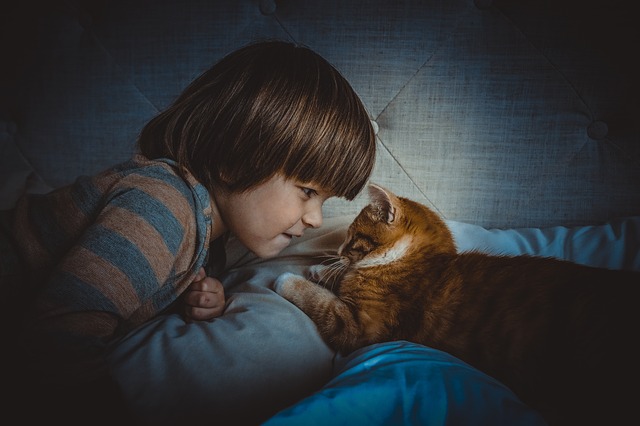
Caring for family pets is a big responsibility! Pets need patience, love and attention, food and water, grooming, exercise, playtime, and medical care throughout their lives. Sounds a lot like what we all require, especially kids! So with that, it is important to remember that as kids are learning responsibilities in life, they also must learn that pets are living creatures that deserve to be treated kindly and with compassion, and that they are a lifetime commitment. This can be very time consuming, but well worth the effort. The level of responsibility you teach a child certainly depends on their age. How much responsibility do you think he or she can handle? What would be age-appropriate and considered safe for him or her to do? Overall, as a parent, you are responsible for supervision in pet caretaking by making sure the pet is well cared for.

Here are some points for promoting positive pet care:

  • If there is already a pet in the home, kids will have an idea of what it takes to care for one, but still may need oversight in overall pet care. If a pet is not yet in the home, it can be helpful to start with a “pretend animal” and teach kids the basics of care that way first.
  • Help kids understand that sometimes pets do not want attention, and give examples of what that looks like so they can be respectful of that.
  • Some pets like hugs and some don’t, so it’s important for kids to understand acceptable ways to show affection.
  • Teaching a gentle, calm approach with pets is important.
  • Sometimes it’s important to leave pets alone. This is especially true when they are not feeling well, or they’ve had an eventful day.
  • Teach kids how to interact appropriately with new animals. This includes animals they meet when you’re out around town. When you come across people walking their pets, always ask the owner before approaching an animal. Remind children they must always be respectful, gentle, and cautious when meeting new animals.
  • Make it easy for kids to complete their tasks. For instance, you can draw out instructions and tape to a food container so they know how much to feed the pet.
  • Children can easily become overwhelmed when too much is required of them, so finding a balance that keeps them enthused and participating without feeling overwhelmed is key.
  • Reward smaller kids with a daily “star” for their efforts in helping with a pet-related chore. Children need praise and reward for completing tasks. Positive reinforcement promotes positive results.
  • Offer an allowance of sorts for helping with pets. This could be in the form of a “point system” where a certain number of points are given for specific chores that can be cashed in later for various things.
  • A most valuable tool in teaching kids to be responsible pet caretakers is to set an example by fulfilling this role well ourselves!

Note: There are many books available on teaching kids how to interact with animals.

*Readers are reminded it is entirely of their own accord, right, and responsibility to make informed and educated decisions on their pet’s health care. Jenny Magli disclaims any liability for the decisions you make based on this information.

Jenny is a Certified Natural Health Consultant for pets and their people, and an Animal Iridology, Healing Touch for Animals (Level 2) and NES Bioenergetics practitioner. She is available for consultations and presentations. She can be reached at (906) 235-3524 or 1healthlink@gmail.com.

Excerpted with permission from Health & Happiness U.P. Magazine, Winter 2018-19 Issue, copyright 2018. All rights reserved.

Inner Nutrition: Friendships, Social Media & Authenticity by Crystal Stone

The importance of friendships is emphasized and promoted in our culture and social media, and is generally accepted as a necessary part of mental health and wellness. Indeed, the importance of friendships to support mental health has been well researched, supported, and reported (check out http://www.mayoclinic.org for more information). Many different kinds of friendships and levels of depth can be formed, depending upon the people involved and other contributing factors.

But what happens when a friendship runs awry? Or when a friendship that was supportive no longer seems to be? I’d like to dispel the myth that all friendships should be easy and require little-to-no effort to maintain, making it taboo to talk about when friendships struggle or tank. Friendship difficulties can become a shameful secret a person may harbor, perhaps similar to getting divorced from a spouse or estranged from a child.

Despite the positive value of social media, it is set up to champion “likes,” which automatically promotes those ideas popularly accepted by the culture, which may not be helpful in the long run. In return, an individual’s post may become buried despite its validity or relevance. This can lead people who may have helpful ideas contrary to the social norm to be invalidated by the very social system from which they are seeking support.

I enjoy and can see the appeal of social media, but it is not without its faults. For folks who have blurry boundaries, lack protections, and are still forming their conclusions about the world, social media can bolster psychological binds that are difficult for the uninitiated to recognize. For example I recently saw a very popular (22K likes) quote – “You’ll know the people that feed your Soul… because you’ll feel good after spending time with them.” Taken at face-value, I would agree, and I get a warm, fuzzy feeling about it. But let’s also take a critical look at how this contributes to the myth that friendships should be easy. Having challenging conversations typically does not feel good for people-pleasing or conflict-avoidant types, but this may be necessary in order to grow together. It may be worth spending time not feeling “good” for a while to talk (so long as it’s emotionally and physically safe!) about feelings, needs and other vulnerabilities. This is one important way emotional closeness is built. It may not be comfortable, but in healthy, reciprocal relationships, it is worth it.

The topic of friendships has always been a bit of a sore spot for me. There were times in my elementary school years when I was bullied for months. At other times, I was ostracized from my friendship group for reasons I found out later were unfair and the product of further bullying tactics. Those experiences, coupled with my natural shyness and sensitivity to the world, caused me to be extra vigilant for mean behaviors in others.

In order to cope with being bullied, I developed a way of putting other people first in friendships as I found this led to their being less likely to turn on me. I thought that if I treated them as more important than me, they might like me more. Even though I seemed to have some success with this strategy as a kid (and it strengthened my helping nature in the long run), as an adult I have come to value reciprocity and mutuality in friendships far more than simply staving off rejection by sacrificing myself to be liked. Nonetheless, learning that lesson meant I had to question many of the pithy, yet inspiring ideas our culture has about making and keeping friends.

Months ago, I experienced a falling-out with a friend. We had an argument (several, actually). Despite my best efforts to demonstrate understanding for her point of view, I couldn’t seem to elicit the same from her. The more excited I got about getting her to understand my perspective, the more she recoiled and hunkered down in her position. My patience and caring for her dried up in response to her extinguishment of the process. I felt shut down and dropped; she wasn’t being fair! Months passed with no further discussion. Life went on, but my feelings were hurt, and I grieved the loss.

I recognized this incident as an important growth experience. Moving forward, I embraced it and dove deep into understanding myself and what happened with a spirit of love and self-respect. I spent time nurturing other friendships and enjoyed a variety of social situations. I found an author (Ross Rosenberg, The Human Magnet Syndrome) who helped explain relationship dynamics in an interesting and constructive way that I found empowering and freeing when applied to myself. I cultivated my rich inner experience to be full of self-care, self-understanding, and empathy for others who have had experiences similar to mine.

The friend in question and I met recently in order to talk… and it went okay. We took turns talking, and we both seemed genuinely interested in what the other was saying. We’re not close the way we were before, and we’re not sure that this friendship will go in that direction. And however the friendship goes, it’s okay. Friendship may be a benefit in life, but if a particular friendship doesn’t last or remain as close, it doesn’t mean you’ve failed big time. Friendship is a type of agreement between two people. Life is not static, so such an agreement may naturally require change, bringing more or less closeness. Either way, it still holds value. As with most things, you can learn from any friendship in order to grow into a more authentic, engaged, and fulfilled version of you.

Crystal Stone, LMSW, CAADC is a mental health therapist in the Houghton/Hancock area. She specializes in trauma recovery and EMDR therapy. You can reach her at tamarack.healing.arts@gmail.com and check out her website: tamarackhealingarts.com.

Excerpted with permission from Health & Happiness U.P. Magazine, Fall 2018 Issue, copyright 2018. All rights reserved.

Bodies in Motion: Dead River Derby, by Amber Kinonen

DRD

A muscled shoulder barrels into my chest, reeling me backwards. My butt smacks and then slides across the concrete surface. I scramble to my feet, but the same sweat-glistened shoulder flashes toward me again. I spin away only to have another opponent send me to the floor once more. However, I don’t give up. Instead, I think to myself, “Challenge accepted!” and rise. Even though this may sound like something from an MMA (Mixed Martial Arts) match, it captures less than ten seconds of a roller derby bout.

In 2012, I was invited to skate for Marquette’s Dead River Derby, also known as “DRD.” At first, I was surprised by the perception of derby girls: They are tough, wear booty shorts with ripped up stockings, throw elbows and fists, and have tattoos. As a teacher, scout leader, and mother of two, I was not sure I would fit in. Now, years later, I know that roller derby is no longer the banked track where women dramatically throw each other around. There is an abundance of contact; however, athleticism, strategy, and safety are valued. In fact, derby is one of the fastest growing sports for women with more than 1,200 leagues worldwide and attempts being made for it to qualify as an Olympic event. Why are so many choosing to play?

First are the reasons not to play. One is time. Derby requires hours of drills on skates to avoid injury, the complex gameplay takes practice to understand, and a league’s existence depends on members’ volunteerism. Another issue is money. Derby can be expensive as lots of gear is required for safety. Finally, injuries occur. Derby carries the same risks as other contact sports such as football and hockey.

However, there are also many benefits to playing. The most obvious is exercise. Practices are demanding with a mixture of stretching, footwork, endurance drills, core body exercises, and strategy skills. Therefore, many parts of the body are strengthened. A lot is done in a short amount of time, but the variation and support from teammates makes it not only bearable but enjoyable. In fact, I have to force myself to exercise on a bike or treadmill, but I eagerly burn calories on my skates for hours at a time. When I miss practice, my body feels it, and when I finish practice, my body is strong.

Other benefits are not so obvious. Derby allows a range of women to be involved. Some are thin and others curvy. Round booties can stop jammers, tiny ones can evade blockers, and anyone can choose to participate in a league. Women of varying ages can also participate. For example, the average age of skaters in the DRD is forty-three, which is higher than many other leagues. Backgrounds are also wide-ranging. Membership consists of teachers, business owners, accountants, college students, and stay-at-home moms. There is a place for anyone with determination. As we work to become an effective team, the diversity provided by derby fosters comradery unlike any experienced elsewhere.

Derby also requires the brain to work in ways a person may not be used to. I equate it to a game of fast-paced chess with contact. A skater must think critically and quickly. Skaters have to make gameplay happen in a matter of seconds to gain advantage over the other team. The track can be confusing because so much is happening; calculating and executing strategy requires awareness, mental strength, and focus.

Another benefit is a sense of accomplishment. When I first started, I couldn’t stand on my skates. Every training session was a challenge, but if I could race around the track a little faster or jump higher than the week before, I felt good. Now, I’m trying to jump the apex or pull off a pummel horse. I still leave practice awed by what my forty-one-year-old body is capable of accomplishing.

In addition, most people think that being tough indicates a lack of fear. However, derby has taught me that being tough means being afraid but doing what scares you anyway. It is a sport where even after years of practice, my fear of failure and injury is still there. Nevertheless, I skate. When a game is over, regardless of performance, I am satisfied that even though I may have been so nervous I gave myself a fever beforehand, I got on the track and worked my hardest.

Derby is not about a bunch of rogues who throw theatrical punches on the track. It is so much more. My children get to watch their mom, an athlete, working with an eclectic group of women as part of a team. They see hard work and determination from a mom who gets knocked down but, most importantly, gets back up, over and over again.

Amber Kinonen skates under the name of “Ripper” for Marquette’s Dead River Derby. She has been skating for five years. In her non-derby life, she teaches English at Bay College in Escanaba, Michigan and spends her remaining time momming her two children, Mason and Grace.

Excerpted with permission from Health & Happiness U.P. Magazine, Fall 2018 Issue, copyright 2018. All rights reserved.

New Programs from AAUW-Marquette by Leslie Bek

The mission of the American Association of University Women is to advance gender equity for women and girls through research, education, and advocacy. A powerful mission. A mission the Marquette Branch seizes to create and sustain positive change locally, statewide, nationally, and globally.

The membership year is September – May, highlighted with engaging and inspiring programs. Through collaborative actions, it organizes additional mission-driven training and educational opportunities in the area. AAUW Marquette Branch also supports national and Northern Michigan University scholarships. Funding is generated by a scholarship fund campaign launched each new school year in September, and a used book sale held each April.

The gift of academic opportunity changes lives and opens doors for women who demonstrate financial need. AAUW Marquette Branch has been campaigning to raise funds for national AAUW scholarship programs since 1959, and local scholarships at Northern Michigan University since 1980. Through this investment, donors are impacting women’s dreams for the future.

Upcoming meetings begin at 7 p.m. and are held at the Federated Women’s Clubhouse, 104 W. Ridge Street, Marquette. Guests and new members are welcome to attend.

On September 13, AAUW Marquette Branch Program Co-Chair Leslie Bek will facilitate “Salad Supper & AAUW Priorities.” The featured discussion will answer the question “Why AAUW?” explaining why its members are here and why they keep coming back. Highlights will include AAUW accomplishments, priorities at the national, state, and local level, and upcoming programs of the Marquette Branch. AAUW members are asked to bring salad, dessert, or rolls; guests are invited and encouraged to attend. Please email Kathy Davis at kdavismqt@aol.com if you’ll be attending. For more information, contact Leslie Bek at lbek@gsnwgl.org

The timely “Voting Matters” event will take place October 11. AAUW board members Ruth Ziel and Marge Forslin will facilitate an evening filled with a variety of topics to engage and inform voters. Updates on ballot issues, the security of our voting system in Michigan, gerrymandering, and fact checking will be presented. The program will conclude with a call to action to get out the vote.

“Career Night: Empowering Women as They Launch” will take place November 8. This event will focus on first-generation college students, student groups, and pre-professional associations. The mixer format, facilitated by AAUW board member Leslie Warren and AAUW member Taylor Susa, is an opportunity to dialogue with young women about getting a strong career start. Based on professional lessons learned from members representing multiple fields, this match-up promises to offer priceless heads-up conversations.

For more information, contact AAUW Marquette Branch President, Judy Puncochar, jpuncoch@nmu.edu or website https://marquette-mi.aauw.net/.

Leslie Bek is the AAUW Marquette Branch NMU Scholarship Campaign Chair and Program Co-Chair.

Excerpted with permission from Health & Happiness U.P. Magazine, Fall 2018 Issue, copyright 2018. All rights reserved.

Green Living: Time for a Happy Walk! by Steve Waller

Feeling stressed, tired, angry, lonely, or sleepless? Fighting weight gain or aging? The fountain of youth exists—only two feet away, literally. Look down and count. Two feet? You’re all set. Park the car. Start Happy Walking!

We are built to walk! Our ancient ancestors walked out of Africa to the ends of the earth – Europe, Asia, the Americas, the U.P! The average American spends nine to ten hours a day sitting or driving cars. We’re becoming wimps. If we were built to drive cars, we’d have only one foot!

Google “benefits of walking.” Walking helps you lose weight, reduces stress (lowering blood pressure), decreases anger and hostility (makes you nicer), and reduce the risk of many chronic diseases. A regular 15-30-45 minute walk is one of the best (cheapest) and easiest things you can do for your health.

Walkers think more creatively than sitters. Walking opens up the free flow of ideas, increases metabolism by burning extra calories, and prevents muscle loss. Walking triggers your body to release natural pain-killing endorphins. A 10-minute walk may be as good as a 45-minute workout to relieve the symptoms of anxiety. You don’t need to slog it out on a treadmill at the gym for these benefits.

Walking in nature, specifically, reduces dwelling over negative experiences, which reduces the risk of depression. Walks with a partner, a neighbor, or a good friend help you feel connected, which boosts mood. Just twelve minutes of walking can increase joviality, vigor, attentiveness, and self-confidence versus the same time spent sitting. The more steps people take during a day, the better their mood tends to be. Walkers are happier!

Since walking doesn’t wear down your body much, it doesn’t require recovery time. For those who are fit, walking is a phenomenal maintenance activity, keeping you healthier into old age.

So, instead of driving to a gym to work out, walk to the gym’s front door. Do Not Enter. Shout out loud, “I walk!” Turn around. Walk home. Your workout is done. No monthly fee!

Start with a walk in the neighborhood. Take it easy at first. Bring the kids. Be neighborly. Walk to the local grocery. Why drag 4,000 lbs of automobile along to buy a 10 lb. bag of goodies? Grab a comfortable recycled bag or backpack or borrow a neighbor’s wagon or a stroller for strolling, and walk. Plan weekends exploring many of the local short or long foot trails awaiting your footprints. (https://www.traillink.com/state/mi-trails/.)

Ready for an adventure? The Iron Ore Heritage Trail traverses 47 miles across the Marquette Iron Range. It’s an outdoor linear mining history museum where you exercise your body and mind with interpretive signage, artwork and connections to museums along the way. http://ironoreheritage.com/

The North Country Trail (NCT) is a 4,600 mile footpath stretching from eastern New York to central North Dakota. As of early 2017, 3,009 miles of the trail are in place, passing through seven states. The longest stretch is 1,000+ miles split evenly between upper and lower Michigan.

In the beautiful Upper Peninsula, the NCT stretches 167 miles from the Mackinac Bridge to the Luce/Alger County border, just east of Grand Marais; 188 miles from Grand Marais through Marquette to the Marquette/Baraga County Line on the eastern border of Craig Lake State Park; then 192 more miles to the MI/WI border near Ironwood. (https://northcountrytrail.org/trail/michigan-upper/)

Do it all or maybe just a part, or just one part at a time. Walking outdoors exposes you to natural sunlight. Walking with groups of friends outdoors exposes you to fun and creative thought.

Buy less gasoline. Walk. You’ll be happier!

Steve Waller’s family lives in a wind- and solar-powered home. He has been involved with conservation and energy issues since the 1970s and frequently teaches about energy. He and a partner own a U.P. wind/solar business called Lean Clean Energy. He can be reached at Steve@UPWallers.net.

Excerpted with permission from Health & Happiness U.P. Magazine, Summer 2018 Issue, copyright 2018. All rights reserved.